Poet of Nature, thou hast wept to know That things depart…
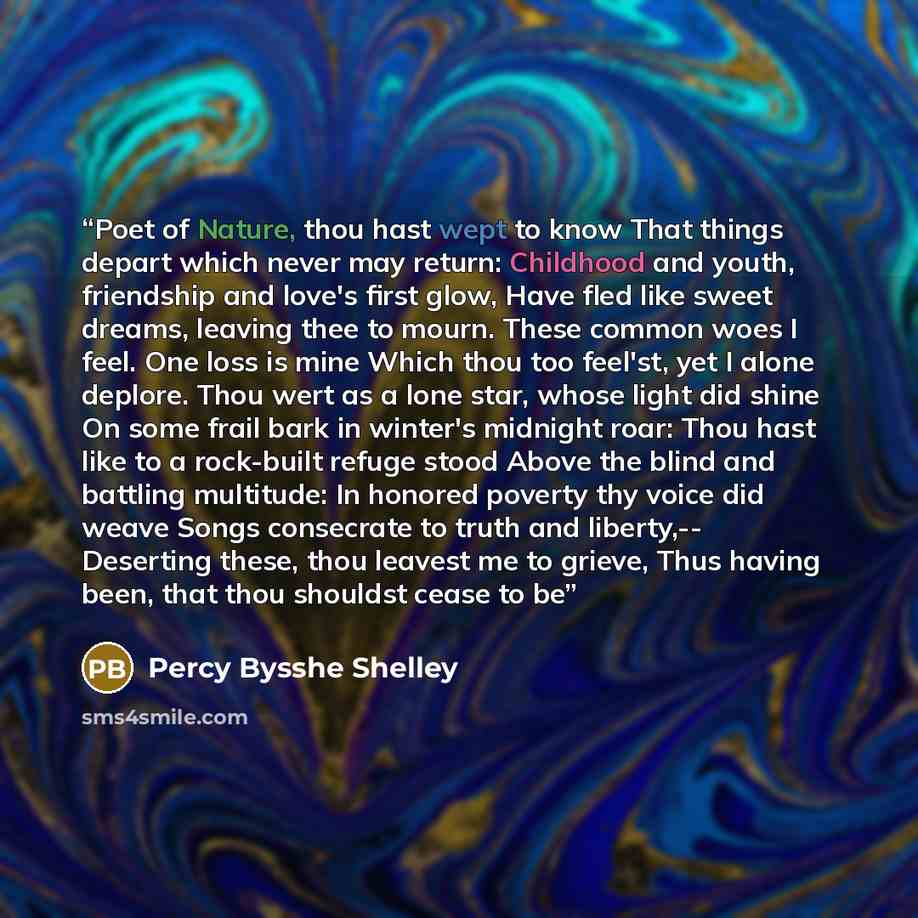
““Poet of Nature, thou hast wept to know That things depart which never may return: Childhood and youth, friendship and love's first glow, Have fled like sweet dreams, leaving thee to mourn. These common woes I feel. One loss is mine Which thou too feel'st, yet I alone deplore. Thou wert as a lone star, whose light did shine On some frail bark in winter's midnight roar: Thou hast like to a rock-built refuge stood Above the blind and battling multitude: In honored poverty thy voice did weave Songs consecrate to truth and liberty,-- Deserting these, thou leavest me to grieve, Thus having been, that thou shouldst cease to be””
About This Quote
This interpretation was drafted with AI assistance. It is one reading of the quote, not the author's own explanation.
The speaker laments the inevitable loss of youth, love, and innocence, feeling both personal grief and shared sorrow with nature.
In simple terms: Loss of youth and love feels painful and universal.
Key Takeaway
Accept impermanence, cherish present moments.
Themes
loss
grief
impermanence
nature
solitude
Mood
melancholy
reflective
poetic
Type
literary
emotive
philosophical
When to use this quote
- reflecting on past relationships
- writing poetry
- comforting a grieving friend
- contemplating nature's cycles
Key Concepts
Romanticism
transience
melancholy
Questions to Reflect On
- How do you honor fleeting joys?
- Can grief become a source of creative strength?
A Different Perspective
Nature’s mourning may romanticize loss, overlooking resilience.