A Prince is likewise esteemed who is a stanch friend and a…
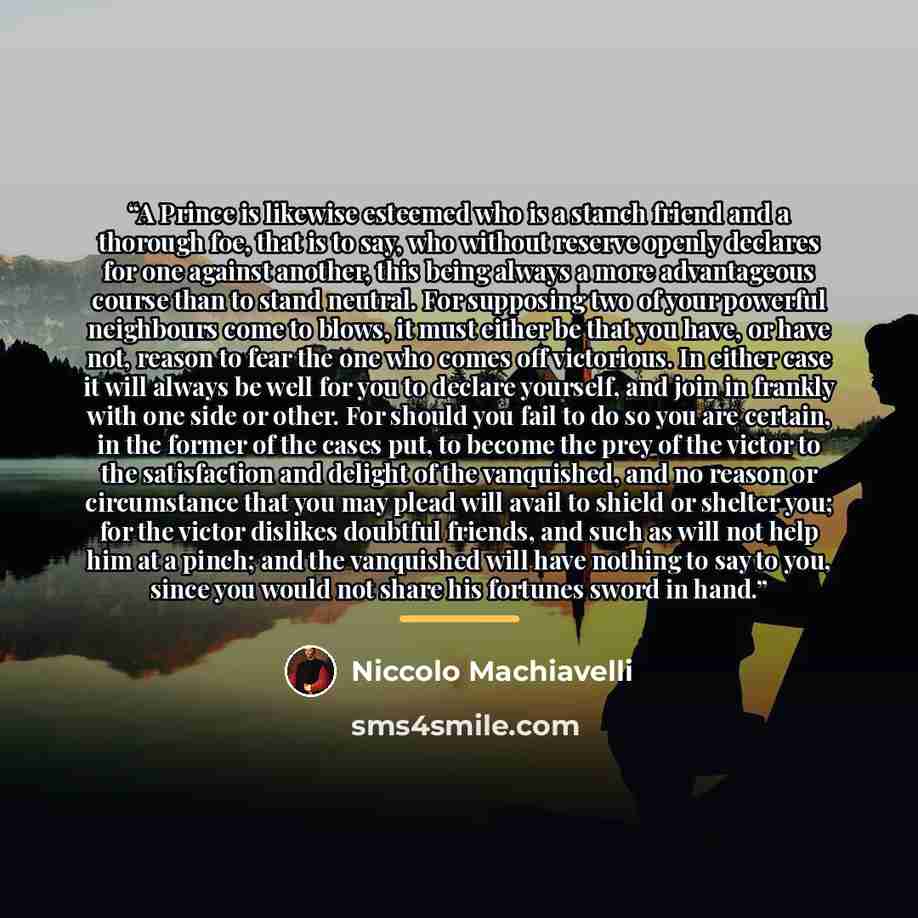
““A Prince is likewise esteemed who is a stanch friend and a thorough foe, that is to say, who without reserve openly declares for one against another, this being always a more advantageous course than to stand neutral. For supposing two of your powerful neighbours come to blows, it must either be that you have, or have not, reason to fear the one who comes off victorious. In either case it will always be well for you to declare yourself, and join in frankly with one side or other. For should you fail to do so you are certain, in the former of the cases put, to become the prey of the victor to the satisfaction and delight of the vanquished, and no reason or circumstance that you may plead will avail to shield or shelter you; for the victor dislikes doubtful friends, and such as will not help him at a pinch; and the vanquished will have nothing to say to you, since you would not share his fortunes sword in hand.””
About This Quote
This interpretation was drafted with AI assistance. It is one reading of the quote, not the author's own explanation.
A ruler should openly support one side in a conflict rather than stay neutral, because neutrality makes him vulnerable to both the winner and the loser.
In simple terms: Take a clear side, avoid neutrality.
Key Takeaway
Choose a side to protect yourself.
Themes
politics
strategy
power
loyalty
Mood
cautious
strategic
pragmatic
Type
advice
philosophical
When to use this quote
- war
- political negotiations
- business competition
- diplomacy
- personal conflicts
Key Concepts
realpolitik
risk management
decision making
Questions to Reflect On
- When have you stayed neutral and suffered?
- How can you assess which side benefits you most?
A Different Perspective
Neutrality can lead to loss of trust and support from both parties.