And how do you know that you're mad? "To begin with," said…
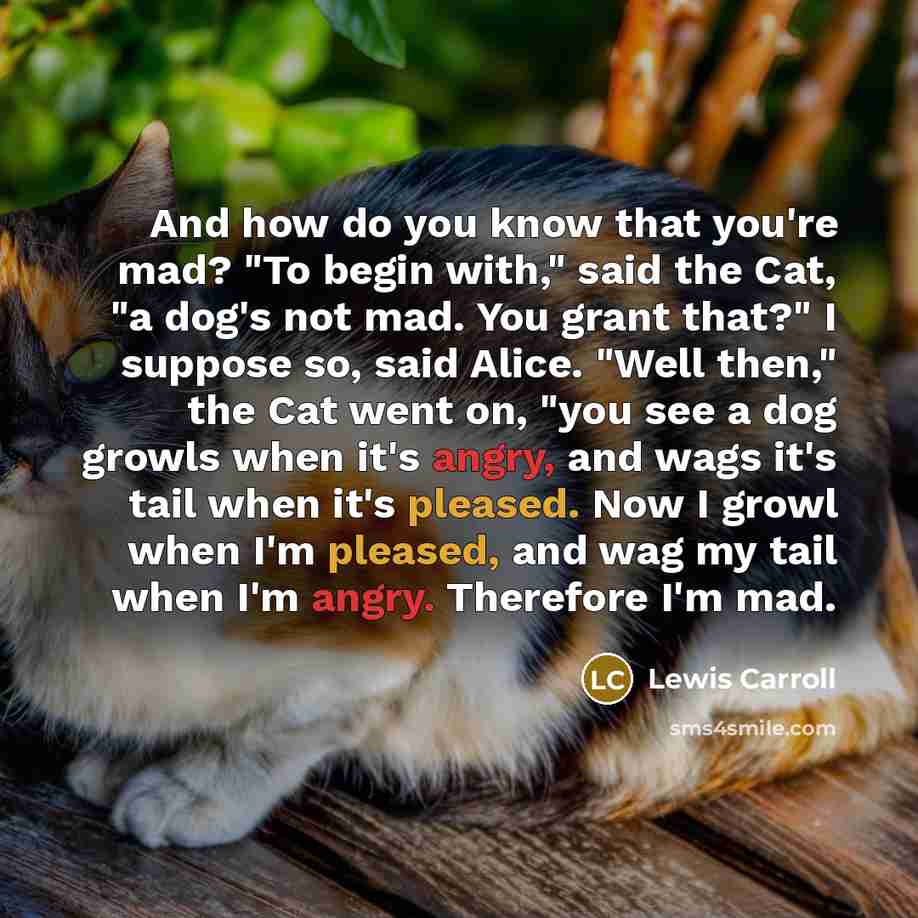
“And how do you know that you're mad? "To begin with," said the Cat, "a dog's not mad. You grant that?" I suppose so, said Alice. "Well then," the Cat went on, "you see a dog growls when it's angry, and wags it's tail when it's pleased. Now I growl when I'm pleased, and wag my tail when I'm angry. Therefore I'm mad.”
About This Quote
This interpretation was drafted with AI assistance. It is one reading of the quote, not the author's own explanation.
The Cat uses absurd logic to claim madness, highlighting how definitions can be twisted for humor.
In simple terms: Madness can be defined by contradictory behavior.
Key Takeaway
Question assumptions about labels.
Themes
humor
logic
identity
Mood
playful
ironic
Type
literary
philosophical
When to use this quote
- literary analysis
- teaching logical fallacies
- creative writing
- debating definitions
Key Concepts
paradox
self‑reference
language play
Questions to Reflect On
- What does “mad” truly mean to you?
- How can humor reveal hidden truths?
A Different Perspective
The joke relies on absurdity, not serious philosophical argument.