As a recovering perfectionist and an aspiring…
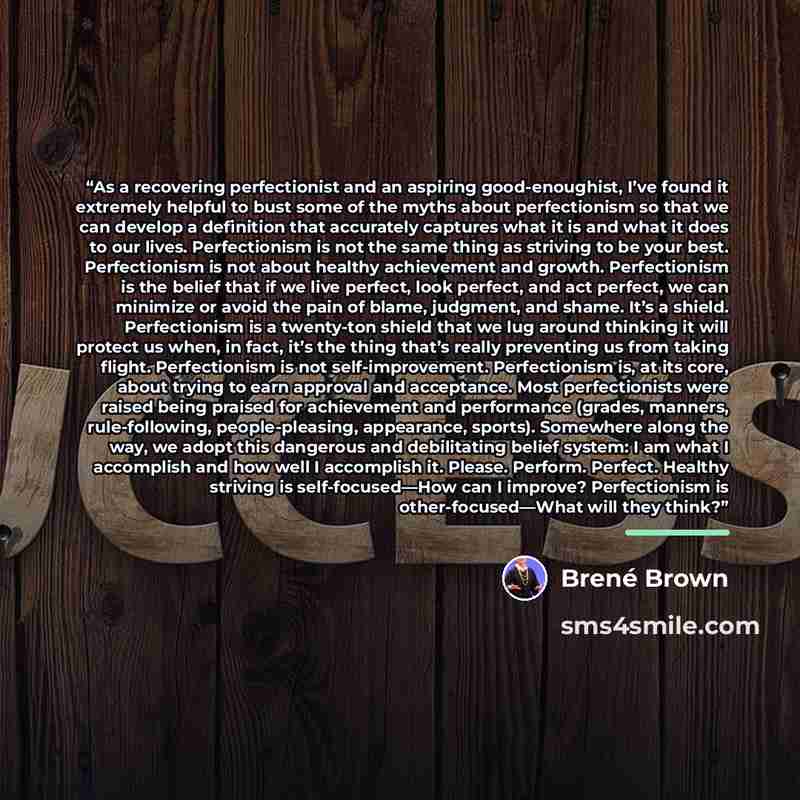
““As a recovering perfectionist and an aspiring good-enoughist, I’ve found it extremely helpful to bust some of the myths about perfectionism so that we can develop a definition that accurately captures what it is and what it does to our lives. Perfectionism is not the same thing as striving to be your best. Perfectionism is not about healthy achievement and growth. Perfectionism is the belief that if we live perfect, look perfect, and act perfect, we can minimize or avoid the pain of blame, judgment, and shame. It’s a shield. Perfectionism is a twenty-ton shield that we lug around thinking it will protect us when, in fact, it’s the thing that’s really preventing us from taking flight. Perfectionism is not self-improvement. Perfectionism is, at its core, about trying to earn approval and acceptance. Most perfectionists were raised being praised for achievement and performance (grades, manners, rule-following, people-pleasing, appearance, sports). Somewhere along the way, we adopt this dangerous and debilitating belief system: I am what I accomplish and how well I accomplish it. Please. Perform. Perfect. Healthy striving is self-focused—How can I improve? Perfectionism is other-focused—What will they think?””
About This Quote
This interpretation was drafted with AI assistance. It is one reading of the quote, not the author's own explanation.
Perfectionism is a defensive shield aimed at avoiding shame, not a path to healthy growth; it seeks external approval rather than self-improvement.
In simple terms: Perfectionism hides behind fear of judgment, blocking true progress.
Key Takeaway
Separate healthy striving from perfectionist approval‑seeking.
Themes
self‑acceptance
growth
shame
approval seeking
Mood
reflective
encouraging
Type
motivational
self‑help
When to use this quote
- personal development
- therapy
- coaching
- education
- writing
Key Concepts
psychology
self‑help
mental health
Questions to Reflect On
- What would happen if you let go of the need to be perfect?
- How can you shift focus from others’ opinions to personal values?
A Different Perspective
Perfectionism can sometimes motivate high performance when balanced.