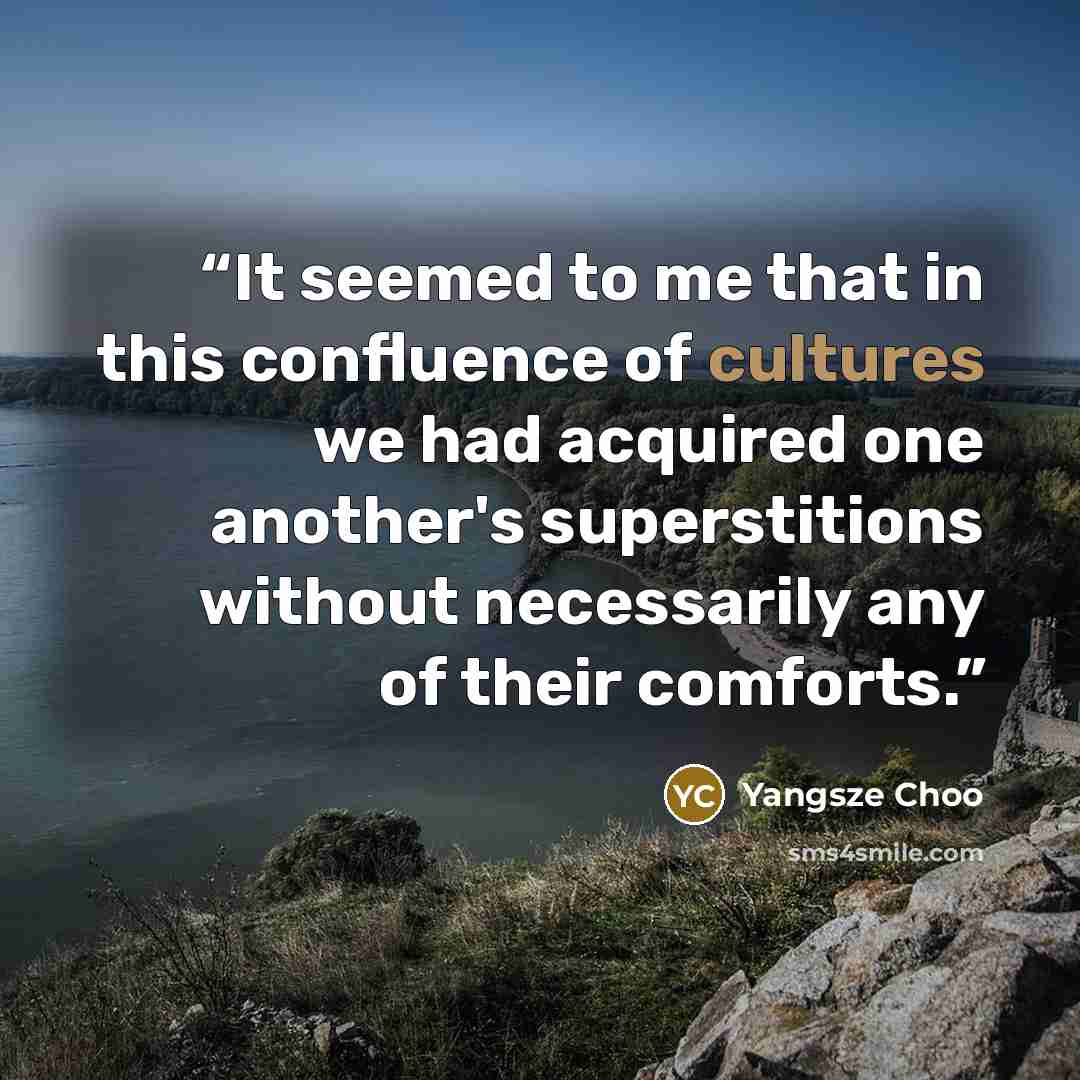
First time Quote by Yangsze Choo

““Then Er Lang was looking at me ruefully. “You have taken at least fifty years of my life!” I was stricken. “Take it back!” “I can’t. But fortunately, my life span is many times yours.” “How long can a dragon live?” “A thousand years, if he is lucky. Not all of us are, of course.” He raised an eyebrow. “I’m sorry.” I couldn’t look him in the eye. Instead, my gaze was drawn to the strong line of his throat. If he had given me blood, I would surely have killed him. But Er Lang was struggling to sit up. “I should have stopped you sooner. Though I now understand why men succumb to ghosts.” He spoke lightly, but my ears blazed with mortification. “You were the one who put your tongue in my mouth!” I blurted out, regretting it instantly. To talk about other people’s tongues was the worst, revealing the depths of my inexperience. And yet, the memory of his made me shiver and burn, as though I had a fever. It hadn’t been like this with Tian Bai; it was easy to understand where I stood with him. But he had been courting me, whereas Er Lang was an entirely different commodity. We did not have that sort of relationship, I reminded myself. But he merely gave me a wry glance. “I was a little carried away.” “Thank you,” I said at last. I realized it was the first time I had thanked him formally.””
About This Quote
Source Novel: The Ghost Bride, Yangsze Choo, 2013
A character confronts the moral weight of a supernatural bargain, feeling guilt and awe over the dragon's long life and their own fleeting existence.
In simple terms: The speaker feels guilt after a supernatural deal with a long‑lived dragon.
Key Takeaway
Acknowledge consequences and express gratitude.
Themes
guilt
supernatural
mortality
gratitude
Mood
reflective
somber
introspective
Type
dialogue
literary
philosophical
When to use this quote
- encounter with a mythic being
- making a pact
- reflecting on mortality
- expressing thanks
Key Concepts
life span
ethical dilemma
power dynamics
Questions to Reflect On
- What responsibility do we have when dealing with powerful beings?
- How does recognizing another's longevity affect our choices?
A Different Perspective
The narrative may romanticize dangerous bargains, overlooking real harm.
![“Her [Rosalind Franklin] devotion to research showed itself at its finest in the last months of her life. Although stricken with an illness which she knew would be fatal, she continued to work right up to the end.” quote by John Desmond Bernal](https://sms4smile.com/quotes/img-quotes/92b/john-desmond-bernal-14871_devotion_her-rosalind-franklin-devotion-to-resear_1532826.jpg)