Life Quote by William Shakespeare
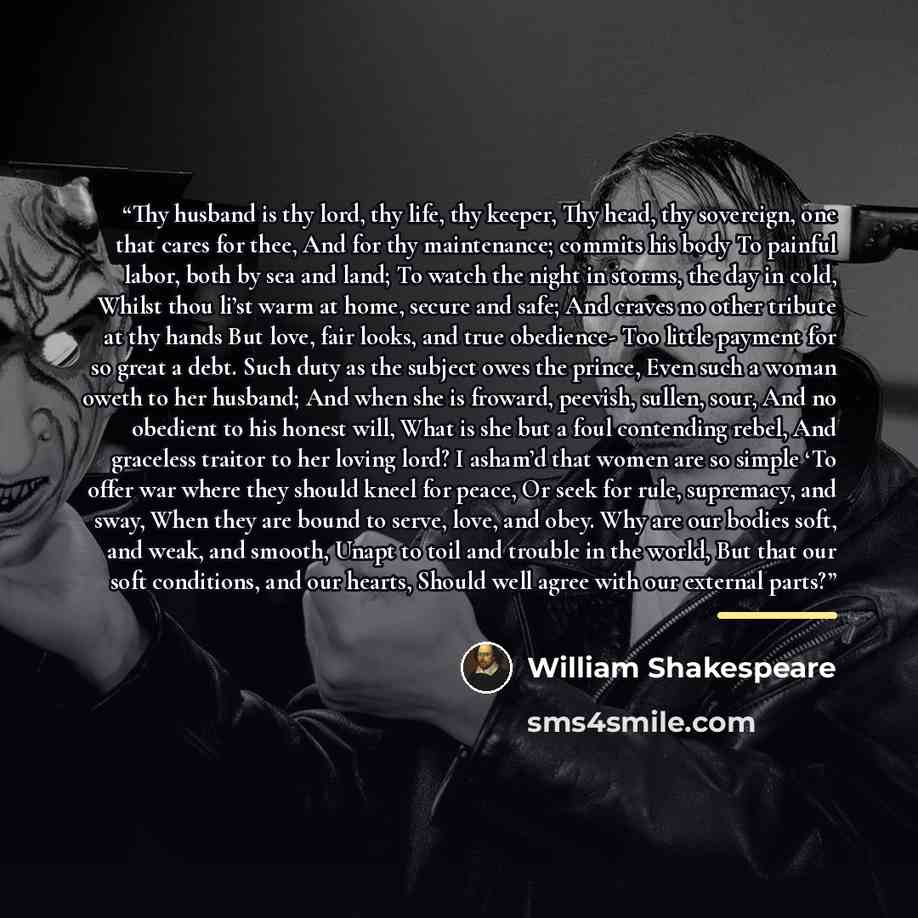
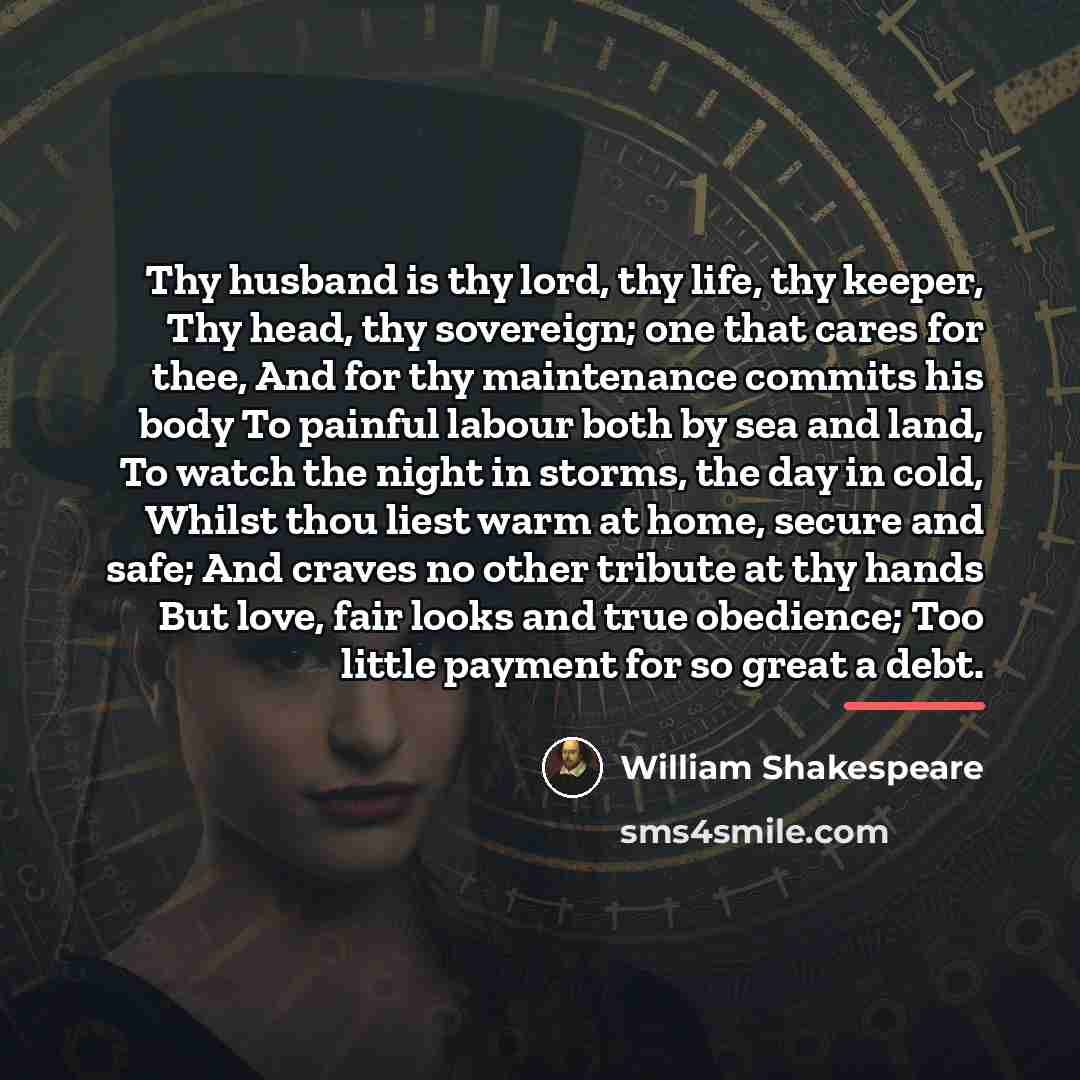
““Thy husband is thy lord, thy life, thy keeper, Thy head, thy sovereign, one that cares for thee, And for thy maintenance; commits his body To painful labor, both by sea and land; To watch the night in storms, the day in cold, Whilst thou li’st warm at home, secure and safe; And craves no other tribute at thy hands But love, fair looks, and true obedience- Too little payment for so great a debt. Such duty as the subject owes the prince, Even such a woman oweth to her husband; And when she is froward, peevish, sullen, sour, And no obedient to his honest will, What is she but a foul contending rebel, And graceless traitor to her loving lord? I asham’d that women are so simple ‘To offer war where they should kneel for peace, Or seek for rule, supremacy, and sway, When they are bound to serve, love, and obey. Why are our bodies soft, and weak, and smooth, Unapt to toil and trouble in the world, But that our soft conditions, and our hearts, Should well agree with our external parts?””
About This Quote
Source Play: The Taming of the Shrew, Act V, Scene 2, 1590
The passage portrays a patriarchal view that a wife's duty is to serve and obey her husband, framing obedience as a moral debt and love as the only appropriate tribute.
In simple terms: A wife should obey her husband and give love as payment.
Key Takeaway
Recognize the historical context of gender roles.
Themes
gender roles
marriage
obedience
patriarchy
Mood
critical
thoughtful
historical
Type
literary
social commentary
When to use this quote
- marriage counseling
- gender studies
- historical analysis
- literary critique
- social justice
Key Concepts
domestic duty
social contract
power dynamics
Questions to Reflect On
- What would a partnership based on equality look like?
- How can love be expressed without obedience?
A Different Perspective
The view ignores modern notions of equality and mutual partnership.
![“[The wives of powerful noblemen] must be highly knowledgeable about government, and wise – in fact, far wiser than most other such women in power. The knowledge of a baroness must be so comprehensive that she can understand everything. Of her a philosopher might have said: "No one is wise who does…” quote by Christine de Pizan](https://sms4smile.com/quotes/img-quotes/1d7/christine-de-pizan-13257_ability_the-wives-of-powerful-noblemen-must-be-h_2336937.jpg)