Eternal beauty Quote by William Butler Yeats
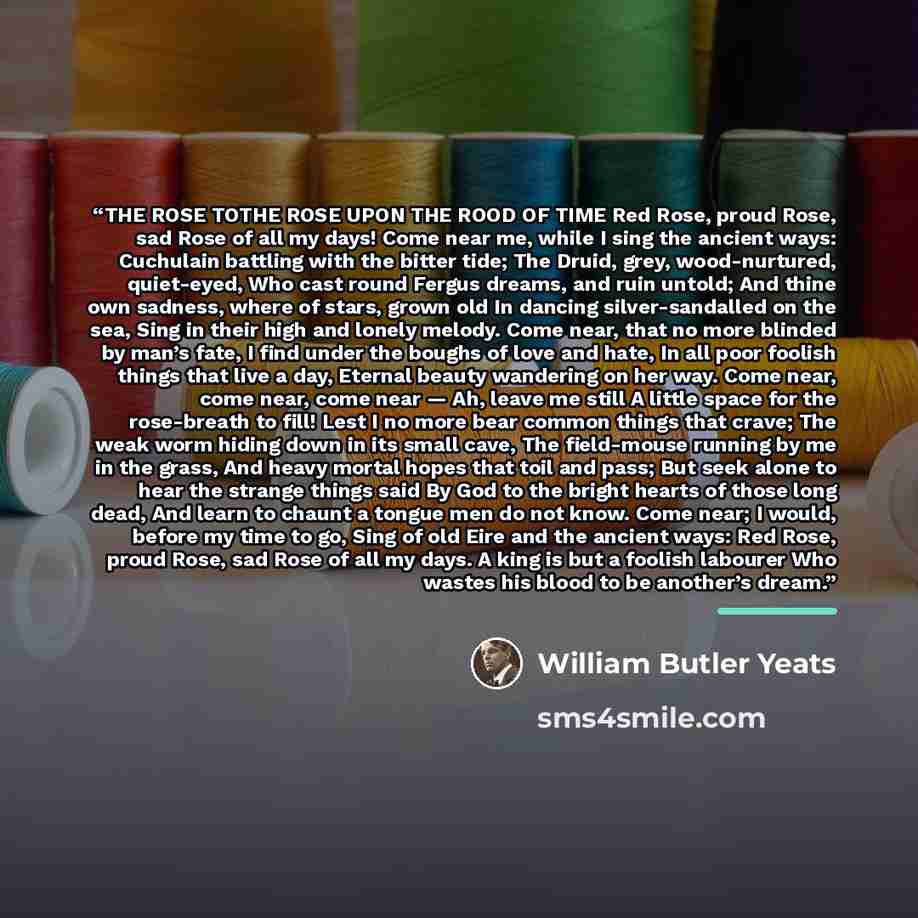
““THE ROSE TOTHE ROSE UPON THE ROOD OF TIME Red Rose, proud Rose, sad Rose of all my days! Come near me, while I sing the ancient ways: Cuchulain battling with the bitter tide; The Druid, grey, wood-nurtured, quiet-eyed, Who cast round Fergus dreams, and ruin untold; And thine own sadness, where of stars, grown old In dancing silver-sandalled on the sea, Sing in their high and lonely melody. Come near, that no more blinded by man’s fate, I find under the boughs of love and hate, In all poor foolish things that live a day, Eternal beauty wandering on her way. Come near, come near, come near — Ah, leave me still A little space for the rose-breath to fill! Lest I no more bear common things that crave; The weak worm hiding down in its small cave, The field-mouse running by me in the grass, And heavy mortal hopes that toil and pass; But seek alone to hear the strange things said By God to the bright hearts of those long dead, And learn to chaunt a tongue men do not know. Come near; I would, before my time to go, Sing of old Eire and the ancient ways: Red Rose, proud Rose, sad Rose of all my days. A king is but a foolish labourer Who wastes his blood to be another’s dream.””
About This Quote
Source Poem: “The Rose” (fragment), 1919, from “The Collected Poems of W.B. Yeats”
The poem uses the rose as a symbol of love, beauty, and mortality, urging closeness to the divine and the natural world while lamenting human folly.
In simple terms: The rose represents love, beauty, and life's fleeting nature.
Key Takeaway
Embrace beauty and reflect on mortality.
Themes
love
beauty
mortality
spirituality
nature
Mood
melancholic
hopeful
reflective
Type
poetic
philosophical
When to use this quote
- personal reflection
- ritual
- artistic appreciation
- spiritual contemplation
Key Concepts
symbolism
mythology
poetic lament
human folly
Questions to Reflect On
- What does the rose symbolize for you?
- How do we balance beauty with sorrow?
A Different Perspective
The rose can also signify political or personal oppression.