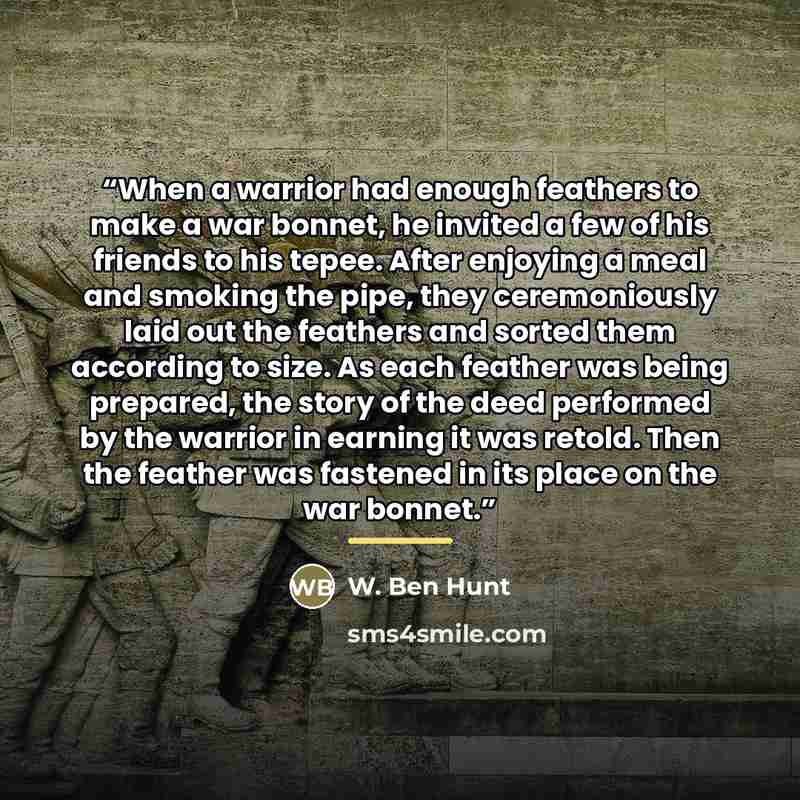
““Originally the Indians made their tepees of buffalo hides, but since the destruction of the buffalo herds by the white man, domestic cow hides have been used, as well as canvas. New buffalo-hide tepee covers were made every spring. The size of the tepee depended somewhat on the number of horses the tribe or family had, because it required several horses to transport a large tepee. The poles were made of lodgepole pine, cedar, spruce, or any other straight tree. Flexible poles were not used. The poles averaged about 25 feet in length and tapered from 4 to 1 inch in diameter. In warm weather the lower part of the tepee was raised up on the poles to allow the breeze to blow through. In cold weather the space around the bottom between the stakes and the ground was packed with sod to hold it down tightly and to keep out the snow and drafts. When the tepee was new it was nearly white. But by spring, the smoke and the weather had darkened it at the top and the skins became quite transparent. At night the campfires made the tepees look like large Japanese lanterns. On the Great Plains the wind is usually from the west and for that reason the tepees were set up with the smoke hole facing the east. The flaps, or smoke hole ears, as they are called, were used to control the drafts and to keep the wind from blowing down the smoke hole. In case of a storm they could be lapped over to close the smoke hole completely.””













![“This cold weather has set all the young Folks to providing Bedfellows. I have signed two or three Licences every Day [as a Fairfax Justice of the Peace] since I have been at Home. I wish I knew where to get a good one myself; for I find cold Sheets extreamly disagreeable.” quote by George Mason](https://sms4smile.com/quotes/img-quotes/b92/george-mason-8435_bedfellows_this-cold-weather-has-set-all-the-young_3953.jpg)