Compassion Quote by Vasily Grossman
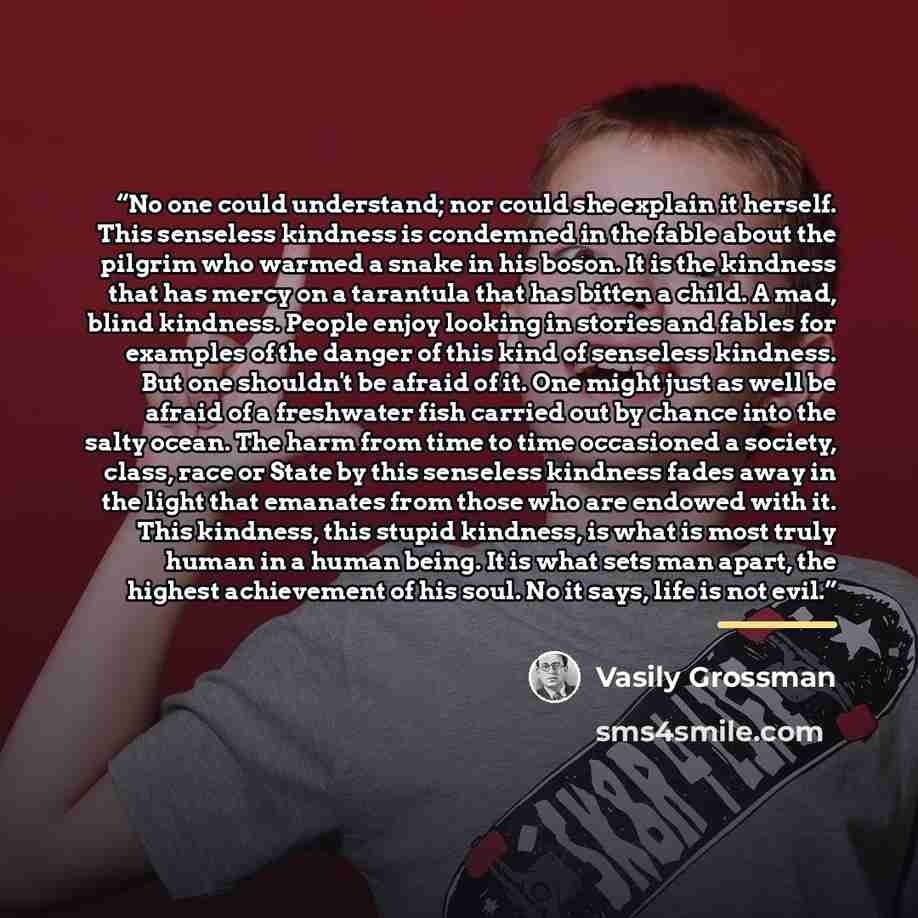
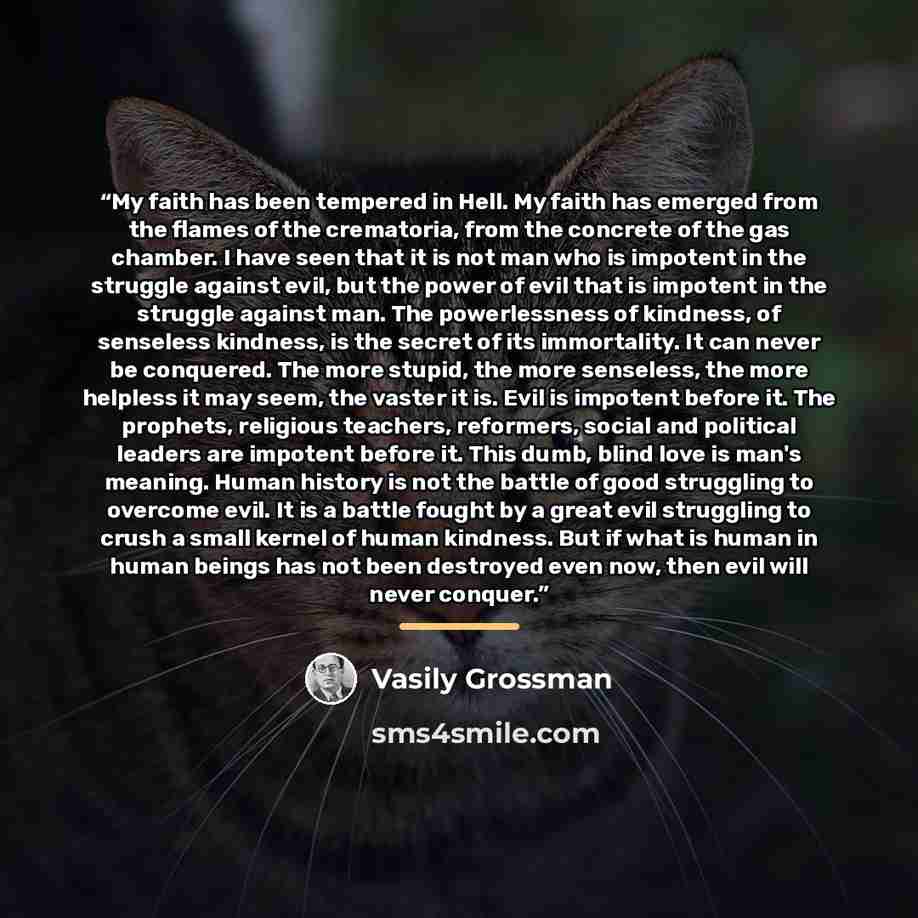
““No one could understand; nor could she explain it herself. This senseless kindness is condemned in the fable about the pilgrim who warmed a snake in his boson. It is the kindness that has mercy on a tarantula that has bitten a child. A mad, blind kindness. People enjoy looking in stories and fables for examples of the danger of this kind of senseless kindness. But one shouldn't be afraid of it. One might just as well be afraid of a freshwater fish carried out by chance into the salty ocean. The harm from time to time occasioned a society, class, race or State by this senseless kindness fades away in the light that emanates from those who are endowed with it. This kindness, this stupid kindness, is what is most truly human in a human being. It is what sets man apart, the highest achievement of his soul. No it says, life is not evil.””
About This Quote
Source Book: Life and Fate, Vasily Grossman, 1959
The passage portrays senseless kindness as a paradoxical human trait that can cause harm yet also reflects humanity’s highest moral potential.
In simple terms: Kindness can be both dangerous and uniquely human.
Key Takeaway
Recognize kindness’s complexity and its role in humanity.
Themes
humanity
paradox
morality
compassion
danger
Mood
thoughtful
reflective
Type
philosophical
literary
critical
When to use this quote
- interpersonal relationships
- social policy
- conflict resolution
- personal growth
Key Concepts
existentialism
ethical ambiguity
human nature
Questions to Reflect On
- What are the limits of kindness?
- How can we balance compassion with prudence?
A Different Perspective
Blind kindness can lead to unintended negative outcomes.