Being truthful Quote by Plato
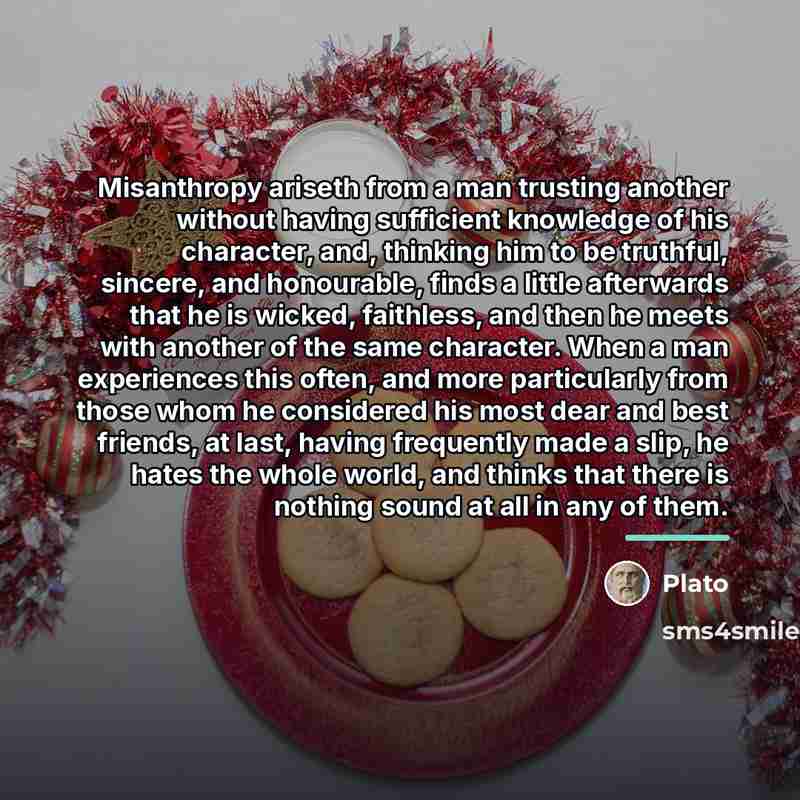
“Misanthropy ariseth from a man trusting another without having sufficient knowledge of his character, and, thinking him to be truthful, sincere, and honourable, finds a little afterwards that he is wicked, faithless, and then he meets with another of the same character. When a man experiences this often, and more particularly from those whom he considered his most dear and best friends, at last, having frequently made a slip, he hates the whole world, and thinks that there is nothing sound at all in any of them.”
About This Quote
Source Dialogue: Republic, Book VIII, Plato, 380 BC
When repeated trust is betrayed, it breeds cynicism and hatred toward humanity as a whole.
In simple terms: Repeated betrayal leads to hatred of all.
Key Takeaway
Guard against blind trust; verify character.
Themes
trust
betrayal
misanthropy
disillusionment
Mood
cynical
skeptical
Type
philosophical
warning
When to use this quote
- friendships
- business partnerships
- political alliances
Key Concepts
human nature
skepticism
psychology
Questions to Reflect On
- How do you balance trust and caution?
- What signs indicate a person’s true nature?
A Different Perspective
Repeated betrayal can also stem from misreading signals, not just character flaws.