Able Quote by Paul Auster
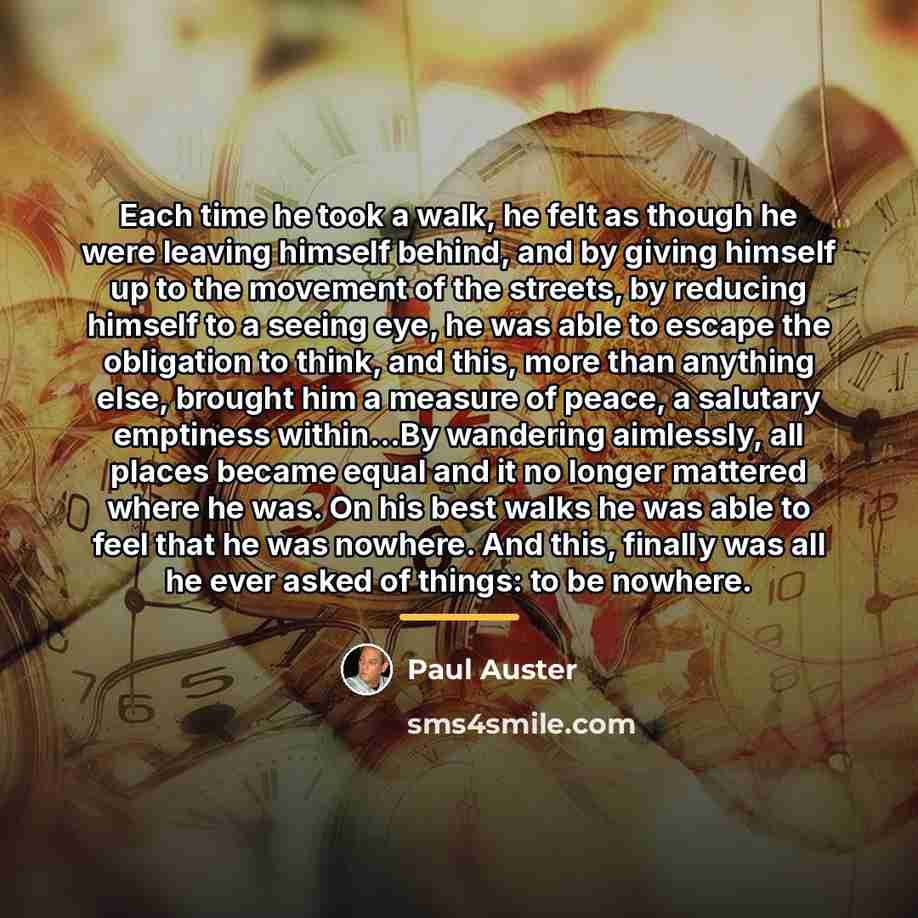
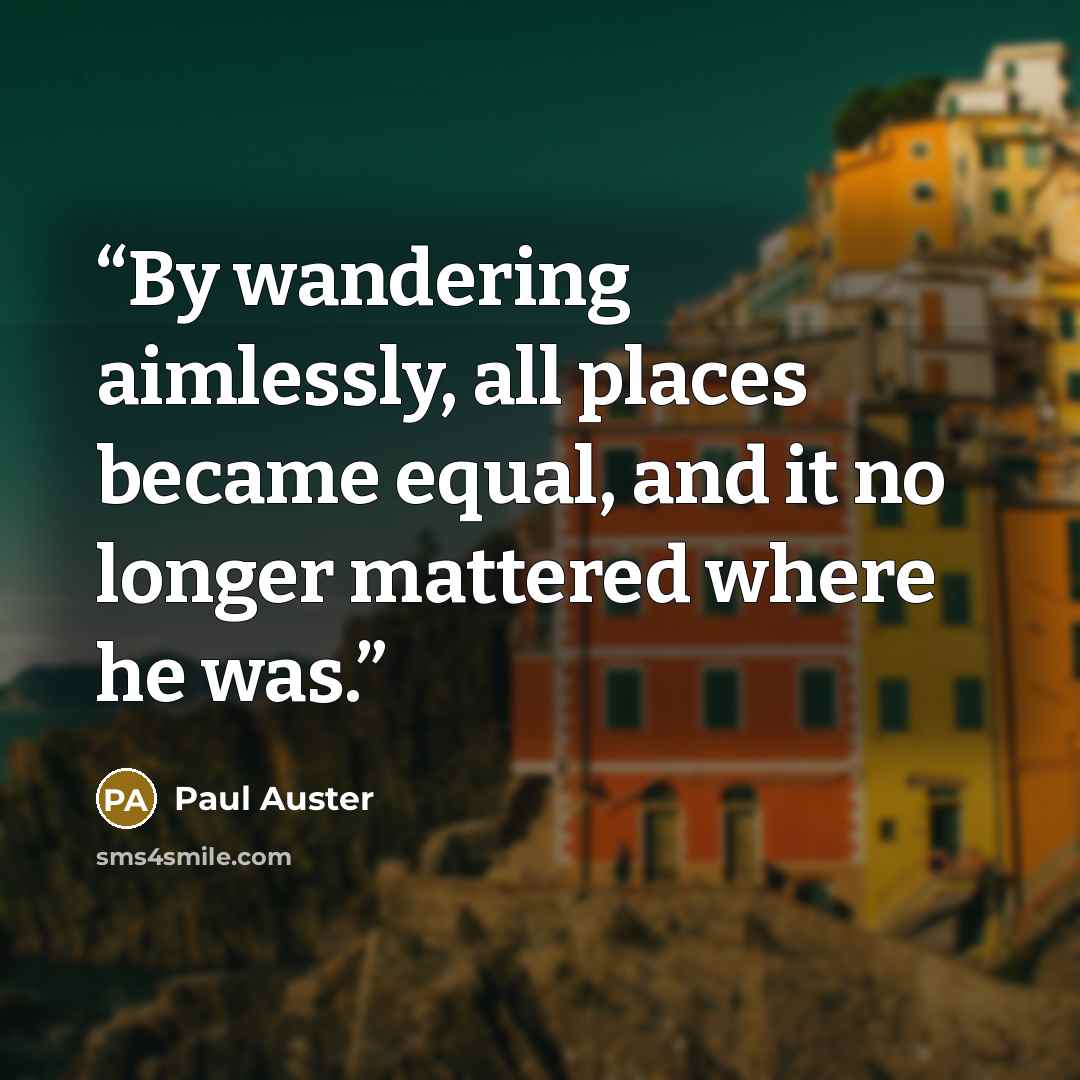
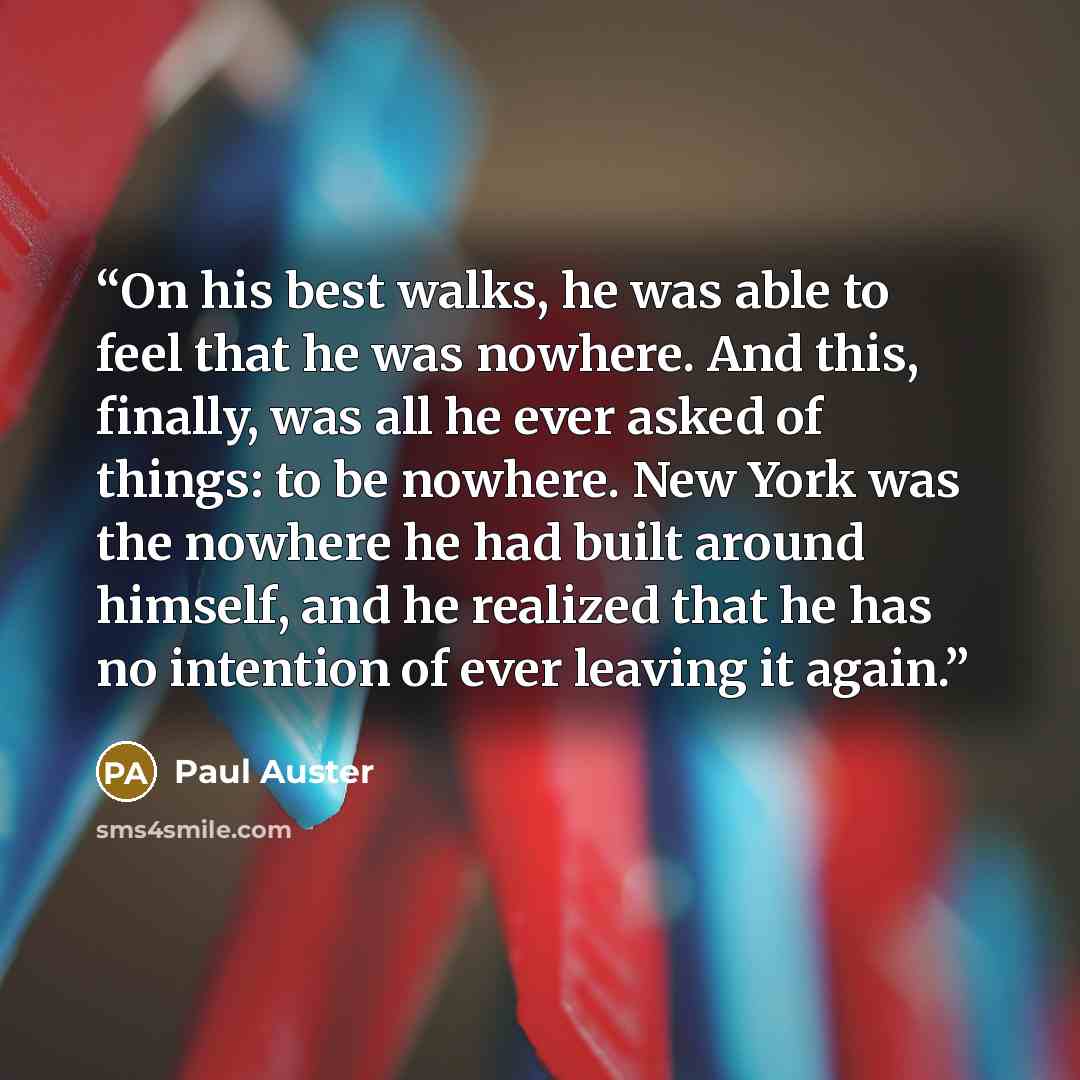
“Each time he took a walk, he felt as though he were leaving himself behind, and by giving himself up to the movement of the streets, by reducing himself to a seeing eye, he was able to escape the obligation to think, and this, more than anything else, brought him a measure of peace, a salutary emptiness within...By wandering aimlessly, all places became equal and it no longer mattered where he was. On his best walks he was able to feel that he was nowhere. And this, finally was all he ever asked of things: to be nowhere.”
About This Quote
Source Novel: The New York Trilogy, 1985
Wandering frees the mind from self-imposed obligations, creating a peaceful emptiness and sense of non-location.
In simple terms: Walking away from self lets us find peace.
Key Takeaway
Embrace aimless wandering.
Themes
freedom
mindfulness
existentialism
Mood
contemplative
philosophical
Type
existential
inspirational
When to use this quote
- urban exploration
- meditative walks
- creative retreats
- stress relief
Key Concepts
self-transcendence
presence
emptiness
Questions to Reflect On
- What does “being nowhere” truly mean?
- How can aimlessness be productive?
A Different Perspective
May lead to avoidance of responsibilities.