Children Quote by Miroslav Penkov
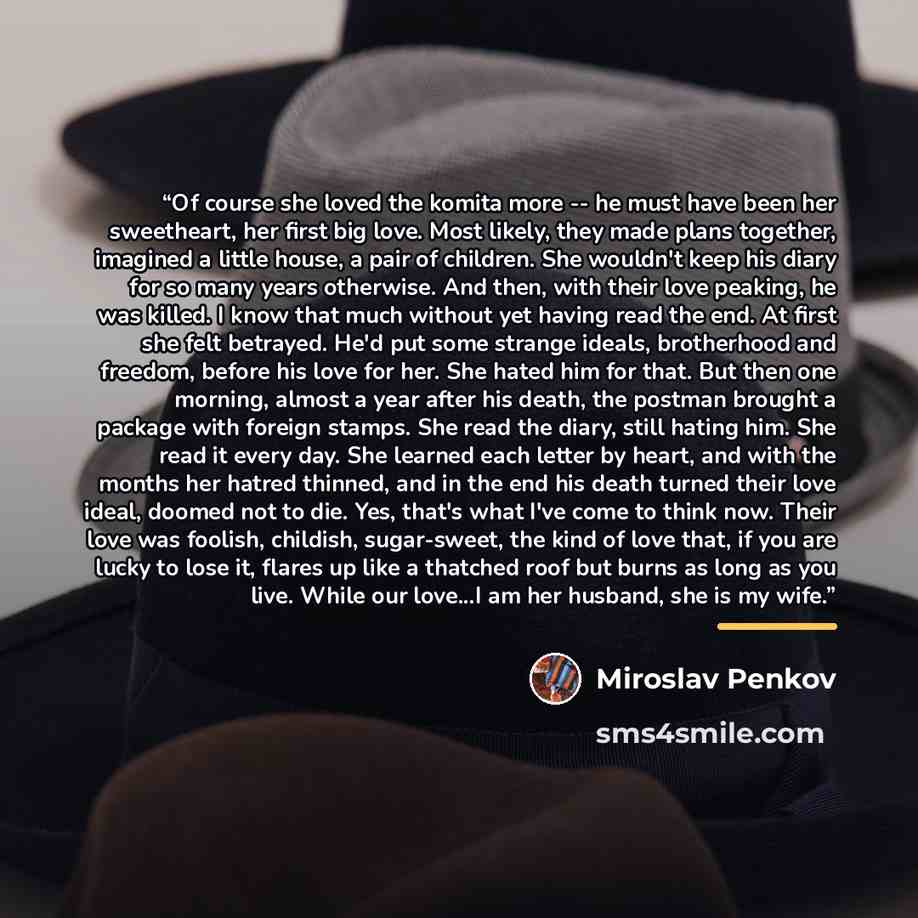
““Of course she loved the komita more -- he must have been her sweetheart, her first big love. Most likely, they made plans together, imagined a little house, a pair of children. She wouldn't keep his diary for so many years otherwise. And then, with their love peaking, he was killed. I know that much without yet having read the end. At first she felt betrayed. He'd put some strange ideals, brotherhood and freedom, before his love for her. She hated him for that. But then one morning, almost a year after his death, the postman brought a package with foreign stamps. She read the diary, still hating him. She read it every day. She learned each letter by heart, and with the months her hatred thinned, and in the end his death turned their love ideal, doomed not to die. Yes, that's what I've come to think now. Their love was foolish, childish, sugar-sweet, the kind of love that, if you are lucky to lose it, flares up like a thatched roof but burns as long as you live. While our love...I am her husband, she is my wife.””
About This Quote
Source Short Story: “The Komita” by Miroslav Penkov, 2015
A woman's love evolves from personal affection to an idealized, enduring bond after her lover's death, transforming grief into reverence for his ideals.
In simple terms: Love can become an ideal after loss.
Key Takeaway
Embrace love's lasting impact beyond the person.
Themes
love
grief
idealization
memory
transformation
Mood
reflective
bittersweet
hopeful
Type
literary
philosophical
When to use this quote
- marriage counseling
- grief support groups
- literary analysis
- personal reflection
- memorial rituals
Key Concepts
romantic idealism
posthumous reverence
psychological processing
Questions to Reflect On
- How does loss reshape our perception of love?
- Can idealization coexist with healthy mourning?
A Different Perspective
Idealizing the dead may overlook their flaws and hinder moving on.