Childhood trauma Quote by Julia Sudbury
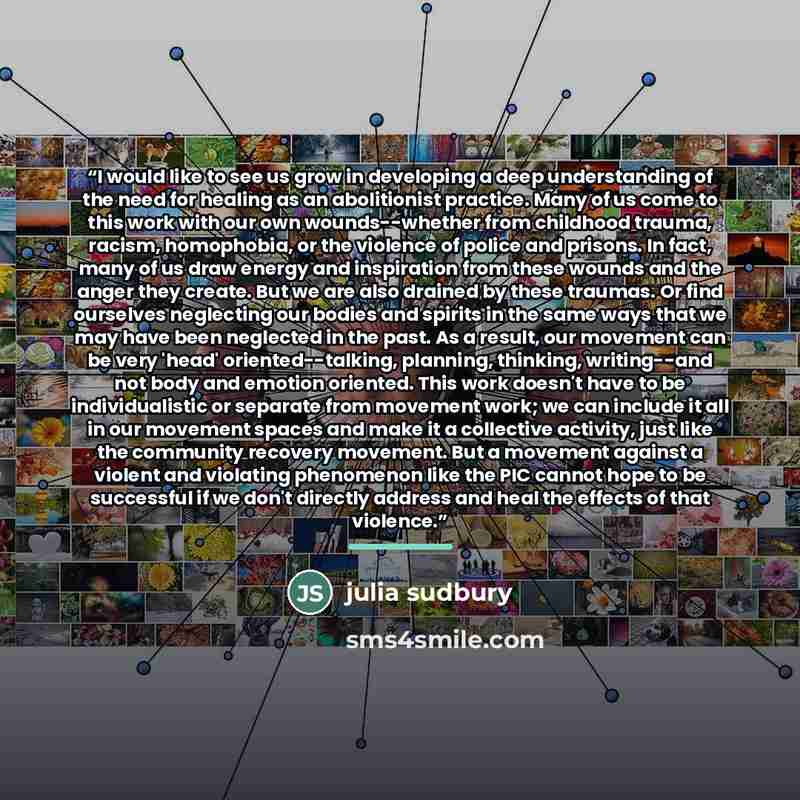
““I would like to see us grow in developing a deep understanding of the need for healing as an abolitionist practice. Many of us come to this work with our own wounds--whether from childhood trauma, racism, homophobia, or the violence of police and prisons. In fact, many of us draw energy and inspiration from these wounds and the anger they create. But we are also drained by these traumas. Or find ourselves neglecting our bodies and spirits in the same ways that we may have been neglected in the past. As a result, our movement can be very 'head' oriented--talking, planning, thinking, writing--and not body and emotion oriented. This work doesn't have to be individualistic or separate from movement work; we can include it all in our movement spaces and make it a collective activity, just like the community recovery movement. But a movement against a violent and violating phenomenon like the PIC cannot hope to be successful if we don't directly address and heal the effects of that violence.””
About This Quote
Sudbury argues that abolitionist work must include healing from personal and collective trauma. Activists' anger fuels their work but also drains them. Movements focused only on intellectual tasks neglect bodies and emotions. Healing should be collective and essential for opposing state violence.
In simple terms: Healing from trauma must be central to effective abolitionist activism.
Key Takeaway
Integrate collective healing into movement building and activism.
Themes
abolition
healing
trauma
activism
collective care
social justice
Mood
compassionate
determined
reflective
Type
argument
call to action
reflective
When to use this quote
- social justice organizing
- activist burnout
- prison abolition campaigns
- community recovery groups
- self-care in movements
Key Concepts
trauma-informed organizing
burnout prevention
collective recovery
Questions to Reflect On
- How can movement spaces prioritize healing?
- What would collective healing look like in your community?
A Different Perspective
Urgent systemic change might make healing-focused work seem slow, but neglecting it risks unsustainable activism.