Love Quote by John Donne

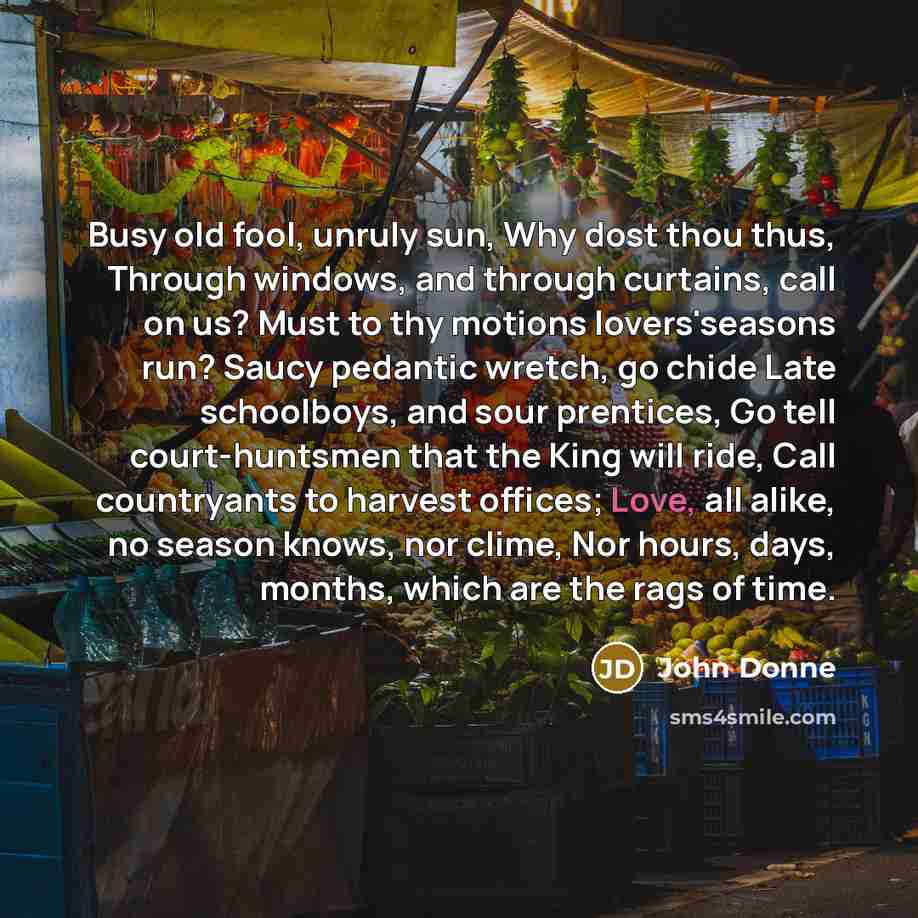
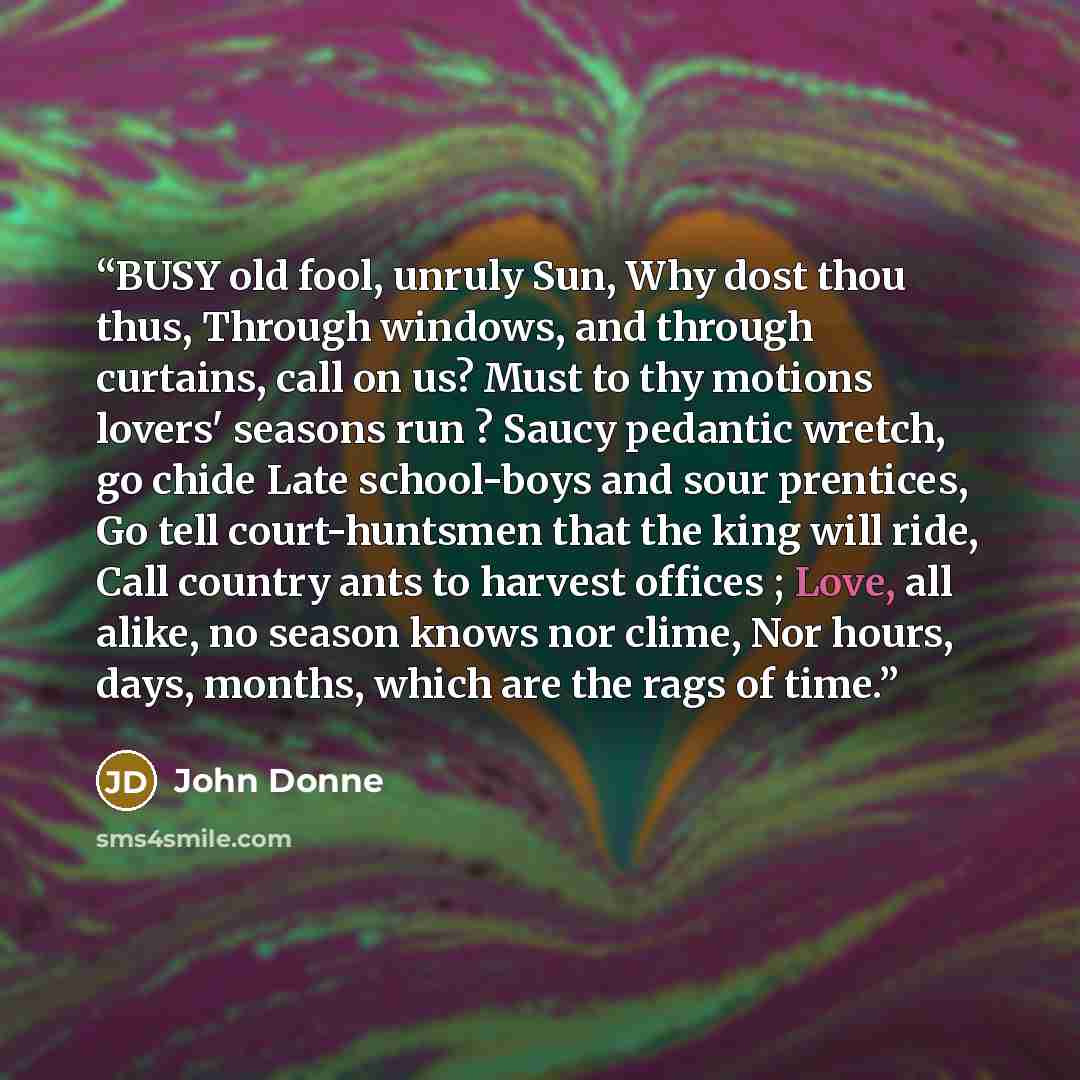
““Busie olde foole, unruly Sunne; Why dost thou thus, Through windowes, and through curtaines call on us? Must to they motions lovers seasons run? Sawcy pedantique wretch, goe chide Late schoole boyes, and sowre prentices, Goe tell Court-huntsmen, that the King will ride, Call countrey ands to harvest offices; Love, all alike, no season knows, nor clyme, Nor houres, dayes, months, which are the rags of time. Thy beames, so reverend, and strong Why shouldst thou thinke? I could eclipse and cloud them with a winke, But that I would not lose her sight so long: If her eyes have not blinded thine Looke, and tomorrow late, tell mee, Whether both the India's of spice and Myne Be where thou leftst them, or lie here with mee. Aske for those Kings whom thou saw'st yesterday, And thou shalt heare, All here in one bed lay. She'is all States, and all Princes, I, Nothing else is; Princes doe but play us; compar'd to this, All honor's mimique; All wealth alchimie, Thou sunne art halfe as happy'as wee, In that the world's contracted thus; Thine ages askes ease, and since thy duties bee To warme the world, that's done in warming us. Shine here to us, and thou art every where; This bed thy center is, these walls, thy spheare.””
About This Quote
Source Poem: “Busie olde foole…” (attributed to John Donne, early 17th century)
Explores the fleeting nature of time, love, and power, likening them to celestial movements and human folly.
In simple terms: Time and love are fleeting and powerful.
Key Takeaway
Reflect on life's transience.
Themes
love
time
power
human folly
celestial metaphor
Mood
contemplative
poetic
Type
literary
philosophical
When to use this quote
- Romantic relationships
- political ambition
- personal introspection
- artistic expression
Key Concepts
Ephemerality
impermanence
satire
Questions to Reflect On
- What does the poem suggest about the relationship between love and power?
- How does the celestial imagery shape our view of human concerns?
A Different Perspective
The poem’s dense archaic language may obscure meaning for modern readers.