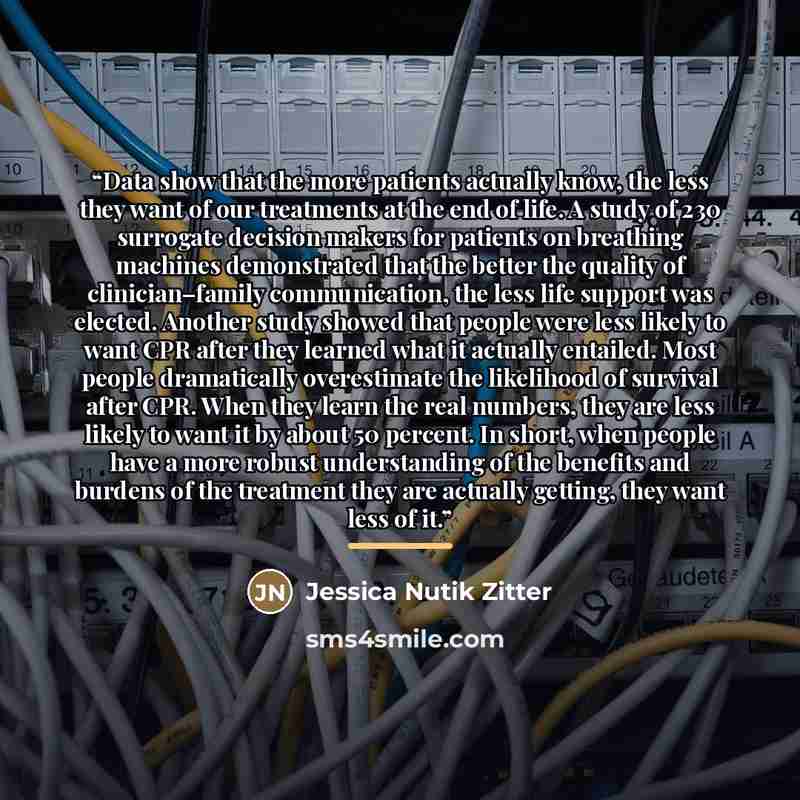
““Data show that the more patients actually know, the less they want of our treatments at the end of life. A study of 230 surrogate decision makers for patients on breathing machines demonstrated that the better the quality of clinician–family communication, the less life support was elected. Another study showed that people were less likely to want CPR after they learned what it actually entailed. Most people dramatically overestimate the likelihood of survival after CPR. When they learn the real numbers, they are less likely to want it by about 50 percent. In short, when people have a more robust understanding of the benefits and burdens of the treatment they are actually getting, they want less of it.””