Economic integration Quote by Jeffry A. Frieden
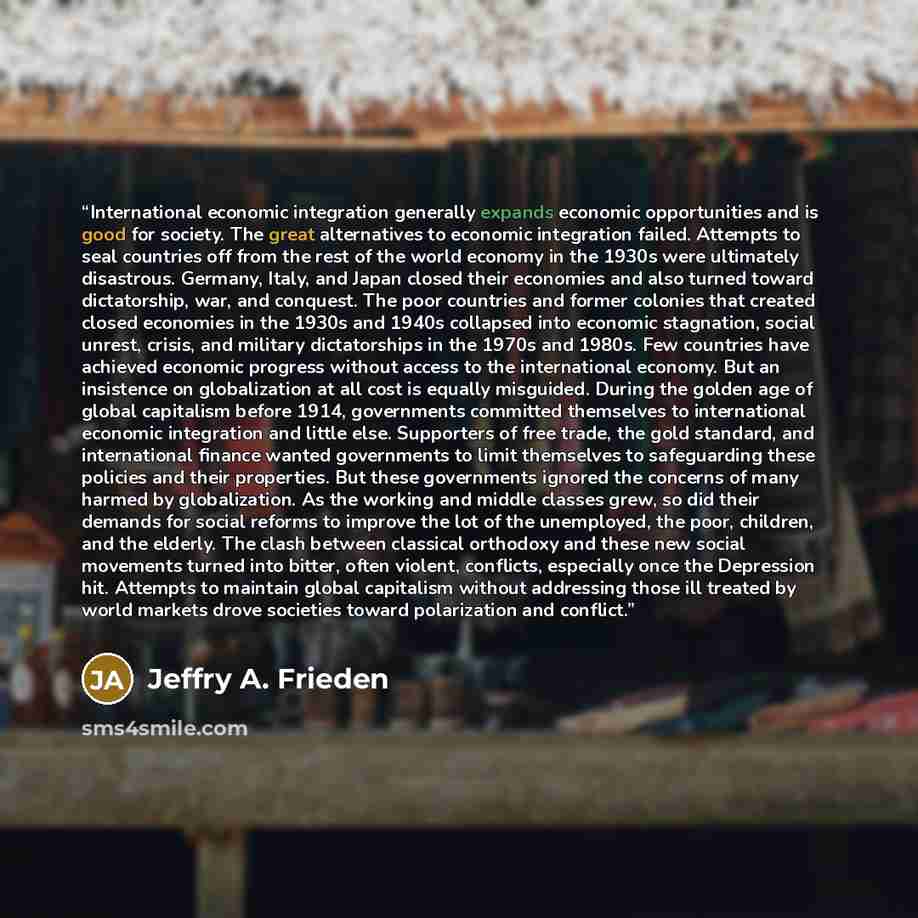
““International economic integration generally expands economic opportunities and is good for society. The great alternatives to economic integration failed. Attempts to seal countries off from the rest of the world economy in the 1930s were ultimately disastrous. Germany, Italy, and Japan closed their economies and also turned toward dictatorship, war, and conquest. The poor countries and former colonies that created closed economies in the 1930s and 1940s collapsed into economic stagnation, social unrest, crisis, and military dictatorships in the 1970s and 1980s. Few countries have achieved economic progress without access to the international economy. But an insistence on globalization at all cost is equally misguided. During the golden age of global capitalism before 1914, governments committed themselves to international economic integration and little else. Supporters of free trade, the gold standard, and international finance wanted governments to limit themselves to safeguarding these policies and their properties. But these governments ignored the concerns of many harmed by globalization. As the working and middle classes grew, so did their demands for social reforms to improve the lot of the unemployed, the poor, children, and the elderly. The clash between classical orthodoxy and these new social movements turned into bitter, often violent, conflicts, especially once the Depression hit. Attempts to maintain global capitalism without addressing those ill treated by world markets drove societies toward polarization and conflict.””
About This Quote
Source Book: Global Capitalism: Its Fall and Rise in the Twenty-First Century, 2015
Economic integration fuels growth and stability, while forced isolation leads to stagnation, conflict, and authoritarianism; unchecked globalization without social safeguards also breeds division.
In simple terms: Open economies boost prosperity; closed ones cause decline; both extremes need balance.
Key Takeaway
Pursue open trade while protecting vulnerable groups.
Themes
globalization
trade
economic policy
social equity
political risk
Mood
cautious
analytical
concerned
Type
analytical
policy
historical
When to use this quote
- policy making
- development strategy
- labor negotiations
- social welfare planning
- conflict prevention
Key Concepts
comparative advantage
institutional design
social safety nets
political economy
Questions to Reflect On
- How can societies balance open markets with social protection?
- What policies prevent the rise of authoritarianism in globalized economies?
A Different Perspective
Overemphasis on market forces can ignore social costs and fuel backlash.