Men and women Quote by James Duane
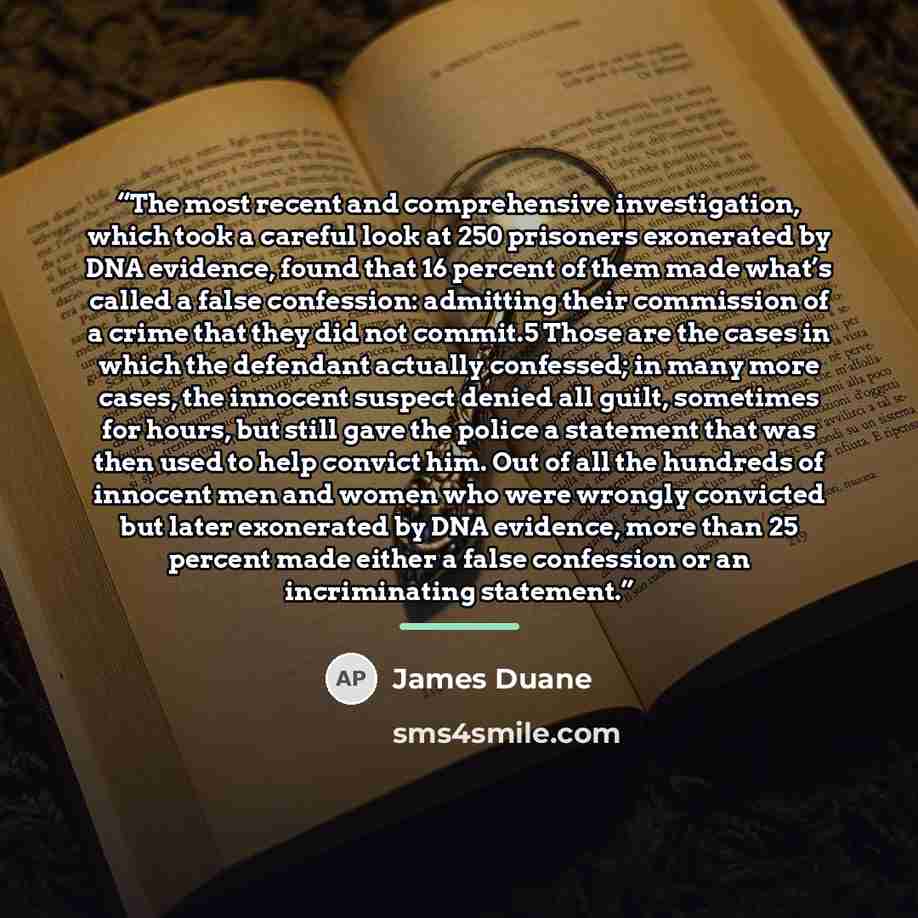
““The most recent and comprehensive investigation, which took a careful look at 250 prisoners exonerated by DNA evidence, found that 16 percent of them made what’s called a false confession: admitting their commission of a crime that they did not commit.5 Those are the cases in which the defendant actually confessed; in many more cases, the innocent suspect denied all guilt, sometimes for hours, but still gave the police a statement that was then used to help convict him. Out of all the hundreds of innocent men and women who were wrongly convicted but later exonerated by DNA evidence, more than 25 percent made either a false confession or an incriminating statement.””
About This Quote
Studies show a significant portion of DNA‑exonerated individuals had made false confessions or incriminating statements, highlighting flaws in interrogation practices.
In simple terms: Many exonerated people confessed falsely.
Key Takeaway
Improve interrogation methods to prevent false confessions.
Themes
justice
law
psychology
Mood
critical
concerned
Type
legal
psychological
When to use this quote
- police training
- legal reform
- jury deliberations
Key Concepts
false confessions
interrogation techniques
DNA exoneration
Questions to Reflect On
- What pressures lead innocent people to confess?
- How can safeguards be implemented?
A Different Perspective
False confessions can arise from coercion or misunderstanding.