Environmental destruction Quote by Jacob Tobia
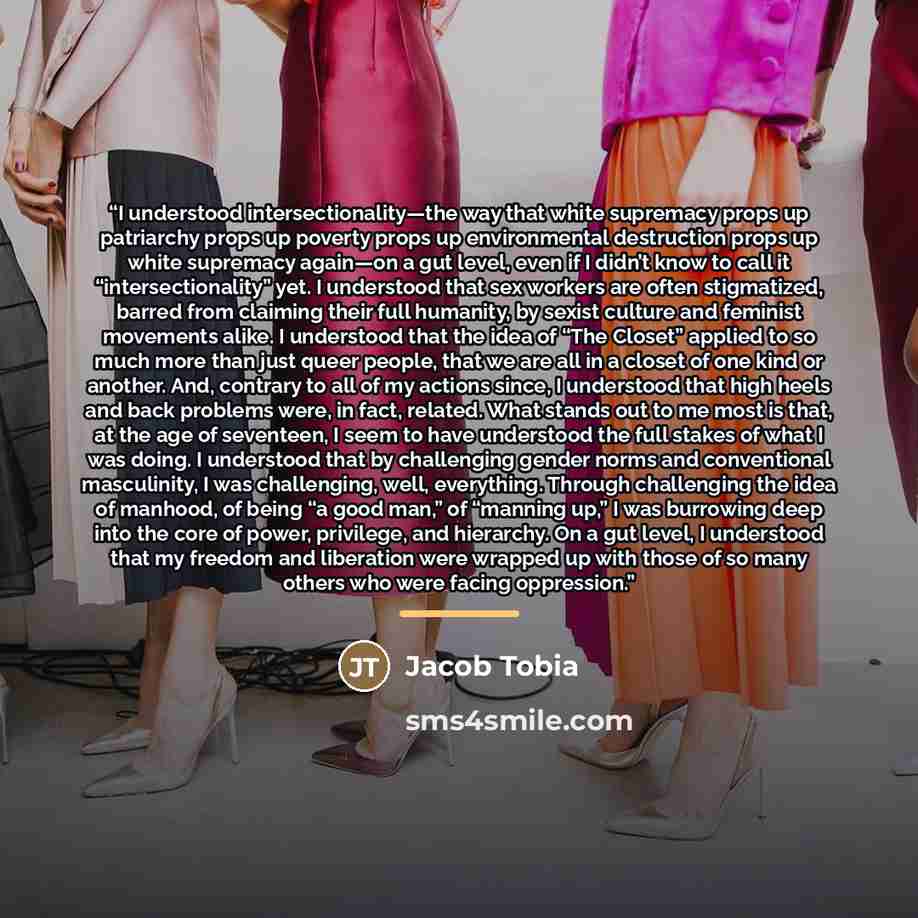
““I understood intersectionality—the way that white supremacy props up patriarchy props up poverty props up environmental destruction props up white supremacy again—on a gut level, even if I didn’t know to call it “intersectionality” yet. I understood that sex workers are often stigmatized, barred from claiming their full humanity, by sexist culture and feminist movements alike. I understood that the idea of “The Closet” applied to so much more than just queer people, that we are all in a closet of one kind or another. And, contrary to all of my actions since, I understood that high heels and back problems were, in fact, related. What stands out to me most is that, at the age of seventeen, I seem to have understood the full stakes of what I was doing. I understood that by challenging gender norms and conventional masculinity, I was challenging, well, everything. Through challenging the idea of manhood, of being “a good man,” of “manning up,” I was burrowing deep into the core of power, privilege, and hierarchy. On a gut level, I understood that my freedom and liberation were wrapped up with those of so many others who were facing oppression.””
About This Quote
The speaker perceives how interlocking systems of oppression—racism, patriarchy, poverty, environmental harm—reinforce each other, and how personal actions against gender norms challenge the entire power structure.
In simple terms: Interconnected oppression and personal resistance.
Key Takeaway
Personal liberation is tied to collective emancipation.
Themes
intersectionality
power structures
gender norms
social justice
environmentalism
privilege
Mood
defiant
reflective
hopeful
Type
personal narrative
theoretical insight
When to use this quote
- activism in youth
- challenging gender expectations
- advocating for sex workers
- environmental advocacy
- addressing economic inequality
Key Concepts
systems of oppression
identity politics
masculinity
solidarity
Practical Applications
- intersectional analysis
- community organizing
Questions to Reflect On
- How does confronting one form of oppression affect others?
- What does it mean to see personal freedom as collective?