Gonzo journalism Quote by Hunter S. Thompson
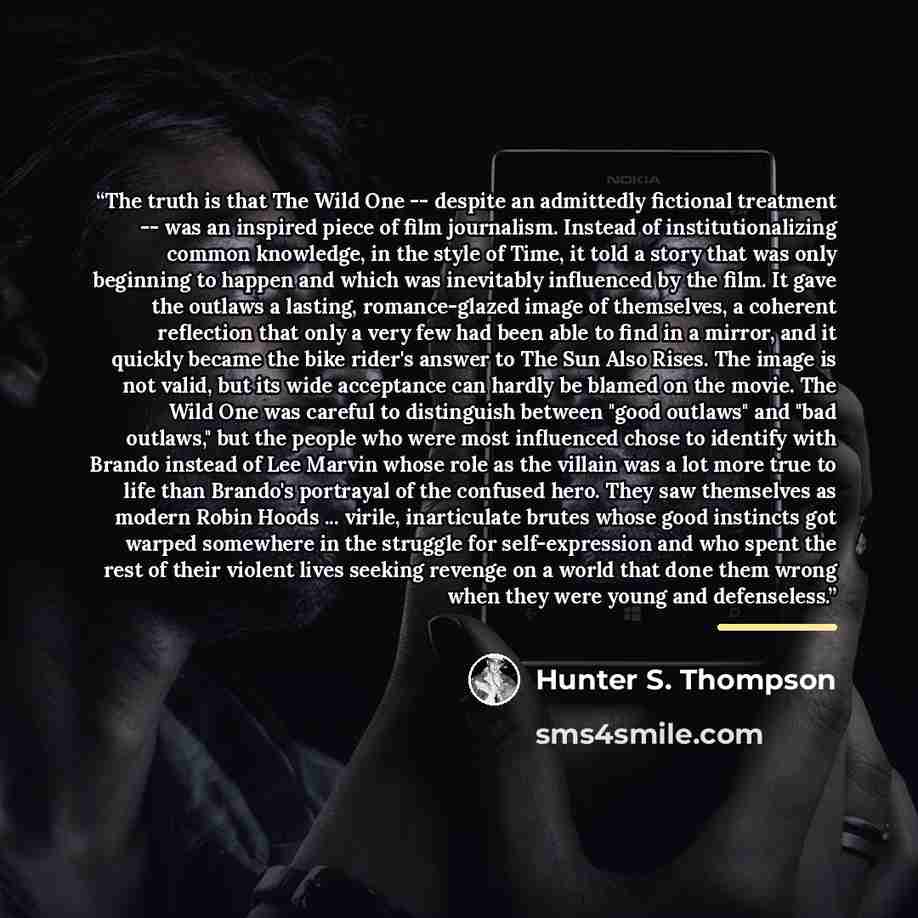
““The truth is that The Wild One -- despite an admittedly fictional treatment -- was an inspired piece of film journalism. Instead of institutionalizing common knowledge, in the style of Time, it told a story that was only beginning to happen and which was inevitably influenced by the film. It gave the outlaws a lasting, romance-glazed image of themselves, a coherent reflection that only a very few had been able to find in a mirror, and it quickly became the bike rider's answer to The Sun Also Rises. The image is not valid, but its wide acceptance can hardly be blamed on the movie. The Wild One was careful to distinguish between "good outlaws" and "bad outlaws," but the people who were most influenced chose to identify with Brando instead of Lee Marvin whose role as the villain was a lot more true to life than Brando's portrayal of the confused hero. They saw themselves as modern Robin Hoods ... virile, inarticulate brutes whose good instincts got warped somewhere in the struggle for self-expression and who spent the rest of their violent lives seeking revenge on a world that done them wrong when they were young and defenseless.””
About This Quote
Source Film: The Wild One (1953) directed by László Benedek
The film mythologized biker culture, shaping a romantic outlaw image that diverged from reality and influenced self‑identity among riders.
In simple terms: The movie created a lasting, romanticized biker image that affected how riders saw themselves.
Key Takeaway
Recognize media’s power to shape identity and question stereotypes.
Themes
culture
identity
media influence
mythmaking
rebellion
Mood
reflective
critical
nostalgic
Type
cultural critique
observational
When to use this quote
- biker subculture
- youth rebellion
- media analysis
- film criticism
- personal identity formation
Key Concepts
heroic outlaw myth
media framing
social identity theory
Questions to Reflect On
- How does media mythmaking affect personal identity?
- Can we separate myth from reality?
A Different Perspective
The film also reinforced harmful stereotypes and glorified violence.





![“[Ken] Kesey practices what has come to be known as gonzo journalism. The reporter, often intoxicated, fails to get the story but delivers instead a stylishly bizarre account that mocks conventional journalism.” quote by R Z Sheppard](https://sms4smile.com/quotes/img-quotes/f6f/r-z-sheppard-69645_gonzo_ken-kesey-practices-what-has-come-to-be_149552.jpg)