Acknowledge Quote by Haroon Moghul
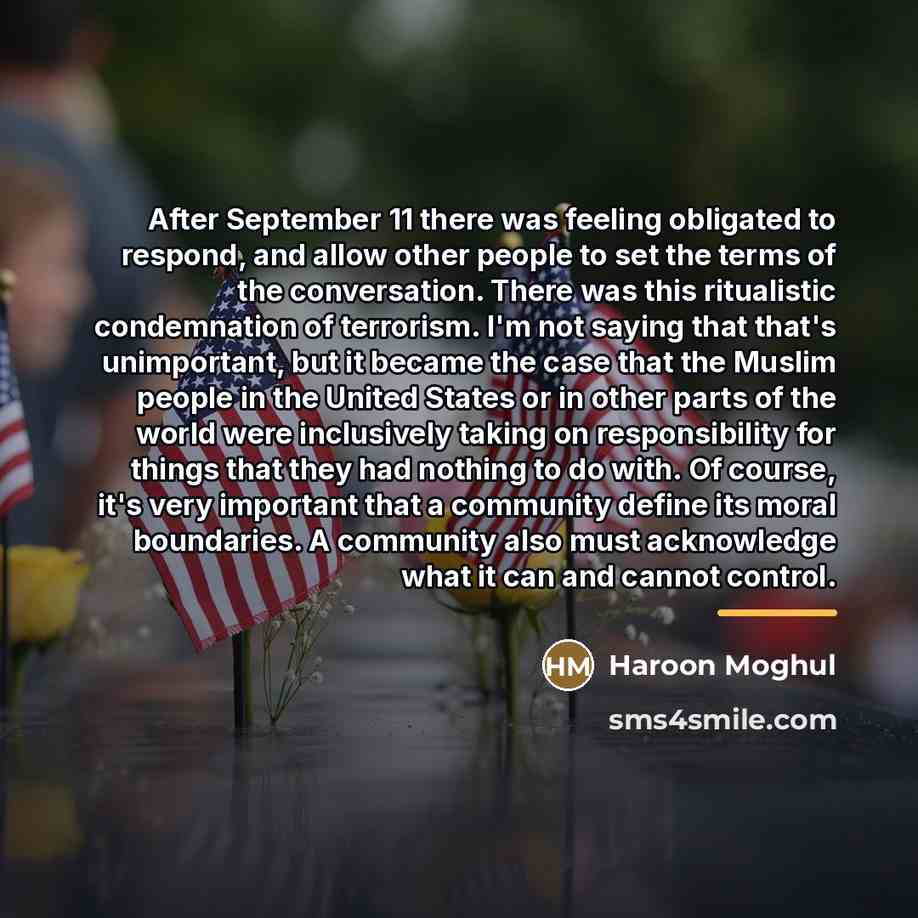
“After September 11 there was feeling obligated to respond, and allow other people to set the terms of the conversation. There was this ritualistic condemnation of terrorism. I'm not saying that that's unimportant, but it became the case that the Muslim people in the United States or in other parts of the world were inclusively taking on responsibility for things that they had nothing to do with. Of course, it's very important that a community define its moral boundaries. A community also must acknowledge what it can and cannot control.”
About This Quote
Source Speech: Post‑9/11 Community Dialogue, 2002
Public discourse often shifts blame onto minority groups, creating unfair moral expectations.
In simple terms: Minorities unfairly blamed for unrelated events.
Key Takeaway
Recognize and challenge collective scapegoating.
Themes
identity
responsibility
media
social dynamics
Mood
reflective
critical
Type
analytical
commentary
When to use this quote
- political commentary
- community activism
- media analysis
Key Concepts
scapegoating
collective guilt
boundary setting
Questions to Reflect On
- How does scapegoating affect social cohesion?
- What responsibilities do majority groups have?
A Different Perspective
Blame can be a tool for control, not truth.