Active Quote by David Hume
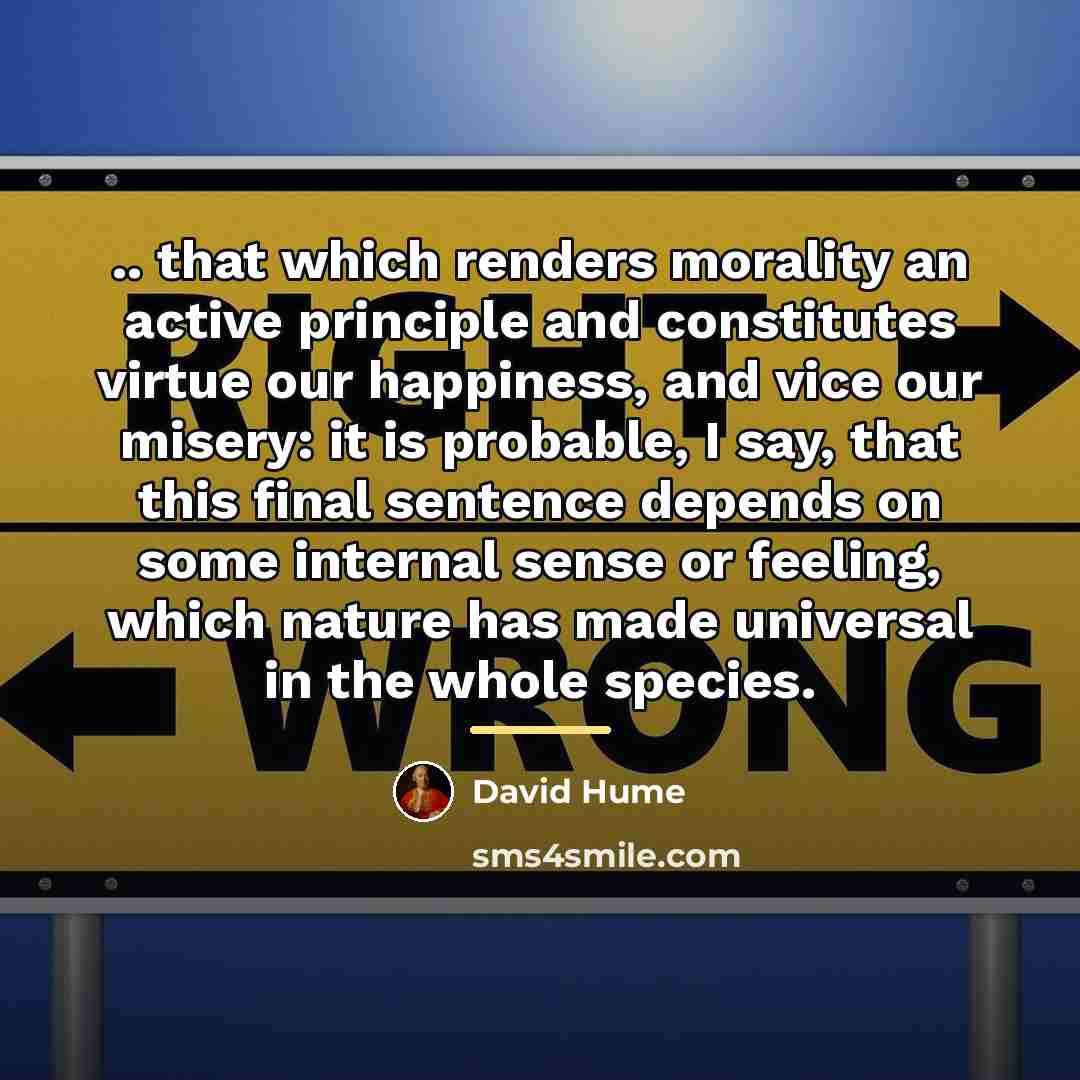
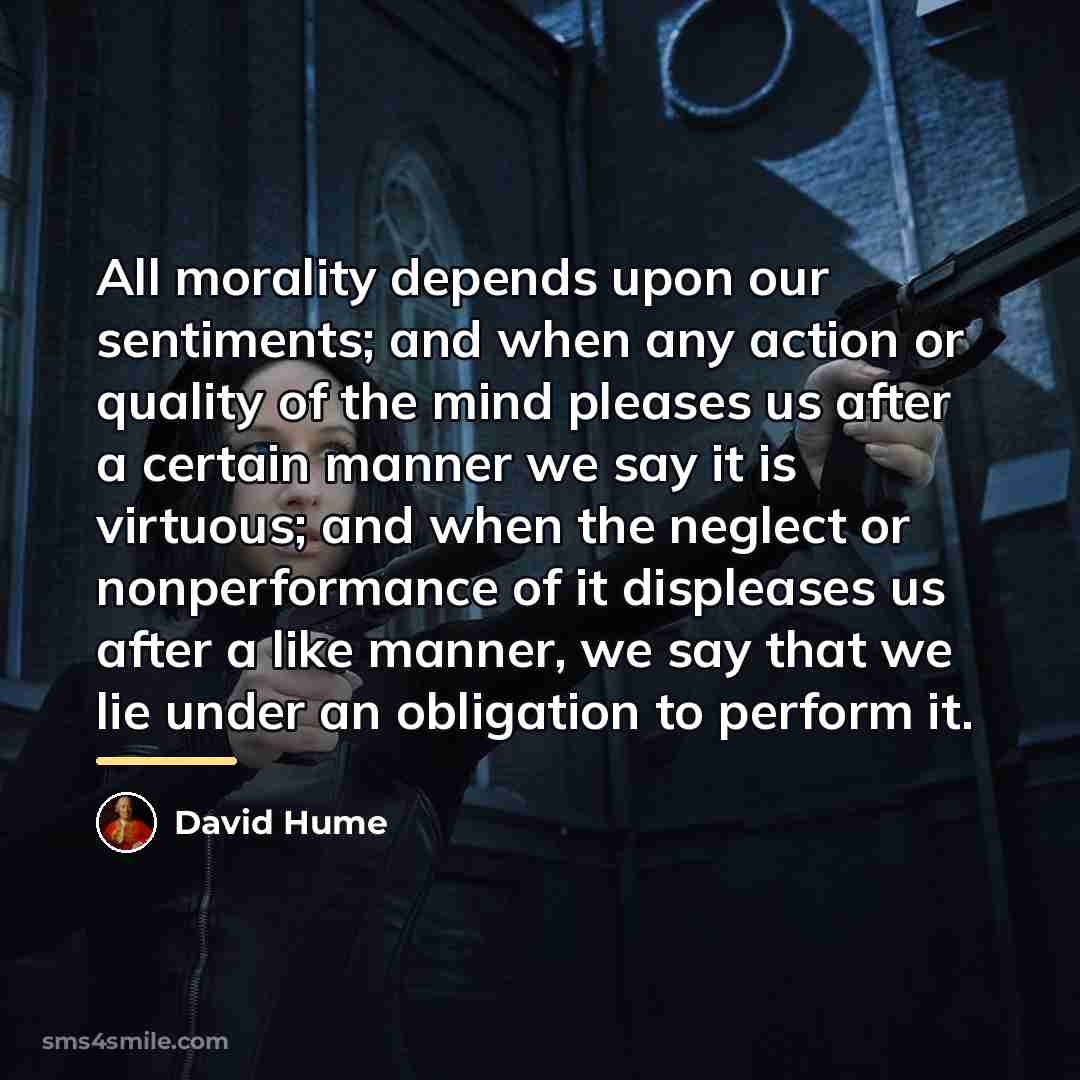
“.. that which renders morality an active principle and constitutes virtue our happiness, and vice our misery: it is probable, I say, that this final sentence depends on some internal sense or feeling, which nature has made universal in the whole species.”
About This Quote
Source Book: A Treatise of Human Nature, 1739
Morality stems from innate feelings that guide happiness and misery, suggesting universal emotional basis for virtue.
In simple terms: Morality comes from shared feelings that affect happiness.
Key Takeaway
Recognize shared feelings in moral judgments.
Themes
morality
virtue
human nature
Mood
thoughtful
analytical
Type
philosophical
ethical
When to use this quote
- ethical debates
- education
- conflict resolution
Key Concepts
philosophy
ethics
psychology
Questions to Reflect On
- Do shared feelings truly guide all moral choices?
- How do cultural differences affect this view?
A Different Perspective
Complexity of universal feelings may be oversimplified.
![“The order of nature [is] that individual happiness shall be inseparable from the practice of virtue.” quote by Thomas Jefferson](https://sms4smile.com/quotes/img-quotes/b81/thomas-jefferson-43_character_the-order-of-nature-is-that-individual-h_1022487.jpg)
![“The actions from which [virtue] was produced are also those in which it is exercised.” quote by Aristotle](https://sms4smile.com/quotes/img-quotes/4d5/aristotle-78_character_the-actions-from-which-virtue-was-produc_1500158.jpg)