To hate, to love, to think, to feel, to see; all this is nothing but to perceive. — David Hume Copy Share Image
It is a certain rule that wit and passion are entirely incompatible. When the affections are moved, there is no place for… — David Hume Copy Share Image
Jealousy is a painful passion; yet without some share of it, the agreeable affection of love has difficulty to subsist in its… — David Hume Copy Share Image
Curiosity, or the love of knowledge, has a very limited influence, and requires youth, leisure education, genius and example to make it… — David Hume Copy Share Image
“The virtues of valor and love of liberty; the only virtues which can have place among an uncivilized people, where justice and… — David Hume Copy Share Image
The feelings of our heart, the agitation of our passions, the vehemence of our affections, dissipate all its conclusions, and reduce the… — David Hume Copy Share Image
A delicacy of taste is favorable to love and friendship, by confining our choice to few people, and making us indifferent to… — David Hume Copy Share Image
Almost every one has a predominant inclination, to which his other desires and affections submit, and which governs him, though perhaps with… — David Hume Copy Share Image
It is with books as with women, where a certain plainness of manner and of dress is more engaging than that glare… — David Hume Copy Share Image
Eloquence, at its highest pitch, leaves little room for reason or reflection, but addresses itself entirely to the desires and affections, captivating… — David Hume Copy Share Image
There is nothing, in itself, valuable or despicable, desirable or hateful, beautiful or deformed; but that these attributes arise from the particular… — David Hume Copy Share Image
When we reflect on our past sentiments and affections, our thought is a faithful mirror, and copies its objects truly; but the… — David Hume Copy Share Image
The great charm of poetry consists in lively pictures of the sublime passions, magnanimity, courage, disdain of fortune; or thoseof the tender… — David Hume Copy Share Image
Riches are valuable at all times, and to all men, because they always purchase pleasures such as men are accustomed to and… — David Hume Copy Share Image
“One that has well digested his knowledge both of books and men, has little enjoyment but in the company of a few… — David Hume Copy Share Image
And as this is the obvious appearance of things, it must be admitted, till some hypothesis be discovered, which by penetrating deeper… — David Hume Copy Share Image
But the most common species of love is that which first arises from beauty, and afterwards diffuses itself into kindness and into… — David Hume Copy Share Image
Reason, in a strict sense, as meaning the judgment of truth and falsehood, can never, of itself, be any motive to the… — David Hume Copy Share Image
“It is indeed a mortifying reflection to those who are actuated by the love of fame, so justly denominated the last infirmity… — David Hume Copy Share Image
“For my part, when I enter most intimately into what I call myself, I always stumble on some particular perception or other,… — David Hume Copy Share Image
Nothing more powerfully excites any affection than to conceal some part of its object, by throwing it into a kind of shade,… — David Hume Copy Share Image
Friendship is a calm and sedate affection, conducted by reason and cemented by habit; springing from long acquaintance and mutual obligations, without… — David Hume Copy Share Image
For my part, when I enter most intimately into what I call myself, I always stumble on some particular perception or other,… — David Hume Copy Share Image
Vanity is so closely allied to virtue, and to love the fame of laudable actions approaches so near the love of laudable… — David Hume Copy Share Image
“It is impossible for us to think of any thing, which we have not antecedently felt, either by our external or internal senses.” — David Hume Copy Share Image
All morality depends upon our sentiments; and when any action or quality of the mind pleases us after a certain manner we say it… — David Hume Copy Share Image
And indeed nothing but the most determined scepticism, along with a great degree of indolence, can justify this aversion to metaphysics. For if truth… — David Hume Copy Share Image
...virtue is attended by more peace of mind than vice, and meets with a more favourable reception from the world. I am sensible, that,… — David Hume Copy Share Image
That the sun will not rise tomorrow is no less intelligible a proposition, and implies no more contradiction, than the affirmation, that it will… — David Hume Copy Share Image
We may conclude, therefore, that, in order to establish laws for the regulation of property, we must be acquainted with the nature and situation… — David Hume Copy Share Image
The observation of human blindness and weakness is the result of all philosophy, and meets us at every turn, in spite of our endeavours… — David Hume Copy Share Image
The religious hypothesis, therefore, must be considered only as a particular method of accounting for the visible phenomena of the universe: but no just… — David Hume Copy Share Image
Manufacturers...gradually shift their places, leaving those countries and provinces which they have already enriched, and flying to others, whether they are allured by the… — David Hume Copy Share Image
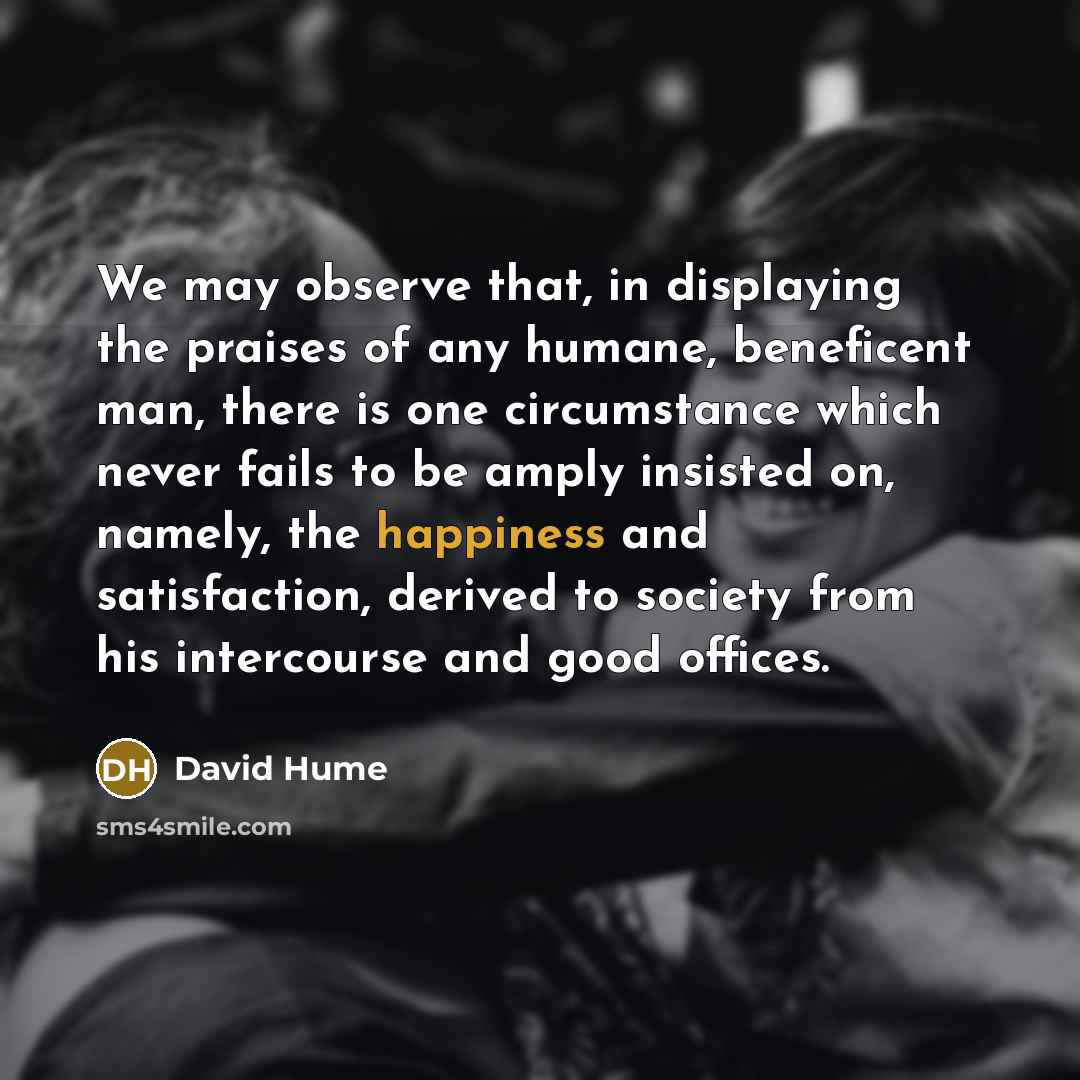
We may observe that, in displaying the praises of any humane, beneficent man, there is one circumstance which never fails to be amply insisted… — David Hume Copy Share Image
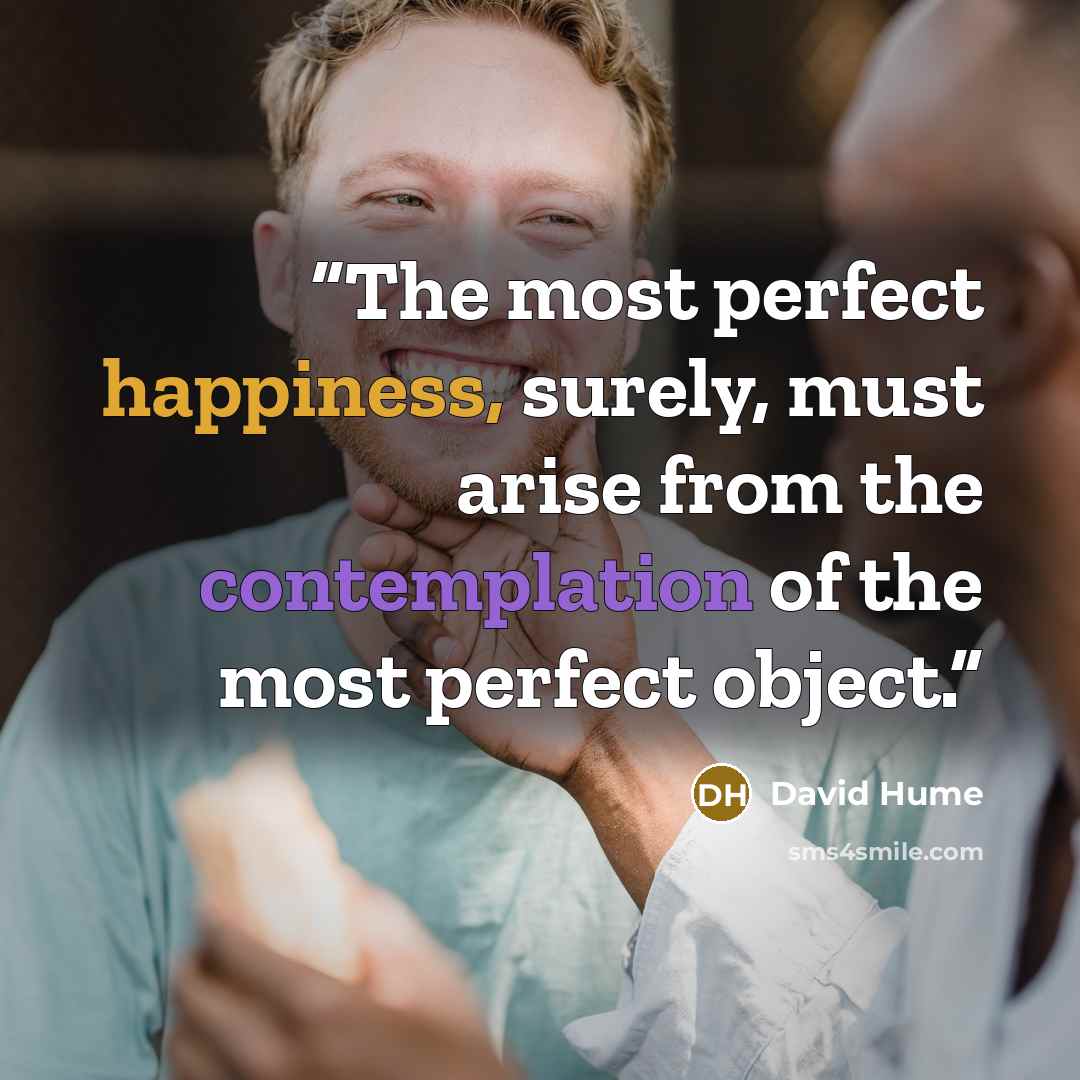
“The most perfect happiness, surely, must arise from the contemplation of the most perfect object.” — David Hume Copy Share Image