Abstract Quote by David Hume
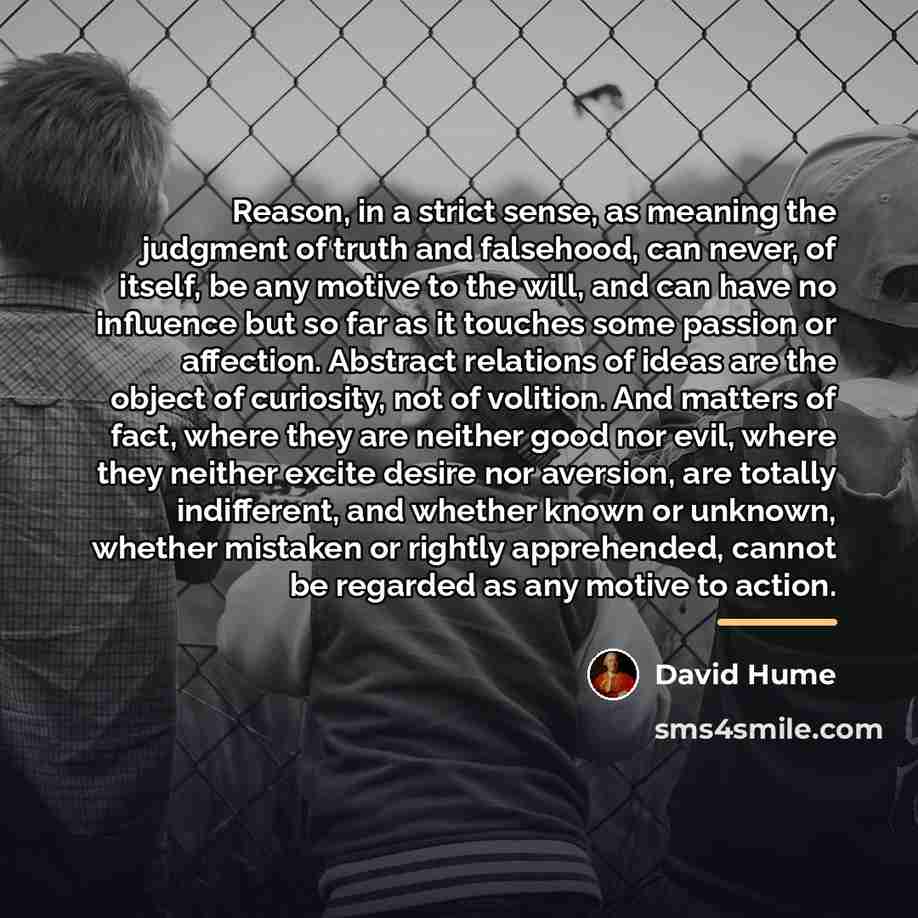
“Reason, in a strict sense, as meaning the judgment of truth and falsehood, can never, of itself, be any motive to the will, and can have no influence but so far as it touches some passion or affection. Abstract relations of ideas are the object of curiosity, not of volition. And matters of fact, where they are neither good nor evil, where they neither excite desire nor aversion, are totally indifferent, and whether known or unknown, whether mistaken or rightly apprehended, cannot be regarded as any motive to action.”
About This Quote
Source Essay: An Enquiry Concerning Human Understanding, David Hume, 1748
Reason alone cannot drive action; motives arise from passions, while facts without emotional charge are indifferent to will.
In simple terms: Reason needs passion to move us; facts alone don’t motivate.
Key Takeaway
Recognize the role of emotion in decision‑making.
Themes
epistemology
motivation
philosophy
human nature
Mood
analytical
contemplative
Type
philosophical
inspirational
When to use this quote
- personal goals
- political persuasion
- marketing strategies
- ethical debates
- conflict resolution
Key Concepts
Passion
desire
volition
cognitive bias
emotional influence
Questions to Reflect On
- What passions drive your major decisions?
- Can facts ever inspire action without emotional context?
A Different Perspective
Rational arguments may fail without emotional relevance.