Able Quote by Charles Bradlaugh
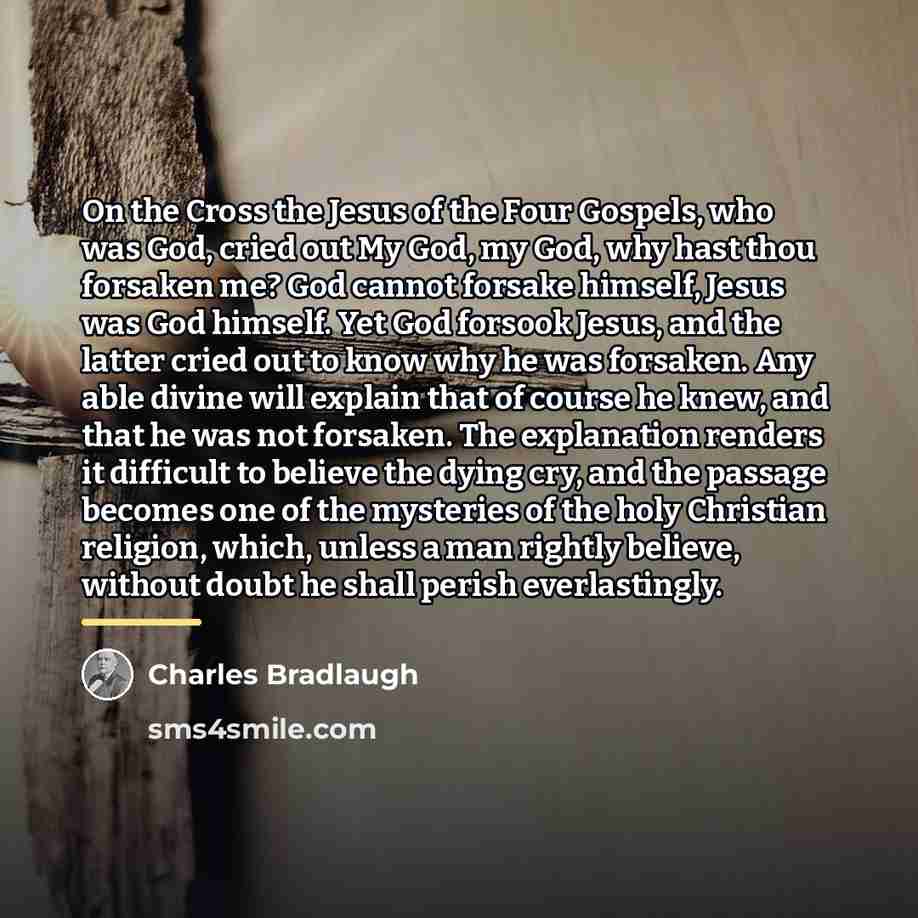
“On the Cross the Jesus of the Four Gospels, who was God, cried out My God, my God, why hast thou forsaken me? God cannot forsake himself, Jesus was God himself. Yet God forsook Jesus, and the latter cried out to know why he was forsaken. Any able divine will explain that of course he knew, and that he was not forsaken. The explanation renders it difficult to believe the dying cry, and the passage becomes one of the mysteries of the holy Christian religion, which, unless a man rightly believe, without doubt he shall perish everlastingly.”
About This Quote
Source Bible: Gospel of Mark, Chapter 15, Verse 34
A theological paradox about divine abandonment and human suffering, questioning how God can be both present and absent in Jesus' crucifixion.
In simple terms: Jesus' cry raises questions about divine presence in suffering.
Key Takeaway
Reflect on the mystery of divine suffering.
Themes
theology
suffering
faith
Mood
contemplative
somber
Type
theological
philosophical
When to use this quote
- personal loss
- spiritual crisis
- religious study
- pastoral counseling
Key Concepts
Divine paradox
Christology
theodicy
Questions to Reflect On
- How does this passage shape your view of divine love?
- Can suffering coexist with divine omnipotence?
A Different Perspective
The interpretation may conflict with traditional doctrines of omnipotence.