Christianity Quote by C.S. Lewis
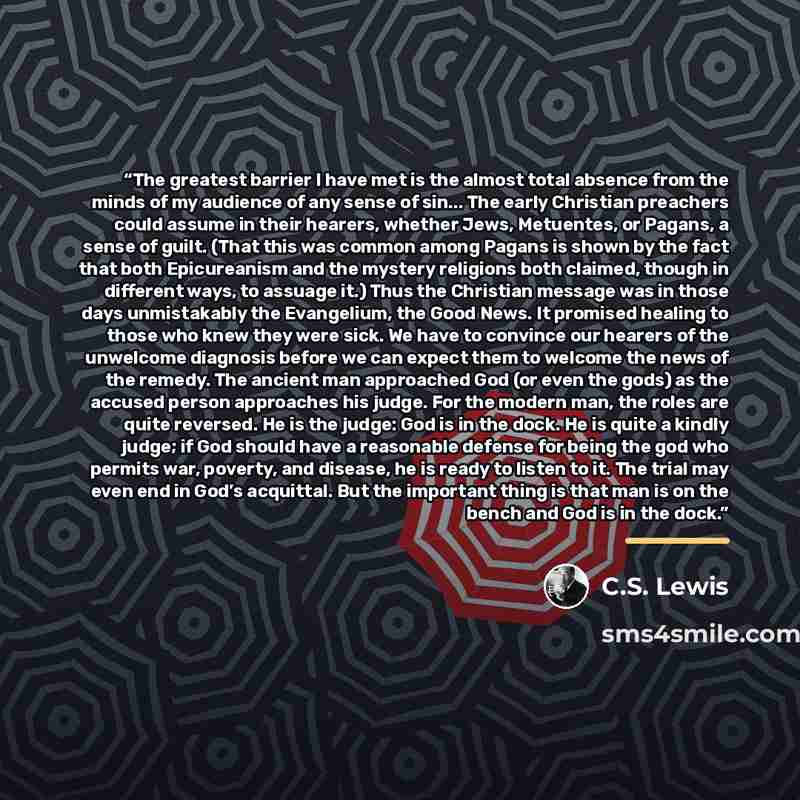
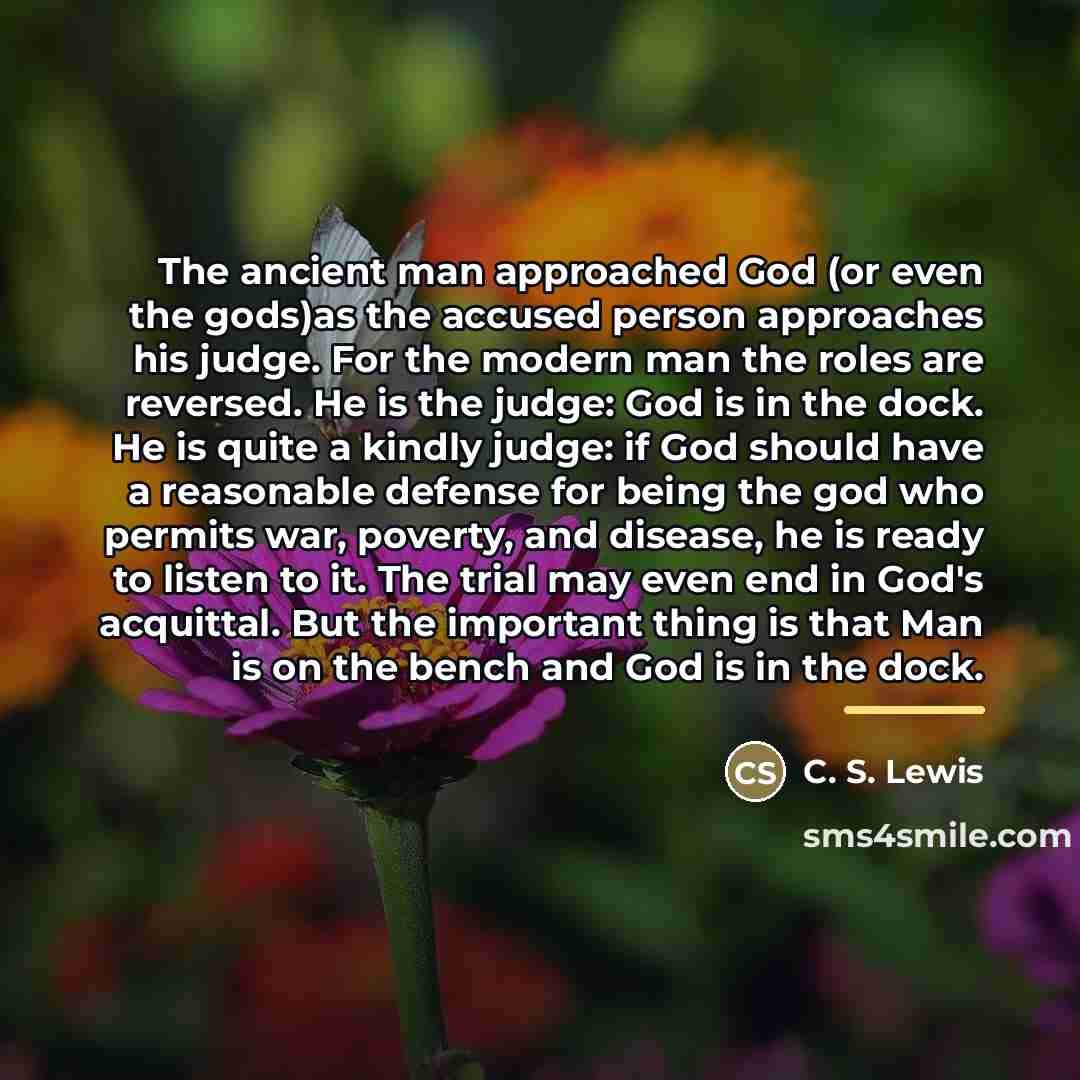
““The greatest barrier I have met is the almost total absence from the minds of my audience of any sense of sin... The early Christian preachers could assume in their hearers, whether Jews, Metuentes, or Pagans, a sense of guilt. (That this was common among Pagans is shown by the fact that both Epicureanism and the mystery religions both claimed, though in different ways, to assuage it.) Thus the Christian message was in those days unmistakably the Evangelium, the Good News. It promised healing to those who knew they were sick. We have to convince our hearers of the unwelcome diagnosis before we can expect them to welcome the news of the remedy. The ancient man approached God (or even the gods) as the accused person approaches his judge. For the modern man, the roles are quite reversed. He is the judge: God is in the dock. He is quite a kindly judge; if God should have a reasonable defense for being the god who permits war, poverty, and disease, he is ready to listen to it. The trial may even end in God’s acquittal. But the important thing is that man is on the bench and God is in the dock.””
About This Quote
Source Book: The Screwtape Letters by C.S. Lewis, 1942
Human perception of guilt shapes how messages are received; without a sense of sin, the Christian claim of healing lacks impact.
In simple terms: Without feeling guilty, people ignore moral messages.
Key Takeaway
Recognize audience assumptions before presenting ideas.
Themes
theology
persuasion
human nature
guilt
communication
Mood
reflective
critical
Type
theoretical
philosophical
When to use this quote
- preaching
- public speaking
- interfaith dialogue
- ethical counseling
Key Concepts
Moral psychology
cultural context
rhetoric
Questions to Reflect On
- How does your audience view responsibility?
- Can you frame your message without relying on guilt?
A Different Perspective
Modern audiences may reject guilt, making moral appeals less effective.