Body temperature Quote by Bruce M. Carruthers
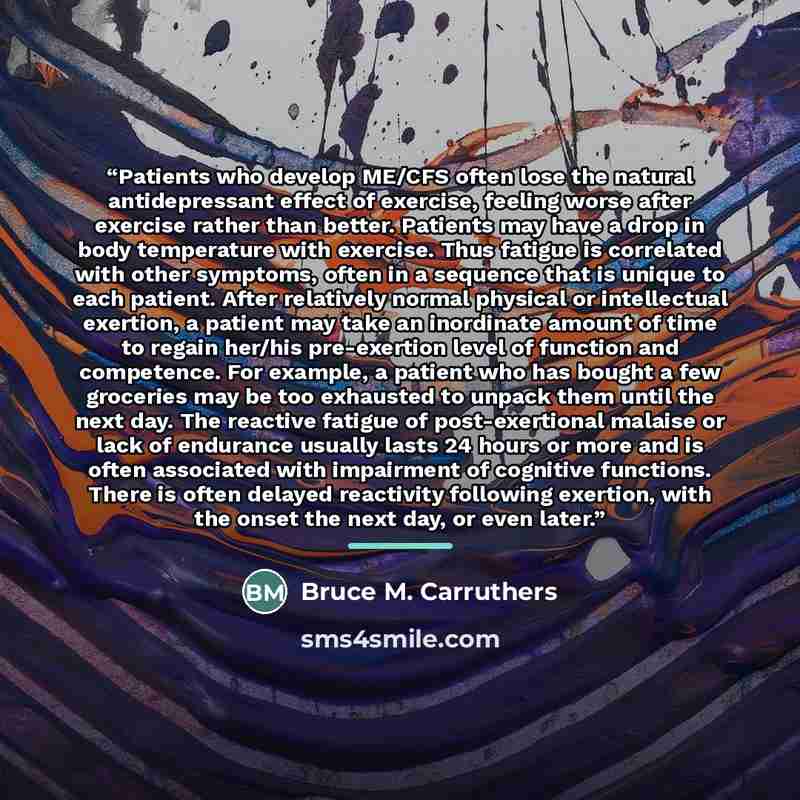
““Patients who develop ME/CFS often lose the natural antidepressant effect of exercise, feeling worse after exercise rather than better. Patients may have a drop in body temperature with exercise. Thus fatigue is correlated with other symptoms, often in a sequence that is unique to each patient. After relatively normal physical or intellectual exertion, a patient may take an inordinate amount of time to regain her/his pre-exertion level of function and competence. For example, a patient who has bought a few groceries may be too exhausted to unpack them until the next day. The reactive fatigue of post-exertional malaise or lack of endurance usually lasts 24 hours or more and is often associated with impairment of cognitive functions. There is often delayed reactivity following exertion, with the onset the next day, or even later.””
About This Quote
Source Article: Post‑Exertional Malaise in ME/CFS, Journal of Clinical Medicine, 2020
Exercise can trigger prolonged fatigue and cognitive decline in ME/CFS patients, often lasting a day or more, with each individual showing a unique symptom pattern.
In simple terms: Exercise may worsen fatigue and mind function for many ME/CFS patients.
Key Takeaway
Recognize and manage activity levels to avoid post‑exertional crashes.
Themes
health
chronic illness
fatigue
exercise
cognitive function
Mood
frustrated
hopeful
reflective
Type
clinical
educational
When to use this quote
- daily chores
- work tasks
- social activities
- exercise routines
- mental work
Key Concepts
post‑exertional malaise
autonomic dysregulation
energy envelope
Questions to Reflect On
- How can patients identify their personal activity limits?
- What strategies help restore function after a crash?
A Different Perspective
Recovery may be delayed beyond 24 hours, making pacing essential.