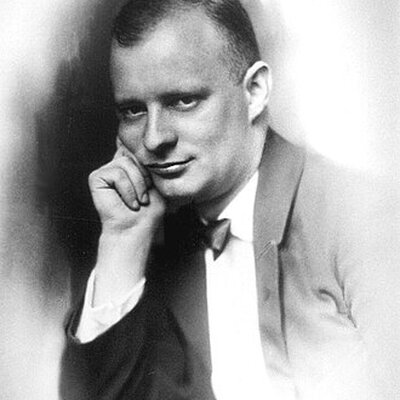
Quick Facts About Paul Hindemith
- Born
- November 16, 1895
- Died
- December 28, 1963
- Nationality
- Germany
- Profession
- Classical Composer
- Notable works
- Unterweisung im Tonsatz
- Known for
- Konzertmusik, Op. 41, Der Schwanendreher, String Quartet No. 2, Symphony in B-flat for Band
- Spouse
- Johanna Gertrud Hindemith
About Paul Hindemith
Paul Hindemith was a German and American composer, music theorist, teacher, violist, and conductor. He founded the Amar Quartet in 1921, touring extensively in Europe. As a composer, he became a major advocate of the Neue Sachlichkeit style of music in the 1920s, with compositions such as Kammermusik, including works with viola and viola d'amore as solo instruments in a neo-Bachian spirit. His other notable compositions include the song cycle Das Marienleben (1923), the oratorio Das Unaufhörliche (1931), Der Schwanendreher for viola and orchestra (1935), the opera Mathis der Maler (1938), and the symphony Mathis der Maler (1934), the Symphonic Metamorphosis of Themes by Carl Maria von Weber (1943), and the oratorio When Lilacs Last in the Dooryard Bloom'd (1946), a requiem based on Walt Whitman's poem. Hindemith and his wife emigrated to Switzerland and the United States ahead of World War II, after worsening difficulties with the Nazi German regime. In his later years, he conducted and recorded much of his own music.
Biography source:
Wikipedia
Awards & Honors
Pour le Mérite
Balzan Prize
Bach Prize of the Free and Hanseatic City of Hamburg
Berliner Kunstpreis
Goethe Plaque of the City of Frankfurt
Wihuri Sibelius Prize
Pour le Mérite for Sciences and Arts order
Honorary doctor of the Free University of Berlin
Show 3 more awards
Honorary doctor of the University of Oxford
honorary doctorate of the Johann Wolfgang Goethe University Frankfurt
Honorary Member of the International Society for Contemporary Music