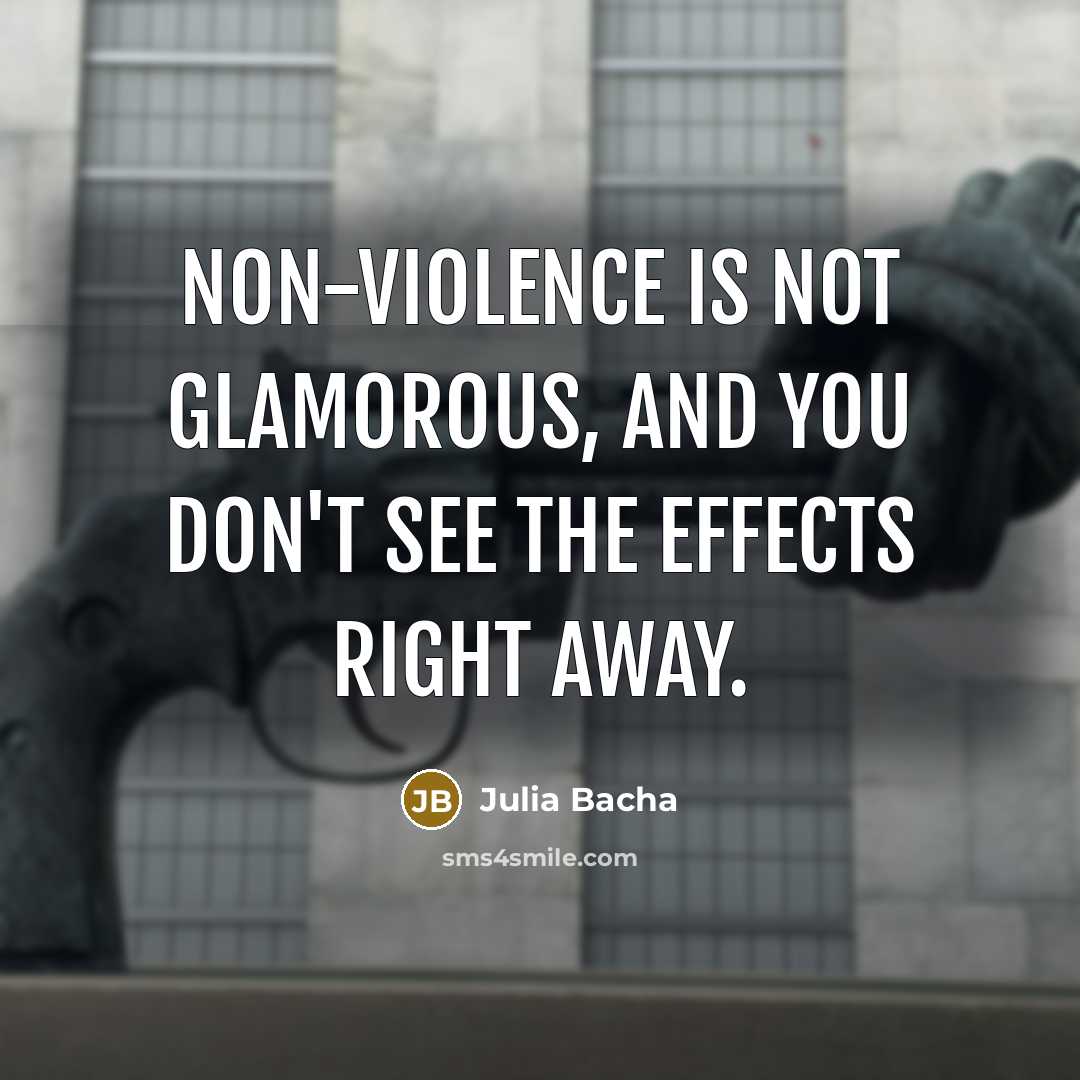
Non-violence is not glamorous, and you don't see the effects right away. — Julia Bacha Away Copy Share Image
A film seeking to create change on a difficult issue should not try to provide a definitive historical overview, nor present an… — Julia Bacha Argument Copy Share Image
For any filmmaker who has just released a film and who is experiencing some measure of success, the temptation can be great… — Julia Bacha Any Copy Share Image
When conflicts end non-violently, it's more likely that the result will be longer-lasting, democratic societies. — Julia Bacha Conflicts Copy Share Image
When I was 17, I came to the U.S. to study Middle Eastern history and politics at Columbia University. — Julia Bacha Came Copy Share Image
Violence and nonviolence are, after all, two different forms of theater. They both depend and thrive on the response of an audience. — Julia Bacha After Copy Share Image
If we don't pay attention to [nonviolent protests], they are invisible, and it's as if they never happened. But I have seen… — Julia Bacha Activism Copy Share Image
Violent resistance and nonviolent resistance share one very important thing in common: They are both a form of theater seeking an audience… — Julia Bacha Activism Copy Share Image
History was always the subject that I loved the most, and I felt it gave me the deepest sense of our humanity… — Julia Bacha Always Copy Share Image
At the heart of any successful film is a powerful story. And a story should be just that: a narrative with a… — Julia Bacha Able Copy Share Image

![“If we don't pay attention to [nonviolent protests], they are invisible, and it's as if they never happened. But I have seen first hand that if we do, they will multiply.” quote by Julia Bacha](https://sms4smile.com/quotes/img-quotes/958/julia-bacha-37264_activism_if-we-don-t-pay-attention-to-nonviolent_2577501.jpg)