Quick Facts About Johann Wolfgang von Goethe
- Born
- August 28, 1749
- Died
- March 22, 1832
- Nationality
- Saxe-Weimar-Eisenach
- Profession
- Writer And Polymath
- Notable works
- Faust, The Sorrows of Young Werther, Elective Affinities, Wilhelm Meister's Apprenticeship, West–Eastern Diwan and 3 more
- Spouse
- Christiane Vulpius
About Johann Wolfgang von Goethe
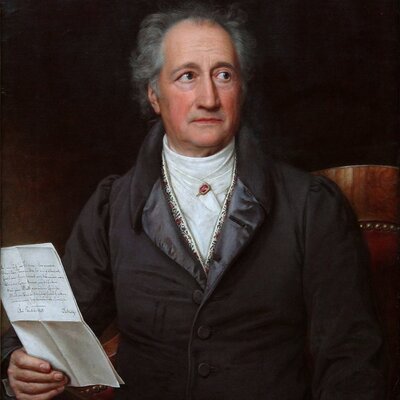
Johann Wolfgang von Goethe (1749–1832) was a German polymath whose stature in German-language literature is widely held to be unmatched. Active as a poet, novelist, playwright, scientist, statesman, theatre director, and critic, he produced work whose impact on Western literary, political, religious, and philosophical thought has persisted from the late eighteenth century into the present day.
His output spanned an unusually broad range: dramas and verse, aesthetic criticism, and scientific treatises on subjects such as botany, anatomy, and colour. Among his celebrated writings are Faust, The Sorrows of Young Werther, Elective Affinities, Wilhelm Meister's Apprenticeship, the West–Eastern Diwan, and the Theory of Colours.
Goethe was married to Christiane Vulpius, and his public standing brought him a series of honors, including the Grand Cross of the Legion of Honour and the Grand Cross of the House Order of the White Falcon.
Biography source:
Wikipedia
Awards & Honors
Grand Cross of the House Order of the White Falcon
Order of Saint Anna, 1st class
Knight Commander of the Order of Leopold (Austria)
Merit Order of the Bavarian Crown
Officer of the Legion of Honour
Grand Cross of the Legion of Honour













![“A wounded heart can with difficulty be cured. [Ger., Doch ein gekranktes Herz erholt sich schwer.]” quote by Johann Wolfgang von Goethe](https://sms4smile.com/quotes/img-quotes/137/johann-wolfgang-von-goethe-36_difficulty_a-wounded-heart-can-with-difficulty-be-c_2875954.jpg)













![“O, may you look, full moon that shines, On my pain for this last time: So many midnights from my desk, I have seen you, keeping watch: When over my books and paper, [390] Saddest friend, you appear! Ah! If on the mountain height I might stand in your sweet light, Float with spirits in mountain…” quote by Johann Wolfgang von Goethe](https://sms4smile.com/quotes/img-quotes/5b6/johann-wolfgang-von-goethe-36_books_o-may-you-look-full-moon-that-shines-on_969392.jpg)

![“THE WITCH. [dancing]. O I shall lose my wits, I fear, Do I, again, see Squire Satan here! MEPHISTOPHELES. Woman, the name offends my ear! THE WITCH. Why so? What has it done to you? MEPHISTOPHELES. It has long since to fable-books been banished; But men are none the better for it; true, The wicked…” quote by Johann Wolfgang von Goethe](https://sms4smile.com/quotes/img-quotes/83c/johann-wolfgang-von-goethe-36_quote_the-witch-dancing-o-i-shall-lose-my-wits_2026210.jpg)