Death Quote by Anne Sexton
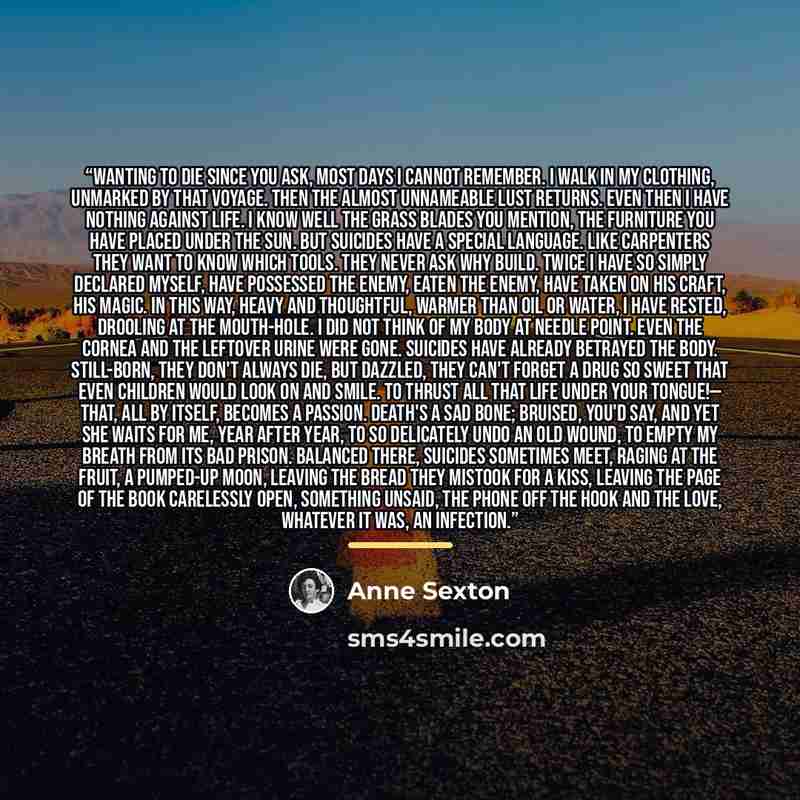
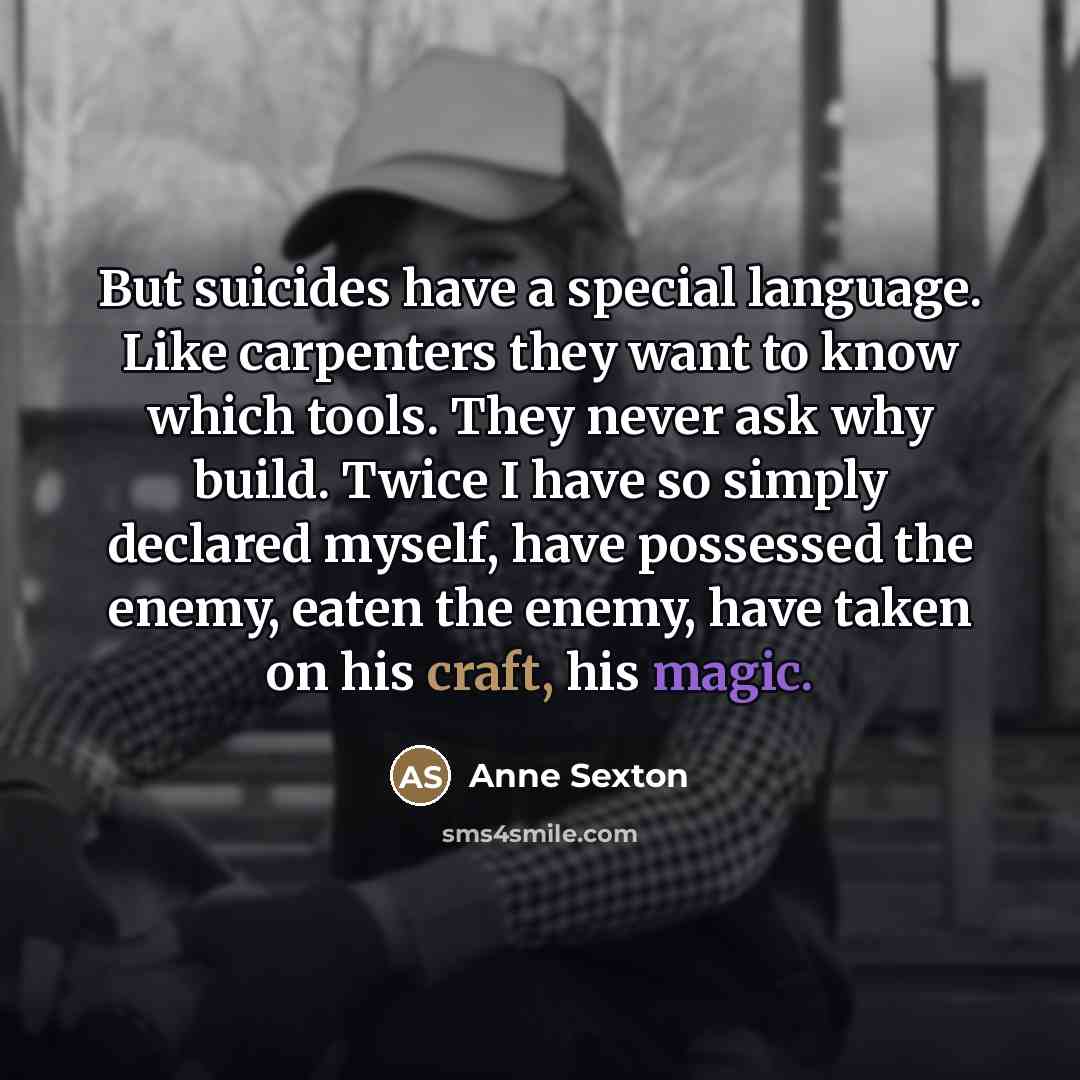
““Wanting to Die Since you ask, most days I cannot remember. I walk in my clothing, unmarked by that voyage. Then the almost unnameable lust returns. Even then I have nothing against life. I know well the grass blades you mention, the furniture you have placed under the sun. But suicides have a special language. Like carpenters they want to know which tools. They never ask why build. Twice I have so simply declared myself, have possessed the enemy, eaten the enemy, have taken on his craft, his magic. In this way, heavy and thoughtful, warmer than oil or water, I have rested, drooling at the mouth-hole. I did not think of my body at needle point. Even the cornea and the leftover urine were gone. Suicides have already betrayed the body. Still-born, they don't always die, but dazzled, they can't forget a drug so sweet that even children would look on and smile. To thrust all that life under your tongue!— that, all by itself, becomes a passion. Death's a sad Bone; bruised, you'd say, and yet she waits for me, year after year, to so delicately undo an old wound, to empty my breath from its bad prison. Balanced there, suicides sometimes meet, raging at the fruit, a pumped-up moon, leaving the bread they mistook for a kiss, leaving the page of the book carelessly open, something unsaid, the phone off the hook and the love, whatever it was, an infection.””
About This Quote
Source Poem: “Wanting to Die” by Anne Sexton, 1972
The poem explores the conflicted, almost compulsive fascination with death, describing it as a language and a craft that both tempts and torments the speaker, while also acknowledging a lingering attachment to life.
In simple terms: A troubled mind is drawn to death as a strange, compelling ritual, yet still feels some love for living.
Key Takeaway
Recognize the pull of dark thoughts and seek help before they dominate.
Themes
death
mental health
addiction
identity
language
Mood
despair
introspective
haunting
Type
poetic
confessional
literary
When to use this quote
- personal crisis
- therapy sessions
- creative writing
- support groups
- medical treatment
Key Concepts
nihilism
psychological conflict
self‑destruction
artistic expression
Questions to Reflect On
- What does the speaker’s “language of suicide” reveal about their inner world?
- How can creative expression serve both as a warning and a coping tool?
A Different Perspective
The intense poetic style may romanticize self‑harm, risking misinterpretation or glorification.