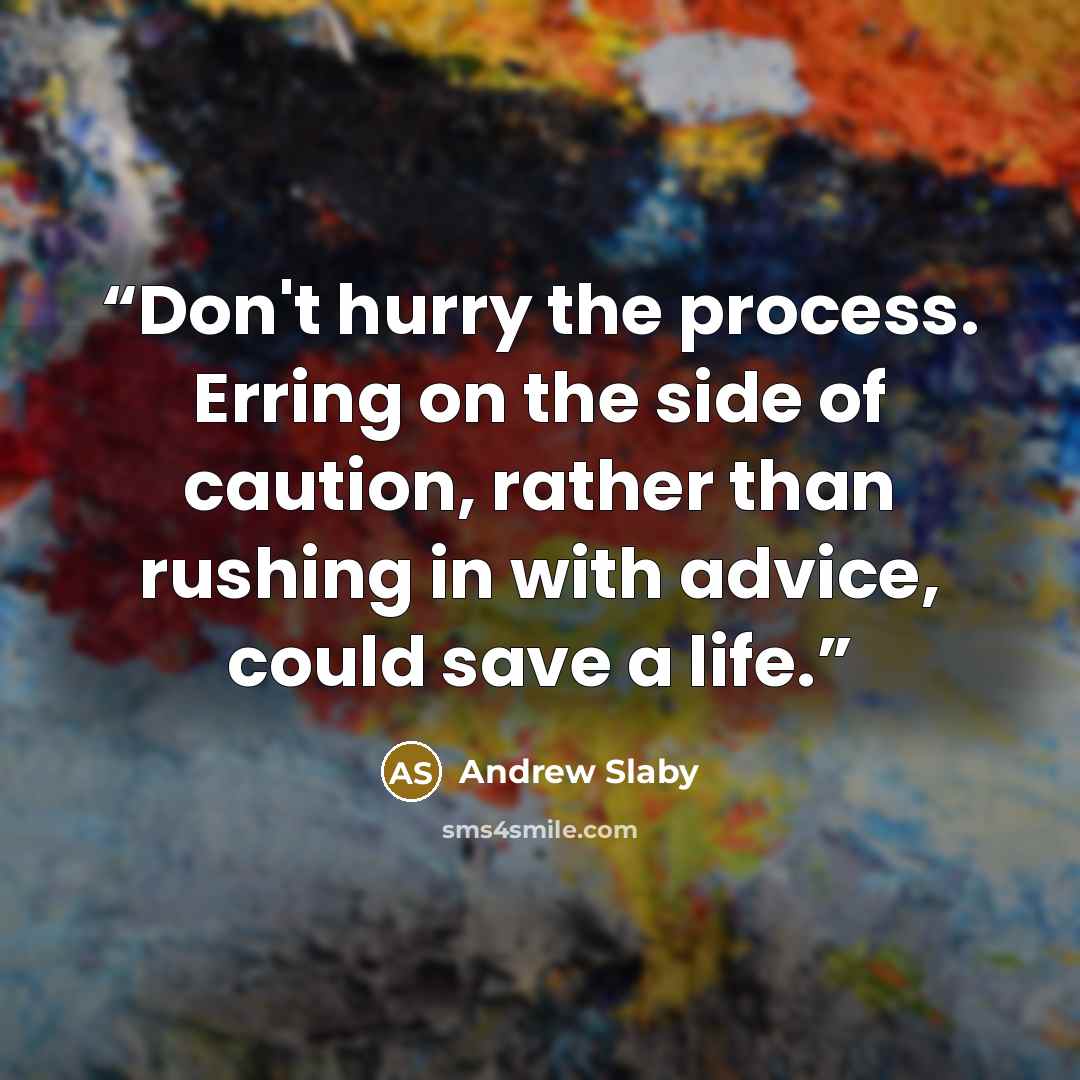
Role models Quote by Andrew Slaby
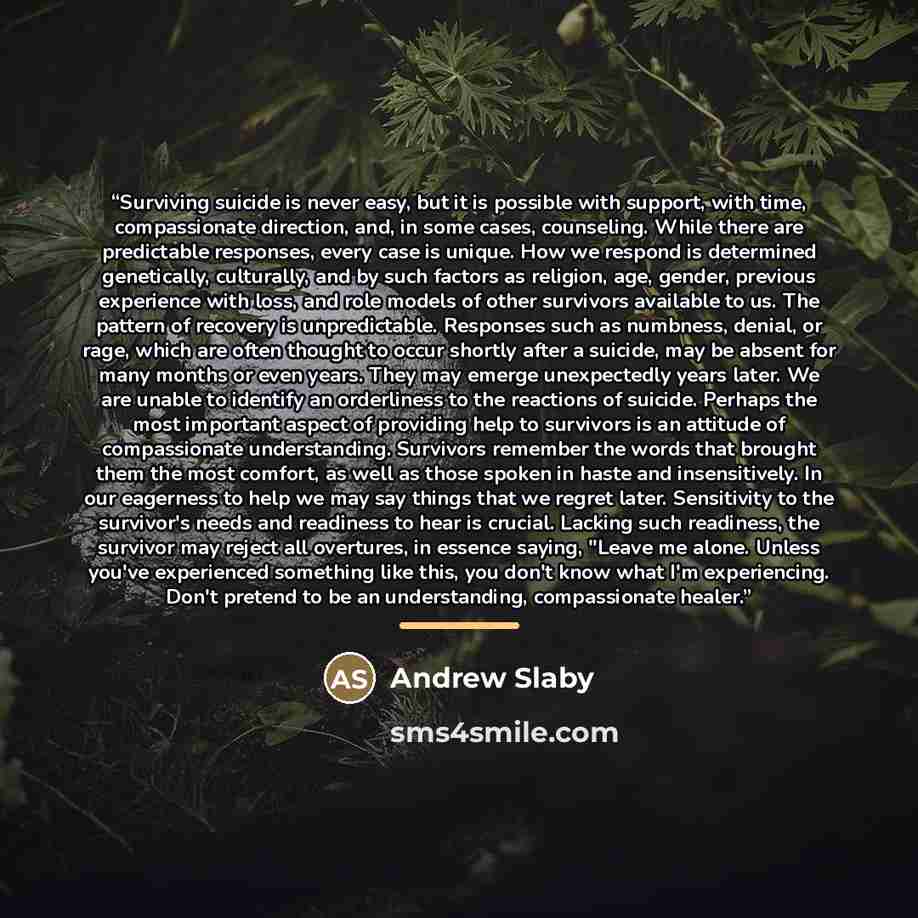
““Surviving suicide is never easy, but it is possible with support, with time, compassionate direction, and, in some cases, counseling. While there are predictable responses, every case is unique. How we respond is determined genetically, culturally, and by such factors as religion, age, gender, previous experience with loss, and role models of other survivors available to us. The pattern of recovery is unpredictable. Responses such as numbness, denial, or rage, which are often thought to occur shortly after a suicide, may be absent for many months or even years. They may emerge unexpectedly years later. We are unable to identify an orderliness to the reactions of suicide. Perhaps the most important aspect of providing help to survivors is an attitude of compassionate understanding. Survivors remember the words that brought them the most comfort, as well as those spoken in haste and insensitively. In our eagerness to help we may say things that we regret later. Sensitivity to the survivor's needs and readiness to hear is crucial. Lacking such readiness, the survivor may reject all overtures, in essence saying, "Leave me alone. Unless you've experienced something like this, you don't know what I'm experiencing. Don't pretend to be an understanding, compassionate healer.””
About This Quote
Source Article: Suicide Survivor Guidance, 2020
Survivors need compassionate, patient support; recovery varies widely and is unpredictable.
In simple terms: Support must be patient and understanding.
Key Takeaway
Offer empathy, avoid assumptions.
Themes
mental health
compassion
recovery
Mood
empathetic
hopeful
Type
advice
educational
When to use this quote
- counseling sessions
- support groups
- family conversations
- online forums
Key Concepts
psychology
grief
cultural factors
Questions to Reflect On
- How can you gauge a survivor’s readiness to talk?
- What words have helped you comfort someone in crisis?
A Different Perspective
Support may be rejected if timing or tone is wrong.