Bible Quote by Alister E. McGrath
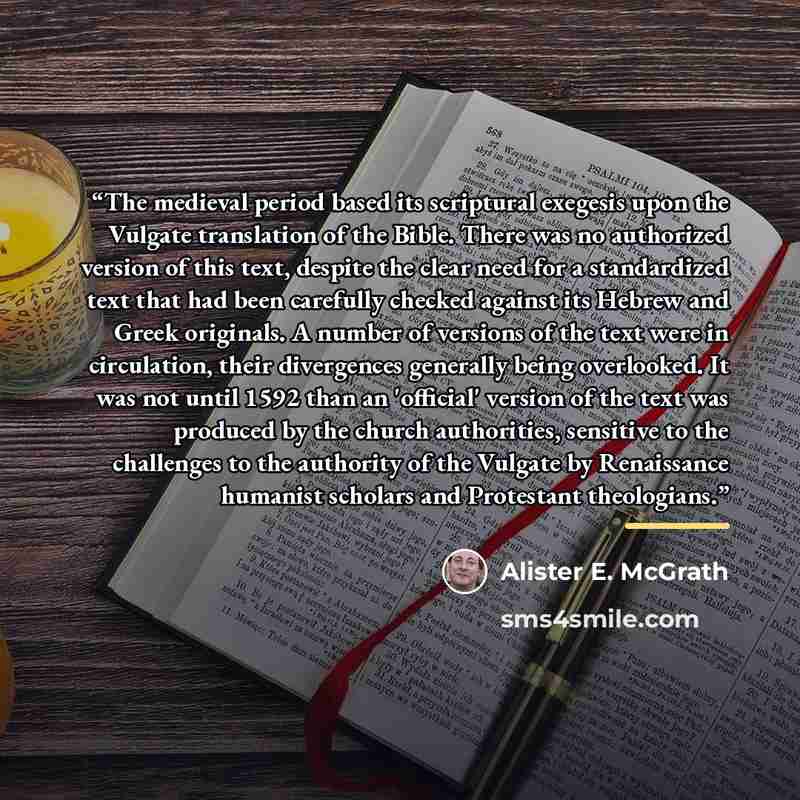
““The medieval period based its scriptural exegesis upon the Vulgate translation of the Bible. There was no authorized version of this text, despite the clear need for a standardized text that had been carefully checked against its Hebrew and Greek originals. A number of versions of the text were in circulation, their divergences generally being overlooked. It was not until 1592 than an 'official' version of the text was produced by the church authorities, sensitive to the challenges to the authority of the Vulgate by Renaissance humanist scholars and Protestant theologians.””
About This Quote
The medieval church relied on the Vulgate despite its lack of a definitive, critically‑checked edition, prompting a later official version to address humanist and reformist challenges.
In simple terms: Standardizing sacred texts amid scholarly debate.
Key Takeaway
Authority vs. textual fidelity.
Themes
history
religion
textual criticism
Renaissance
Reformation
Mood
reflective
analytical
Type
historical observation
academic commentary
When to use this quote
- scholarly translation projects
- church councils
- academic debates on scripture
Key Concepts
Vulgate
canonical authority
humanist scholarship
Practical Applications
- producing authorized biblical editions
- informing modern textual criticism
Questions to Reflect On
- How does standardization affect religious authority?
- What drives the shift from tradition to critical editions?

![“Scholars call it [the Torah] the Masoretic text. The Masoretes were Hebrew scribes of the first centuries of the present era. They fixed the wording and spelling of the Bible; since then it has not changed. It has long been a matter of critical controversy as to just how accurate the Masoretes…” quote by Herman Wouk](https://sms4smile.com/quotes/img-quotes/5b8/herman-wouk-7342_bible_scholars-call-it-the-torah-the-masoretic_39518.jpg)