Birth Quote by Alexis de Tocqueville
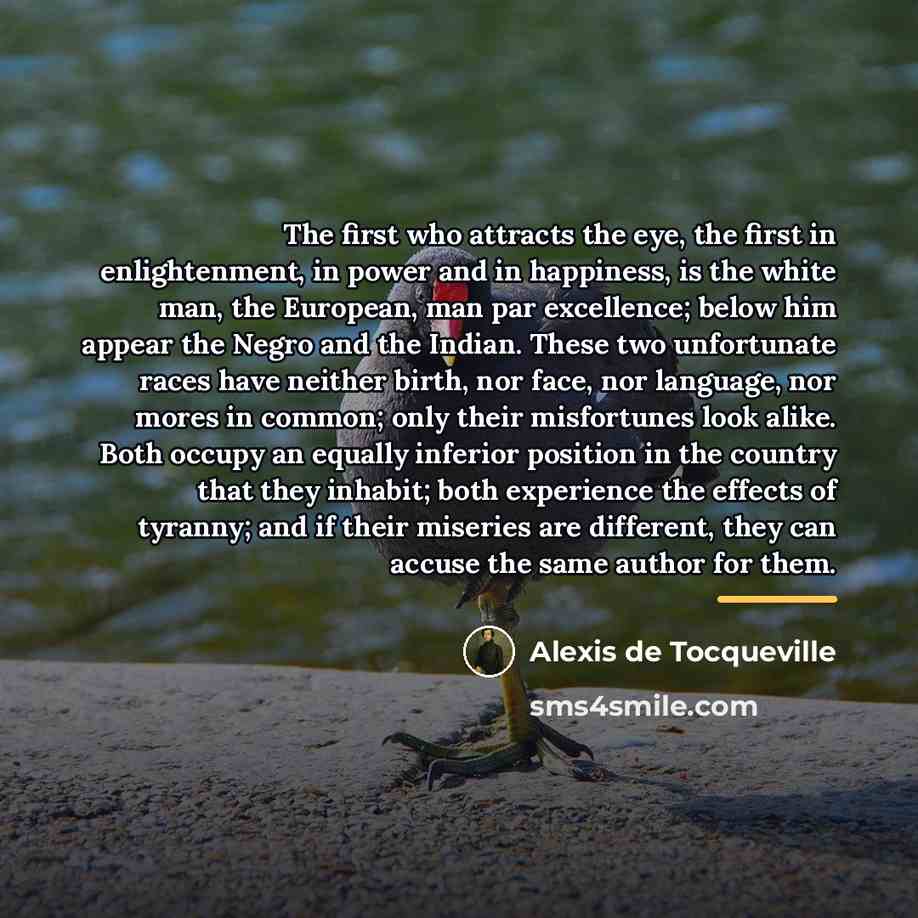
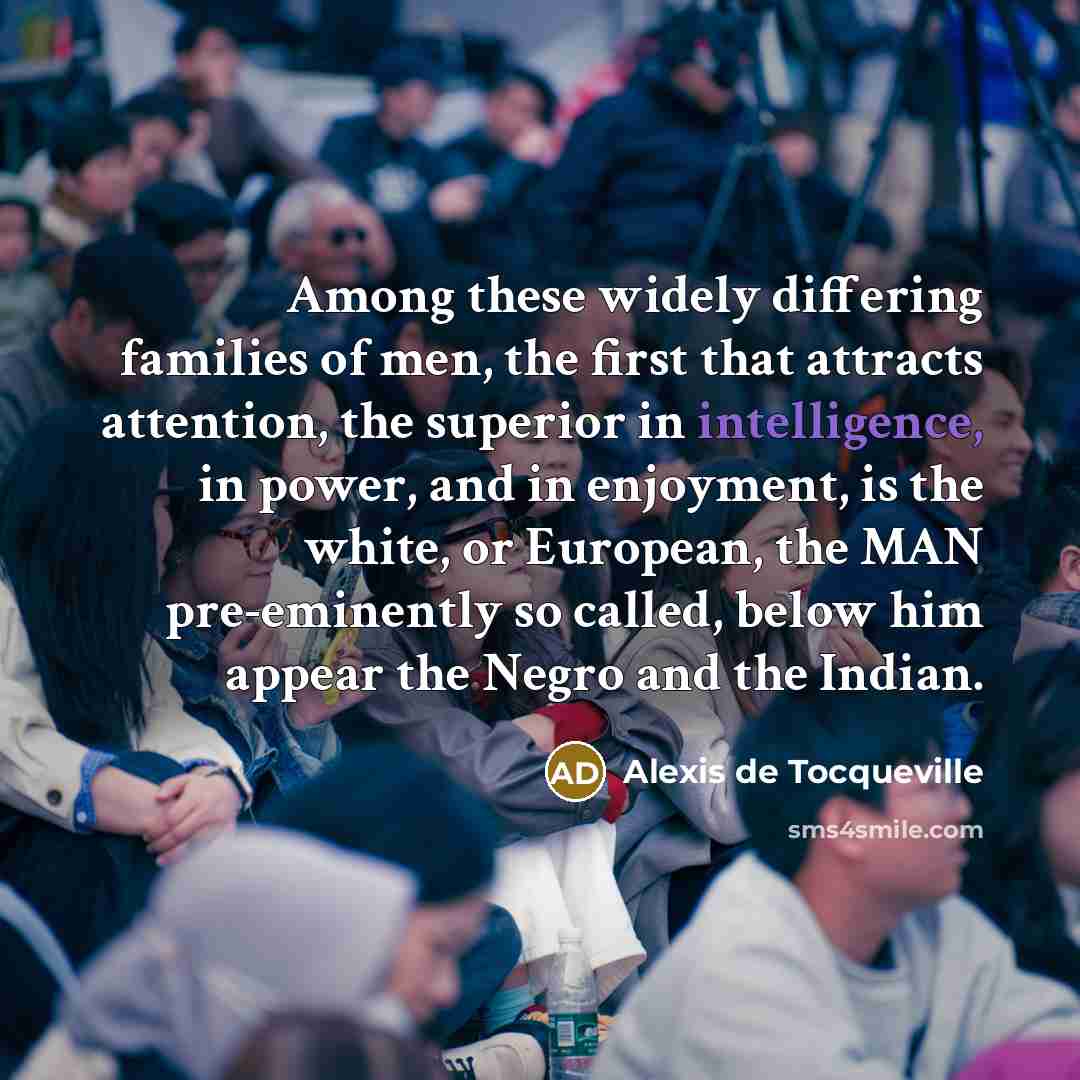
“The first who attracts the eye, the first in enlightenment, in power and in happiness, is the white man, the European, man par excellence; below him appear the Negro and the Indian. These two unfortunate races have neither birth, nor face, nor language, nor mores in common; only their misfortunes look alike. Both occupy an equally inferior position in the country that they inhabit; both experience the effects of tyranny; and if their miseries are different, they can accuse the same author for them.”
About This Quote
Source Book: Democracy in America, Alexis de Tocqueville, 1835
The quote expresses a hierarchical view of races, placing Europeans above Africans and Indigenous peoples, and attributing their suffering to a common oppressor.
In simple terms: It ranks races, claiming Europeans are superior and others share misfortune.
Key Takeaway
Recognize and challenge racial hierarchies.
Themes
racism
colonialism
inequality
Mood
critical
reflective
Type
historical
political
When to use this quote
- colonial policy
- civil rights activism
- education reform
- historical analysis
Key Concepts
social hierarchy
oppression
racial theory
Questions to Reflect On
- How does this perspective affect modern social policies?
- What alternative narratives can empower marginalized groups?
A Different Perspective
Such hierarchical views ignore the agency and diversity of non‑European peoples.
![“Most of [ the Negro leaders] who - who, whose existence or whose position of leadership depends upon the - on the subsidy or crumbs for - the crumbs from the white man's table, will only say what that white man wants to hear. When they get behind the door they talk a different language.” quote by Malcolm X](https://sms4smile.com/quotes/img-quotes/62c/malcolm-x-213_behinds_most-of-the-negro-leaders-who-who-whose_1417700.jpg)