“I ran across an excerpt today (in English translation) of some dialogue/narration from the modern popular writer, Paulo Coelho in his book:… — Roman Payne Copy Share Image
“[T]he new weird represents a productive experiment in fantasy fiction. The New Wave of the 1960s and 1970s arguably embodied science fiction's… — Darja Malcolm-Clarke Copy Share Image
“Now the twelfth canto of Book II is an almost literal translation from Tasso description in the Jerusalem Delivered of the island… — Janet Spens Copy Share Image
“Apocalypse is a part of the modern Absurd. This is testimony to its vitality, a vitality dependent upon its truth to the… — Frank Kermode Copy Share Image
“Just because a book is a classic doesn't mean it has anything to do with real life. Homer's ILIAD is taught at… — David Denby Copy Share Image
“In the whole world there is no deeper, no mightier literary work. This is, so far, the last and greatest expression of… — Dostoyevsky Copy Share Image
“If you tell me bad things about someone, you're telling bad things about me behind me” — Miguel Ángel Sáez Gutiérrez Copy Share Image
“Recognising such dimensions implicit to the reading experience can distract from the immediacy of our response; it can substitute literary archaeology for… — Ian Gregor Copy Share Image
“here is one other element of the apocalyptic tradition to be considered, namely transition. I said a minute ago that one of… — Frank Kermode Copy Share Image
“Tess is not simply presented as a passive victim, however. Throughout the novel she is shown as experiencing tension between the intractable… — Geoffrey Harvey Copy Share Image
“The Renaissance did not break completely with mediaeval history and values. Sir Philip Sidney is often considered the model of the perfect… — Ronald Carter Copy Share Image
“Meaningful literary criticism is like penance to please Bhagwan Shiva and ask for wisdom for the world instead of material things for… — Alok Mishra Copy Share Image
“In the context of Lawrence's rejection of the Freudian notion of incest and the close identification between author and character, Sons and… — John E. Stoll Copy Share Image
“No, I wasn't trying to make Nat Turner look stupid. I was trying to make him more human. More like me. Angry,… — William Styron Copy Share Image
“There is a remarkable degree of consistency in the way mediaeval literature affirms humanity. With all its faults, humanity emerges as more… — Ronald Carter Copy Share Image
“The Librarian swung on. It was slow progress, because there were things he wasn't keen on meeting. Creatures evolved to fill every… — Terry Pratchett Copy Share Image
“The enduring rapture with magic and fable has always struck me as latently childish and somehow sexless (and thus also related to… — Christopher Hitchens Copy Share Image
“Beowulf stands out as a poem which makes extensive use of this kind of figurative language. There are over one thousand compounds… — Ronald Carter Copy Share Image
“As for literary criticism in general: I have long felt that any reviewer who expresses rage and loathing for a novel or… — kurt Vonnegut Copy Share Image
“[N]o such thing as objective writing, . . . every inscription, every traveler's tale, every news account, every piece of technical writing,… — Sue Hubbell Copy Share Image
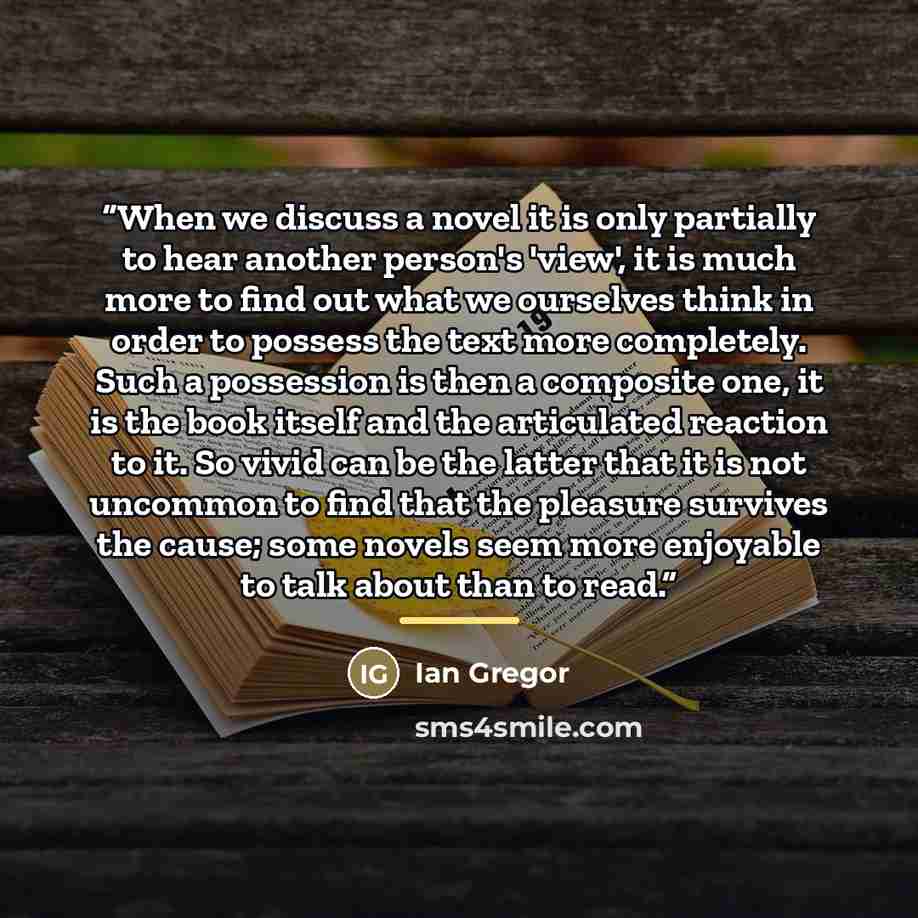
“When we discuss a novel it is only partially to hear another person's 'view', it is much more to find out what… — Ian Gregor Copy Share Image
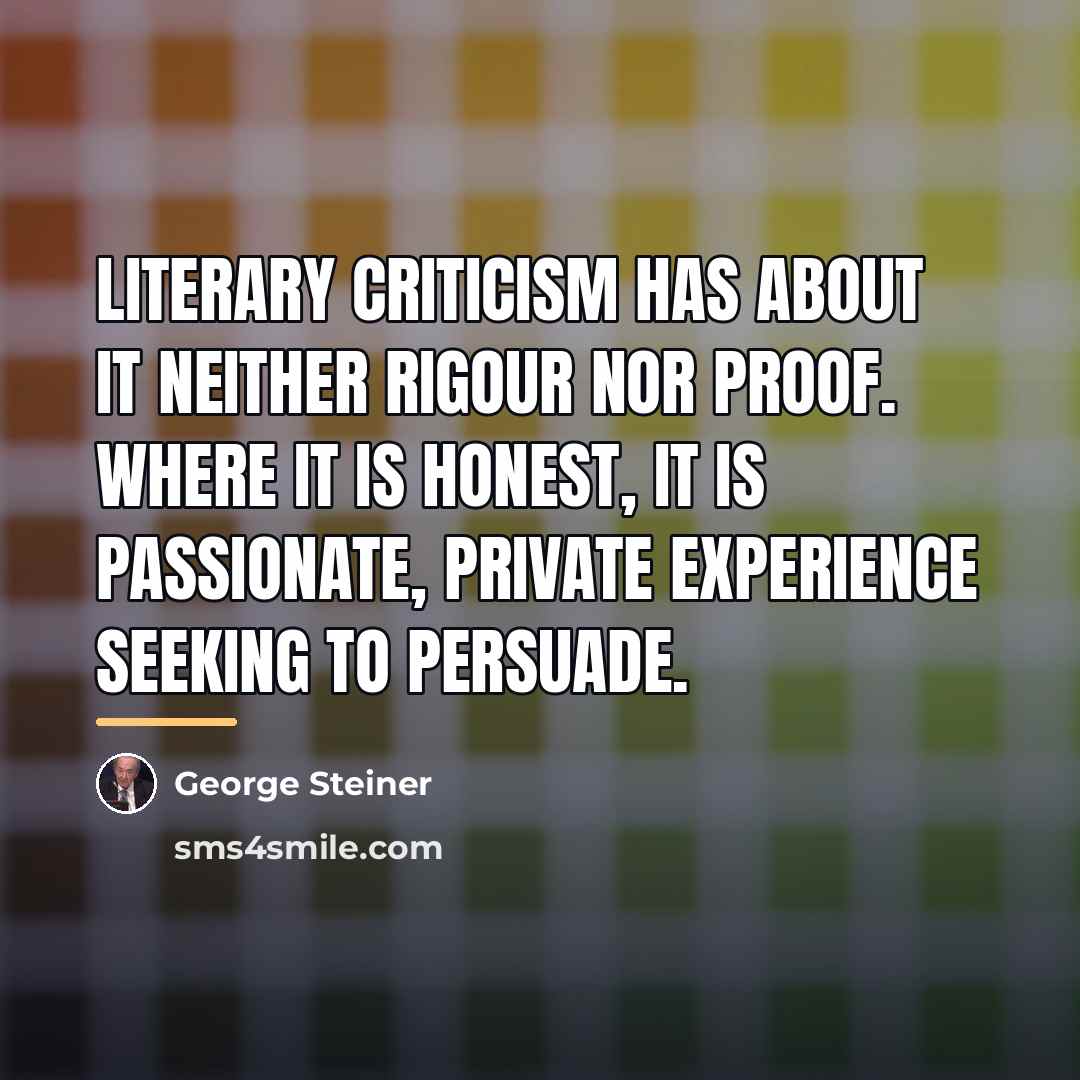
Literary criticism has about it neither rigour nor proof. Where it is honest, it is passionate, private experience seeking to persuade. — George Steiner Copy Share Image
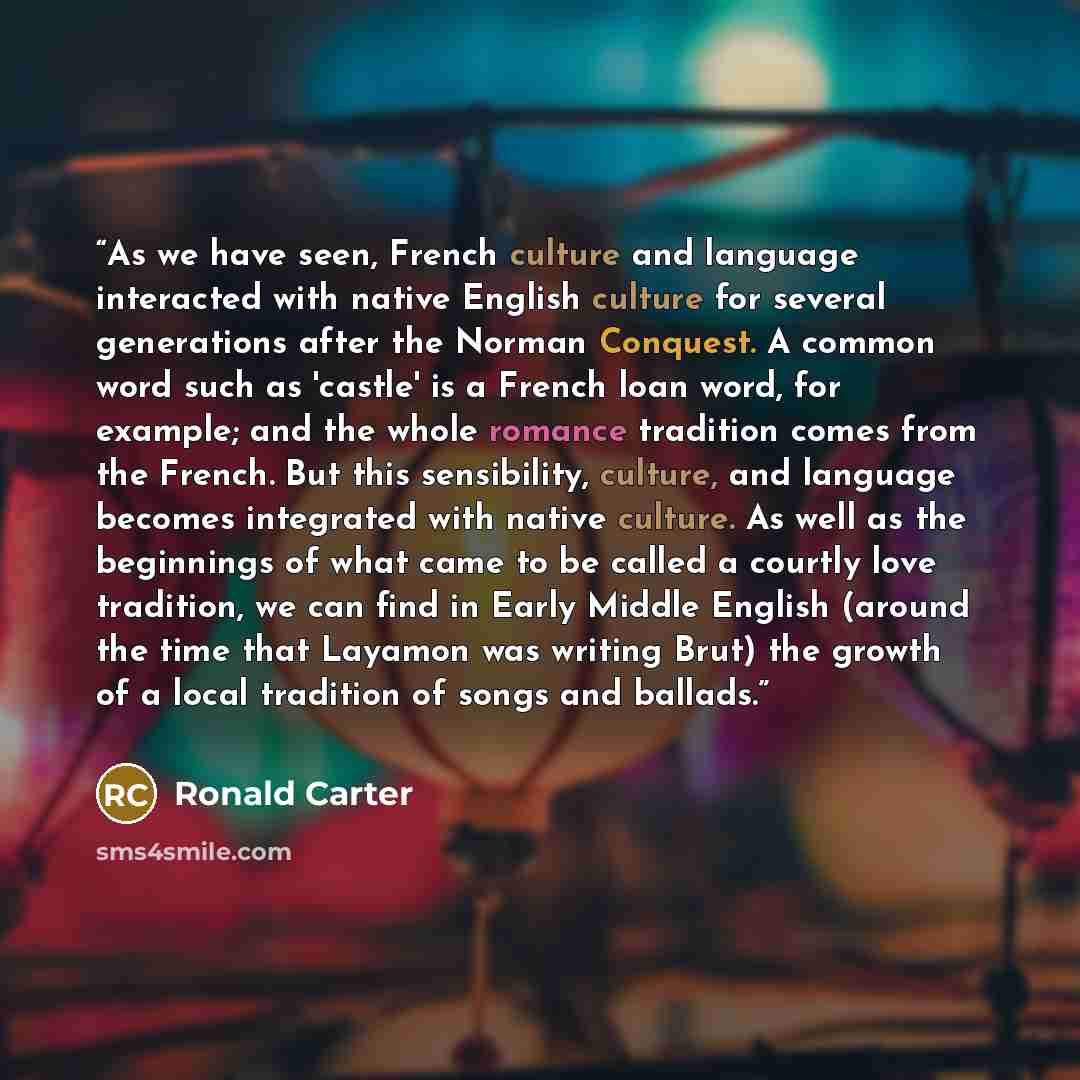
“As we have seen, French culture and language interacted with native English culture for several generations after the Norman Conquest. A common… — Ronald Carter Copy Share Image