A tragedy is the imitation of an action that is serious and also, as having magnitude, complete in itself . . .… — Aristotle Copy Share Image
A state of the soul is either (1) an emotion, (2) a capacity, or (3) a disposition; virtue therefore must be one… — Aristotle Copy Share Image
Excellence or virtue is a settled disposition of the mind that determines our choice of actions and emotions and consists essentially in… — Aristotle Copy Share Image
If then, as we say, good craftsmen look to the mean as they work, and if virtue, like nature, is more accurate… — Aristotle Copy Share Image
Not every action or emotion however admits of the observance of a due mean. Indeed the very names of some directly imply… — Aristotle Copy Share Image
The arousing of prejudice, pity, anger, and similar emotions has nothing to do with the essential facts, but is merely a personal… — Aristotle Copy Share Image
There are, then, these three means of effecting persuasion. The man who is to be in command of them must, it is… — Aristotle Copy Share Image
Emotions of any kind are produced by melody and rhythm; therefore by music a man becomes accustomed to feeling the right emotions;… — Aristotle Copy Share Image
Emotions of any kind can be evoked by melody and rhythm; therefore music has the power to form character. — Aristotle Copy Share Image
The knowledge of the soul admittedly contributes greatly to the advance of truth in general, and, above all, to our understanding of Nature, for… — Aristotle Copy Share Image
Young men have strong passions and tend to gratify them indiscriminately. Of the bodily desires, it is the sexual by which they are most… — Aristotle Copy Share Image
The body is at its best between the ages of thirty and thirty-five; the mind is at its best about the age of forty-nine. — Aristotle Copy Share Image
The ensouled is distinguished from the unsouled by its being alive. Now since being alive is spoken of in many ways, even if only… — Aristotle Copy Share Image
Although it may be difficult in theory to know what is just and equal, the practical difficulty of inducing those to forbear who can,… — Aristotle Copy Share Image
The true forms of government, therefore, are those in which the one, or the few, or the many, govern with a view to the… — Aristotle Copy Share Image
All persons ought to endeavor to follow what is right, and not what is established. — Aristotle Copy Share Image
Give a man a fish, you feed him for a day. Give a man a poisoned fish, you feed him for the rest of… — Aristotle Copy Share Image
The man who confers a favour would rather not be repaid in the same coin. — Aristotle Copy Share Image
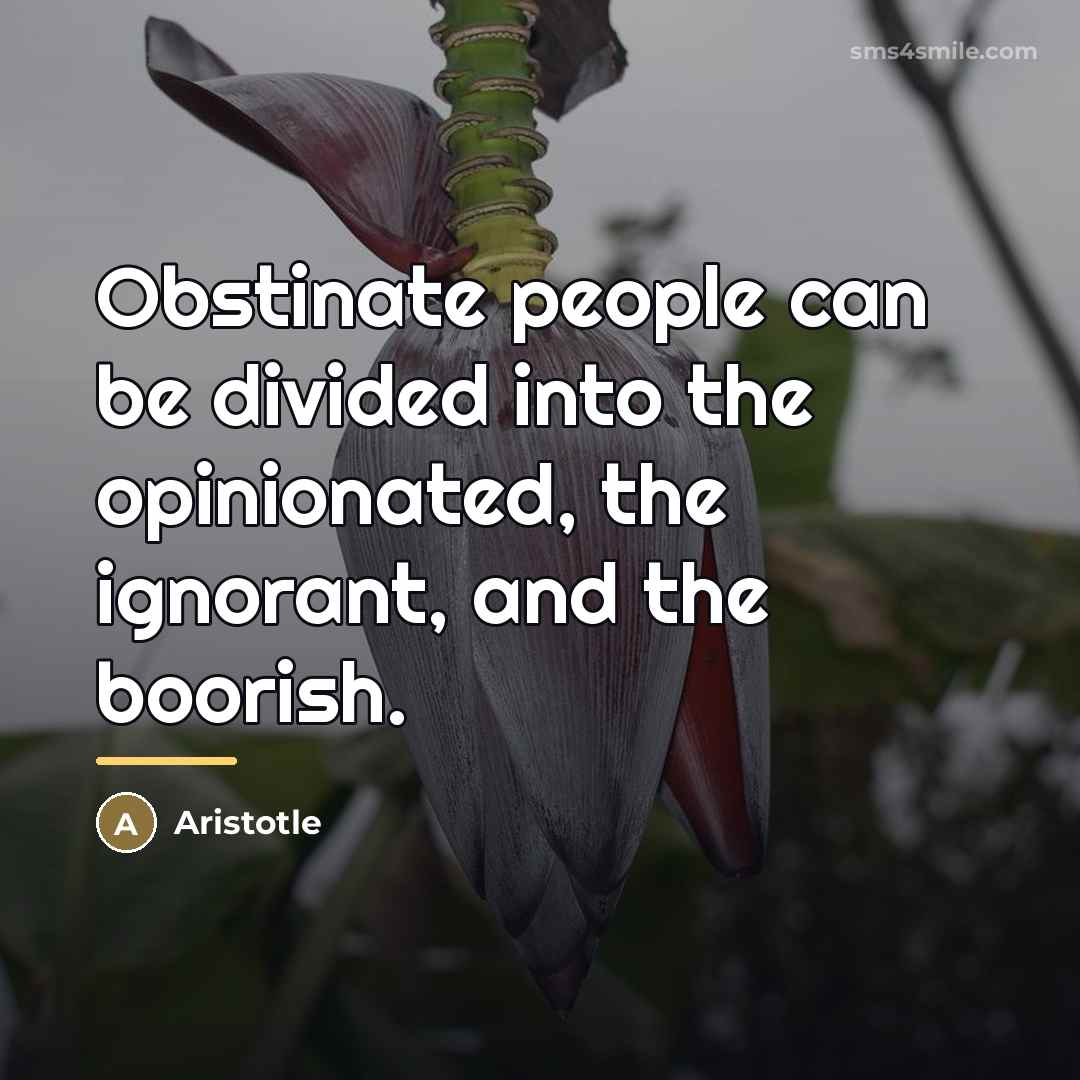
Obstinate people can be divided into the opinionated, the ignorant, and the boorish. — Aristotle Copy Share Image