Suffering does not call into question the "big picture" of the Christian faith. It reminds us that we do not see the… — Alister E. McGrath Copy Share Image
The Christian faith allows us to see further and deeper, to appreciate that nature is studded with signs, radiant with reminders, and… — Alister E. McGrath Copy Share Image
“For the humanists, whatever authority Scripture might possess derived from the original texts in their original languages, rather than from the Vulgate,… — Alister E. McGrath Copy Share Image
The success of the Inklings also helps us to see criticism in a positive light. There are, unfortunately, people who boost their own sense… — Alister E. McGrath Copy Share Image
“The medieval period based its scriptural exegesis upon the Vulgate translation of the Bible. There was no authorized version of this text, despite the… — Alister E. McGrath Copy Share Image
“Lewis's mental map of reality had difficulty accommodating the trauma of the Great War. Like so many, he found the settled way of looking… — Alister E. McGrath Copy Share Image
Good does not triumph unless good people rise to the challenges around them. — Alister E. McGrath Copy Share Image
Surely the better way is to pursue a generous orthodoxy, seeing disagreements in the context of the greater agreements which bind us together. — Alister E. McGrath Copy Share Image
Rational argument does not create belief, but it maintains a climate in which belief may flourish. — Alister E. McGrath Copy Share Image
The true believer is not someone who disengages from this world in order to focus on heaven, but rather the one who tries to… — Alister E. McGrath Copy Share Image
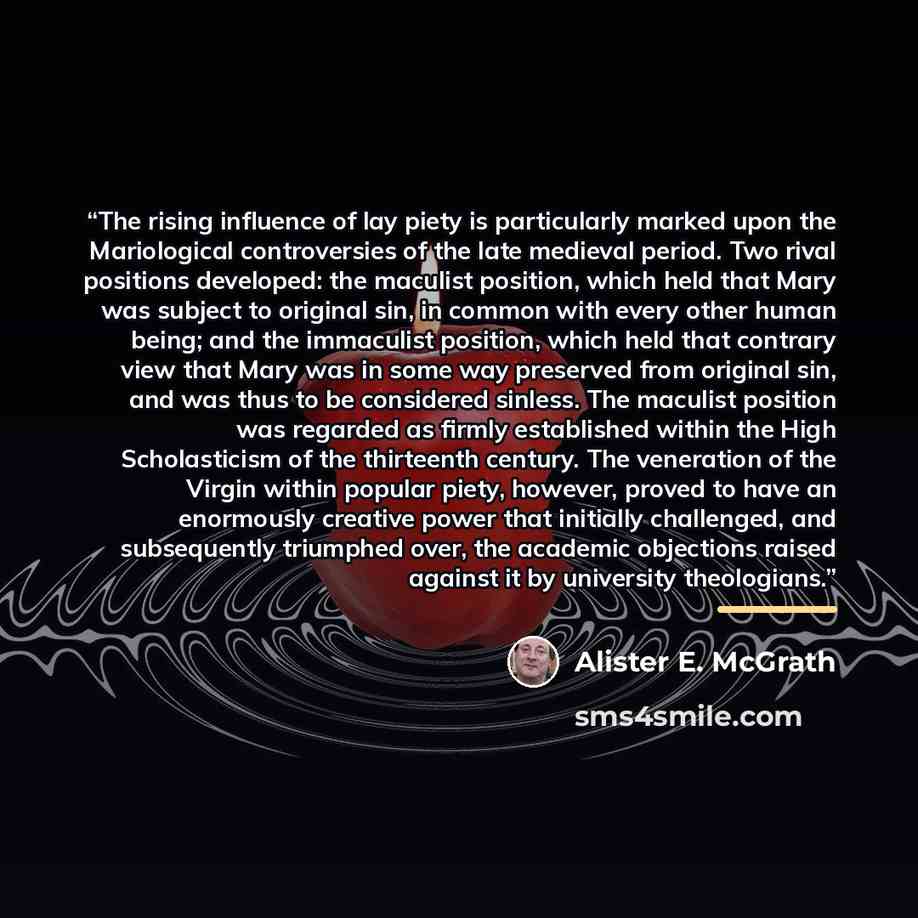
“The rising influence of lay piety is particularly marked upon the Mariological controversies of the late medieval period. Two rival positions developed: the maculist… — Alister E. McGrath Copy Share Image
“We are doomed to remain incomplete in our present existence. Our hopes and deepest longings will remain nothing but just that; Our hopes and… — Alister E. McGrath Copy Share Image
We must not think that religious concerns swamped all other social activities. They simply provided a focal point for them. — Alister E. McGrath Copy Share Image
To reenchant nature is not merely to gain a new perspective for its integrity and well-being; it is to throw open the doors to… — Alister E. McGrath Copy Share Image
“For Lewis, Christianity doesn’t just make sense of things. It changes our stories.” — Alister E. McGrath Copy Share Image
Suffering does not call into question the "big picture" of the Christian faith. It reminds us that we do not see the whole picture,… — Alister E. McGrath Copy Share Image