In the first summer of the Iraqi war, on the crabby…
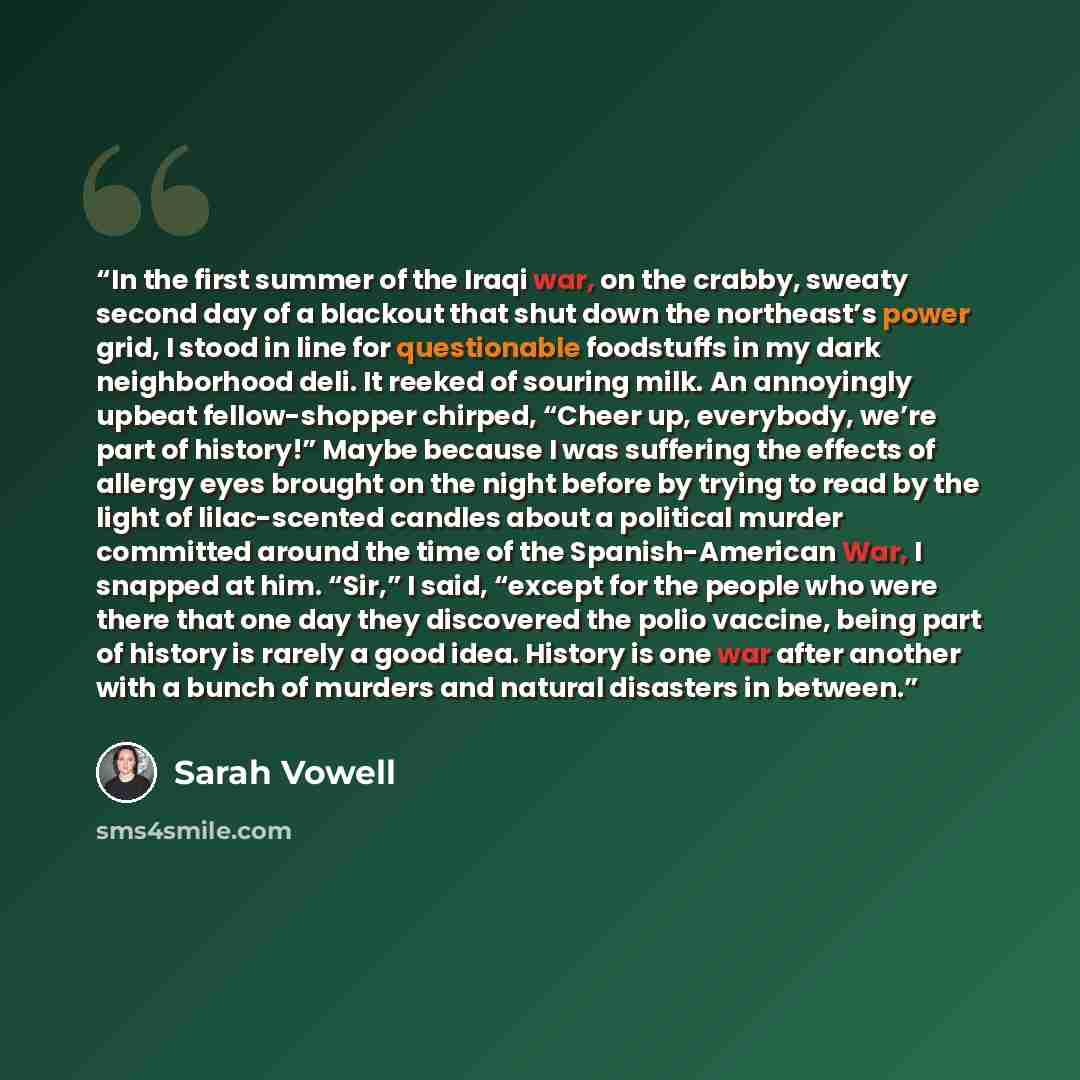
““In the first summer of the Iraqi war, on the crabby, sweaty second day of a blackout that shut down the northeast’s power grid, I stood in line for questionable foodstuffs in my dark neighborhood deli. It reeked of souring milk. An annoyingly upbeat fellow-shopper chirped, “Cheer up, everybody, we’re part of history!” Maybe because I was suffering the effects of allergy eyes brought on the night before by trying to read by the light of lilac-scented candles about a political murder committed around the time of the Spanish-American War, I snapped at him. “Sir,” I said, “except for the people who were there that one day they discovered the polio vaccine, being part of history is rarely a good idea. History is one war after another with a bunch of murders and natural disasters in between.””
About This Quote
This interpretation was drafted with AI assistance. It is one reading of the quote, not the author's own explanation.
The narrator critiques the romanticizing of history, noting that being part of historical events often entails suffering and tragedy rather than glory.
In simple terms: History isn’t always heroic; it’s often painful.
Key Takeaway
Question the glorification of historical participation.
Themes
history
war
human experience
memory
skepticism
Mood
reflective
critical
thoughtful
Type
personal essay
historical commentary
cautionary tale
When to use this quote
- Everyday life during war
- reading by candlelight
- interactions in a blackout
- reflecting on past conflicts
Key Concepts
Historical trauma
collective memory
personal narrative
Questions to Reflect On
- How does personal hardship change our view of historical events?
- What responsibilities do we have when recalling painful histories?
A Different Perspective
Romanticizing history can ignore the human cost and suffering.