As for the danger of alienating people with good…
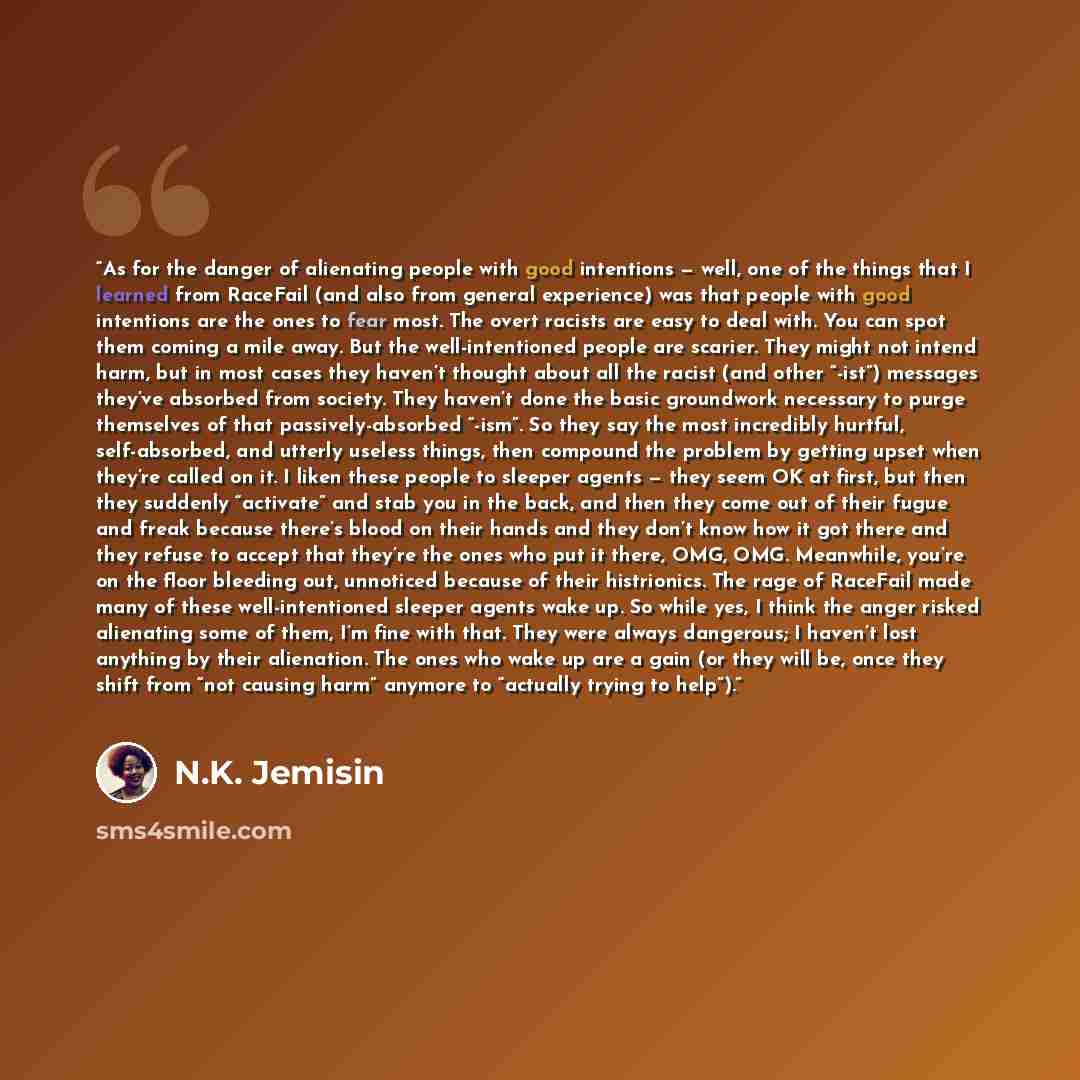
““As for the danger of alienating people with good intentions — well, one of the things that I learned from RaceFail (and also from general experience) was that people with good intentions are the ones to fear most. The overt racists are easy to deal with. You can spot them coming a mile away. But the well-intentioned people are scarier. They might not intend harm, but in most cases they haven’t thought about all the racist (and other “-ist”) messages they’ve absorbed from society. They haven’t done the basic groundwork necessary to purge themselves of that passively-absorbed “-ism”. So they say the most incredibly hurtful, self-absorbed, and utterly useless things, then compound the problem by getting upset when they’re called on it. I liken these people to sleeper agents — they seem OK at first, but then they suddenly “activate” and stab you in the back, and then they come out of their fugue and freak because there’s blood on their hands and they don’t know how it got there and they refuse to accept that they’re the ones who put it there, OMG, OMG. Meanwhile, you’re on the floor bleeding out, unnoticed because of their histrionics. The rage of RaceFail made many of these well-intentioned sleeper agents wake up. So while yes, I think the anger risked alienating some of them, I’m fine with that. They were always dangerous; I haven’t lost anything by their alienation. The ones who wake up are a gain (or they will be, once they shift from “not causing harm” anymore to “actually trying to help”).””
About This Quote
This interpretation was drafted with AI assistance. It is one reading of the quote, not the author's own explanation.
Well‑intentioned individuals can unintentionally perpetuate harmful biases, making them more dangerous than overt bigots.
In simple terms: Good intentions can hide hidden prejudice.
Key Takeaway
Challenge and educate those with hidden biases.
Themes
bias
intentionality
social responsibility
education
accountability
Mood
critical
empathetic
Type
analytical
inspirational
When to use this quote
- workplace training
- community dialogue
- policy making
- personal reflection
- media critique
Key Concepts
implicit bias
social conditioning
ethical vigilance
Questions to Reflect On
- How can you address hidden bias without alienating allies?
- What steps foster genuine self‑examination?
A Different Perspective
Changing deep‑seated beliefs is slow and may meet resistance.