Jan Majen i moj Srem, Pariz, moji mrtvi drugovi, trešnje u…
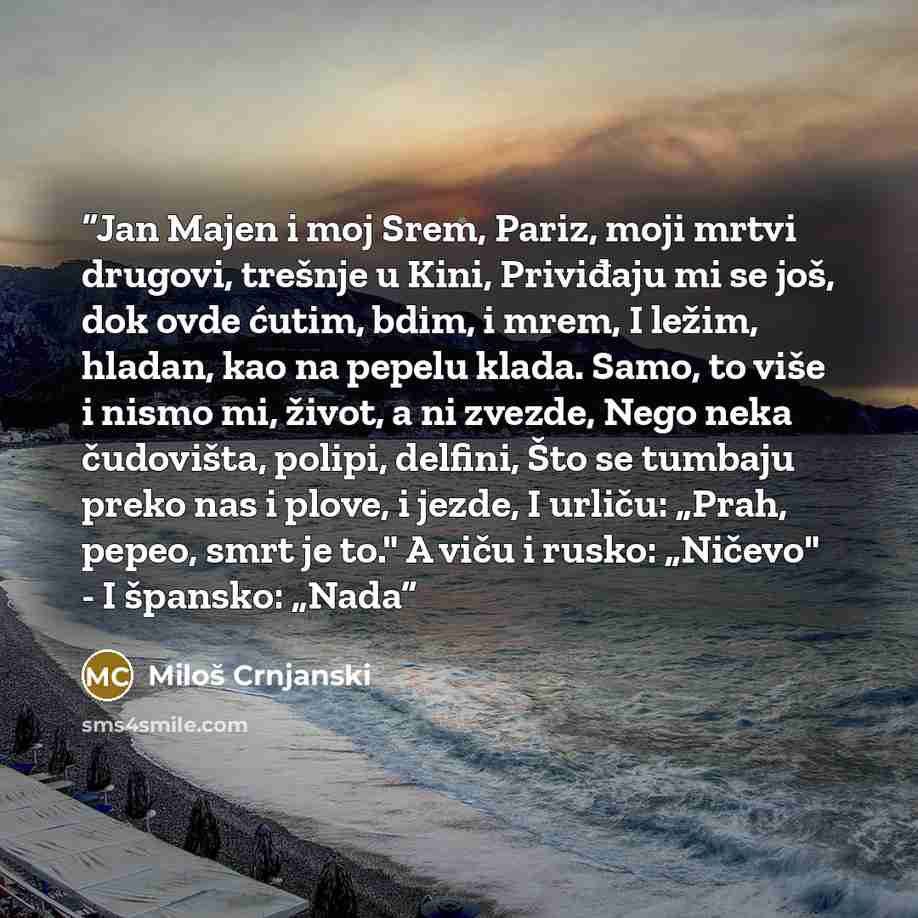
““Jan Majen i moj Srem, Pariz, moji mrtvi drugovi, trešnje u Kini, Priviđaju mi se još, dok ovde ćutim, bdim, i mrem, I ležim, hladan, kao na pepelu klada. Samo, to više i nismo mi, život, a ni zvezde, Nego neka čudovišta, polipi, delfini, Što se tumbaju preko nas i plove, i jezde, I urliču: „Prah, pepeo, smrt je to." A viču i rusko: „Ničevo" - I špansko: „Nada””
About This Quote
This interpretation was drafted with AI assistance. It is one reading of the quote, not the author's own explanation.
The poet juxtaposes personal loss, war devastation, and existential dread, reflecting on mortality and the absurdity of existence amidst chaos.
In simple terms: War and loss confront mortality and absurdity.
Key Takeaway
Acknowledge suffering, seek meaning despite chaos.
Themes
war
loss
existentialism
absurdity
memory
Mood
melancholic
reflective
somber
Type
poetic
philosophical
literary
When to use this quote
- grief counseling
- war veteran support
- philosophical reflection
- literary analysis
Key Concepts
nihilism
human condition
memory
war trauma
Questions to Reflect On
- How does personal loss shape your worldview?
- Can absurdity coexist with meaning?
A Different Perspective
The poem’s bleak tone may overlook resilience and hope that can arise from tragedy.