It is at night, especially when the moon is gibbous and…
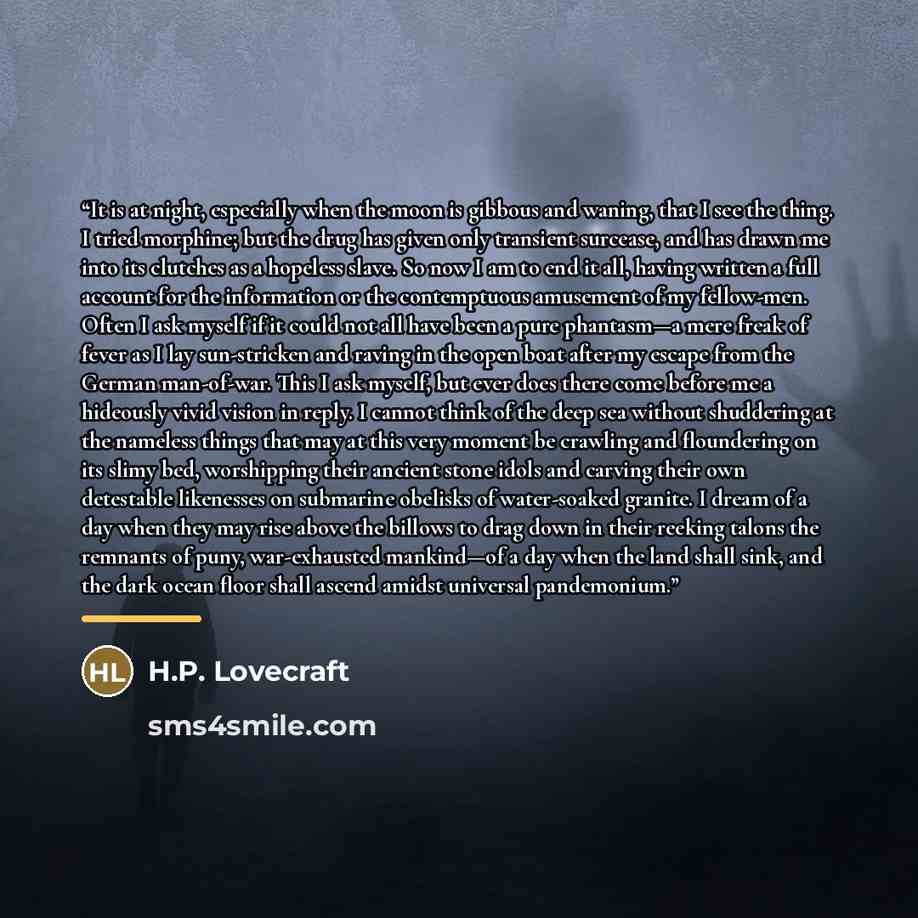
““It is at night, especially when the moon is gibbous and waning, that I see the thing. I tried morphine; but the drug has given only transient surcease, and has drawn me into its clutches as a hopeless slave. So now I am to end it all, having written a full account for the information or the contemptuous amusement of my fellow-men. Often I ask myself if it could not all have been a pure phantasm—a mere freak of fever as I lay sun-stricken and raving in the open boat after my escape from the German man-of-war. This I ask myself, but ever does there come before me a hideously vivid vision in reply. I cannot think of the deep sea without shuddering at the nameless things that may at this very moment be crawling and floundering on its slimy bed, worshipping their ancient stone idols and carving their own detestable likenesses on submarine obelisks of water-soaked granite. I dream of a day when they may rise above the billows to drag down in their reeking talons the remnants of puny, war-exhausted mankind—of a day when the land shall sink, and the dark ocean floor shall ascend amidst universal pandemonium.””
About This Quote
This interpretation was drafted with AI assistance. It is one reading of the quote, not the author's own explanation.
The narrator describes nightmarish visions of sea monsters and a cosmic apocalypse, reflecting deep existential dread and the terror of the unknown.
In simple terms: He fears the deep sea and its ancient monsters.
Key Takeaway
Confront inner fears of the unknown.
Themes
existential dread
cosmic horror
madness
Mood
eerie
foreboding
Type
literary
philosophical
When to use this quote
- nighttime contemplation
- creative writing
- psychological analysis
Key Concepts
Mythos
nihilism
psychology
Questions to Reflect On
- What does the ocean represent for you?
- How do you face overwhelming dread?
A Different Perspective
The horror may be symbolic of personal anxieties.