They hated it when people spoke of “the condition,”…
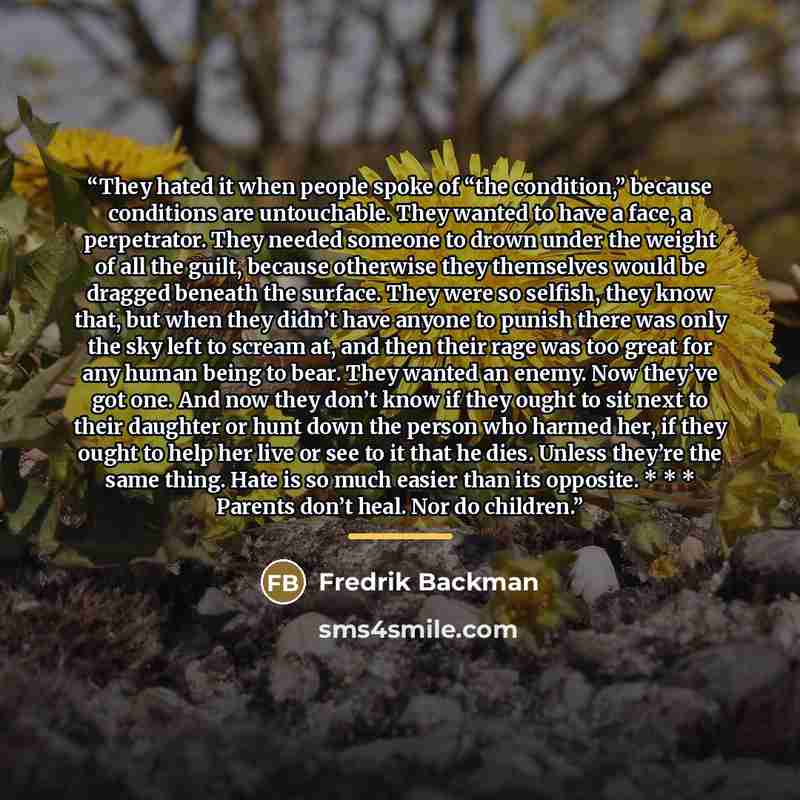
““They hated it when people spoke of “the condition,” because conditions are untouchable. They wanted to have a face, a perpetrator. They needed someone to drown under the weight of all the guilt, because otherwise they themselves would be dragged beneath the surface. They were so selfish, they know that, but when they didn’t have anyone to punish there was only the sky left to scream at, and then their rage was too great for any human being to bear. They wanted an enemy. Now they’ve got one. And now they don’t know if they ought to sit next to their daughter or hunt down the person who harmed her, if they ought to help her live or see to it that he dies. Unless they’re the same thing. Hate is so much easier than its opposite. * * * Parents don’t heal. Nor do children.””
About This Quote
This interpretation was drafted with AI assistance. It is one reading of the quote, not the author's own explanation.
People create scapegoats to avoid confronting collective guilt, leading to cycles of hatred and unresolved trauma.
In simple terms: Blaming others masks deeper guilt and pain.
Key Takeaway
Recognize and address underlying guilt instead of scapegoating.
Themes
guilt
hate
scapegoat
family
trauma
Mood
somber
thoughtful
Type
critical
philosophical
When to use this quote
- family counseling
- community mediation
- personal reflection
Key Concepts
psychology
social dynamics
conflict resolution
Questions to Reflect On
- What mechanisms sustain scapegoating in societies?
- How can empathy replace the need for an enemy?
A Different Perspective
Changing deep‑seated attitudes is difficult and may meet resistance.