One of the most extraordinary examples of adaptation to…
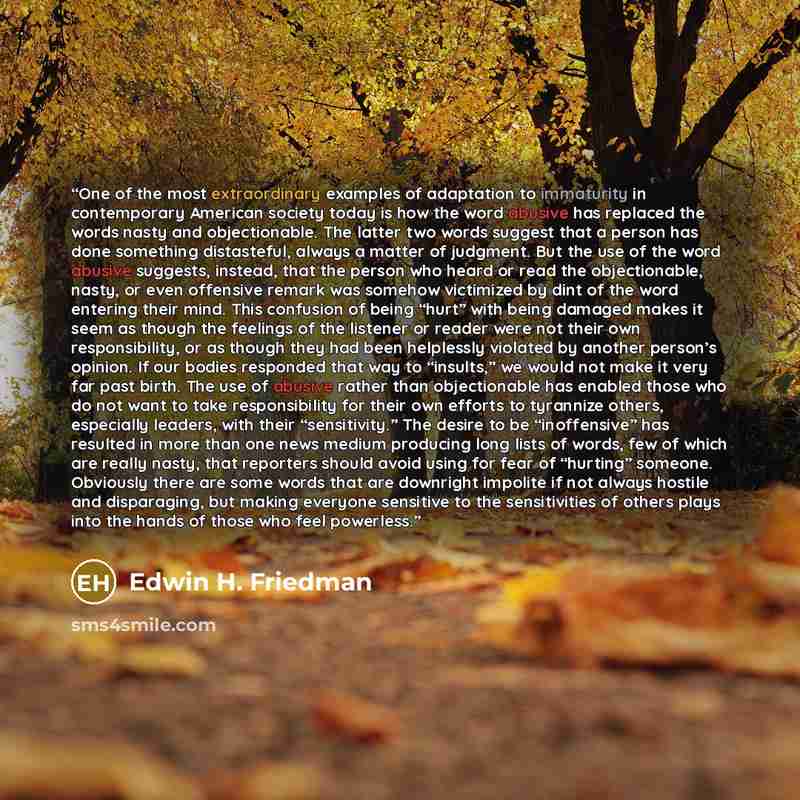
““One of the most extraordinary examples of adaptation to immaturity in contemporary American society today is how the word abusive has replaced the words nasty and objectionable. The latter two words suggest that a person has done something distasteful, always a matter of judgment. But the use of the word abusive suggests, instead, that the person who heard or read the objectionable, nasty, or even offensive remark was somehow victimized by dint of the word entering their mind. This confusion of being “hurt” with being damaged makes it seem as though the feelings of the listener or reader were not their own responsibility, or as though they had been helplessly violated by another person’s opinion. If our bodies responded that way to “insults,” we would not make it very far past birth. The use of abusive rather than objectionable has enabled those who do not want to take responsibility for their own efforts to tyrannize others, especially leaders, with their “sensitivity.” The desire to be “inoffensive” has resulted in more than one news medium producing long lists of words, few of which are really nasty, that reporters should avoid using for fear of “hurting” someone. Obviously there are some words that are downright impolite if not always hostile and disparaging, but making everyone sensitive to the sensitivities of others plays into the hands of those who feel powerless.””
About This Quote
This interpretation was drafted with AI assistance. It is one reading of the quote, not the author's own explanation.
The passage argues that redefining “abusive” to replace milder terms shifts responsibility from the speaker to the listener, fostering a culture of victimhood and limiting personal accountability.
In simple terms: Calling words “abusive” makes people feel victimized, reducing personal responsibility.
Key Takeaway
Recognize language’s role in assigning responsibility.
Themes
language
responsibility
culture
victimhood
politics
Mood
critical
reflective
analytical
Type
philosophical
social commentary
When to use this quote
- public discourse
- media guidelines
- personal interactions
- policy debates
Key Concepts
semantic shift
social control
psychology of offense
Questions to Reflect On
- How does labeling affect free speech?
- When does sensitivity become manipulation?
A Different Perspective
Overemphasis on sensitivity may stifle honest dialogue.