The conclusion is that the ease with which instances come…
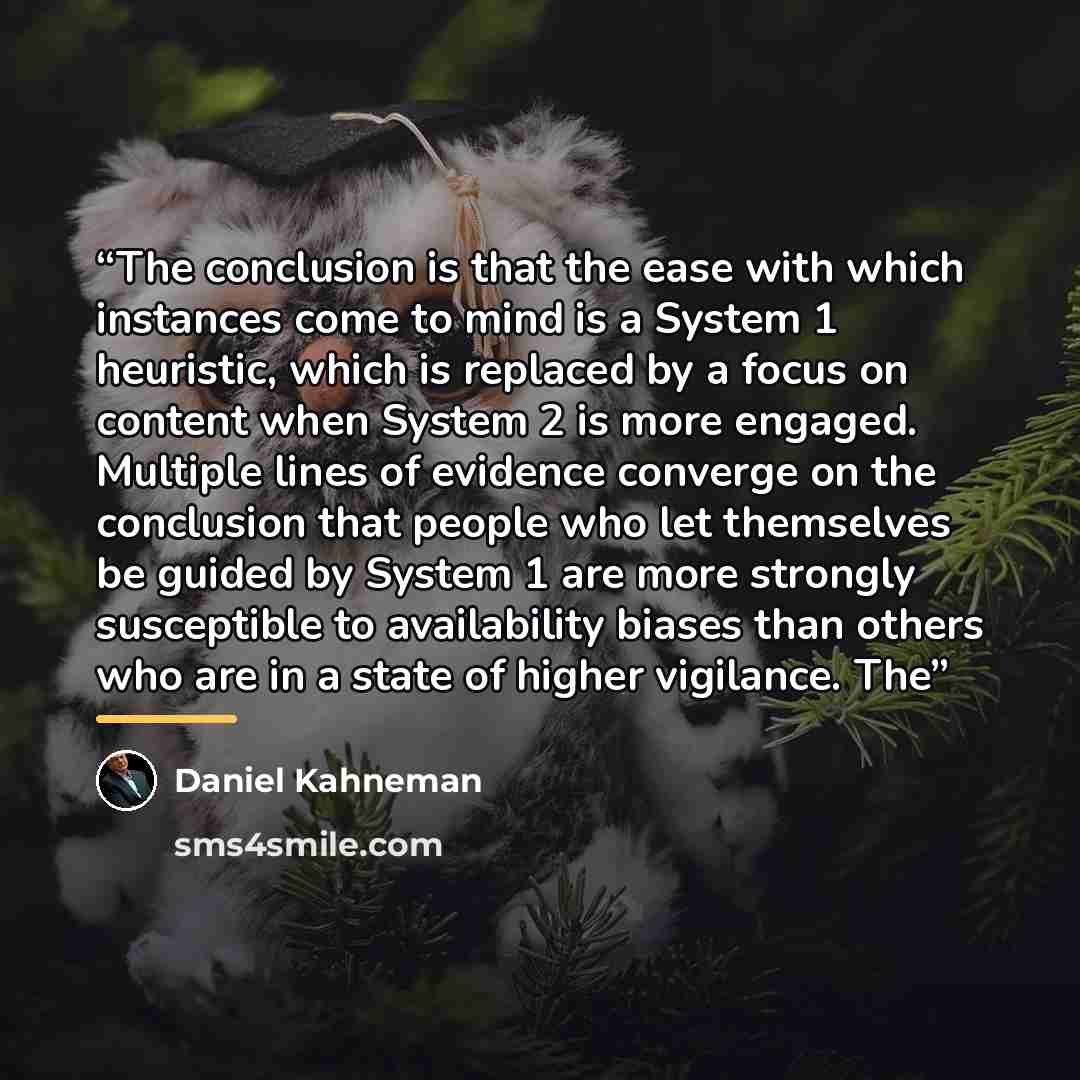
““The conclusion is that the ease with which instances come to mind is a System 1 heuristic, which is replaced by a focus on content when System 2 is more engaged. Multiple lines of evidence converge on the conclusion that people who let themselves be guided by System 1 are more strongly susceptible to availability biases than others who are in a state of higher vigilance. The””
About This Quote
This interpretation was drafted with AI assistance. It is one reading of the quote, not the author's own explanation.
Fast, intuitive thinking (System 1) relies on ease of recall, leading to availability bias; deliberate, effortful thinking (System 2) shifts focus to content, reducing that bias.
In simple terms: Quick judgments favor what comes to mind; careful thought checks bias.
Key Takeaway
System 2 mitigates availability bias.
Themes
Cognitive psychology
Decision making
Bias
Mood
cautious
analytical
Type
educational
psychological
When to use this quote
- Evaluating investment risks
- Medical diagnosis under time pressure
- Jury deliberations
Key Concepts
Dual‑process theory
Heuristics
Practical Applications
- Pause to engage System 2 before high‑stakes decisions
- Use checklists to counter reliance on vivid examples
Questions to Reflect On
- How can we train ourselves to switch to System 2 when needed?
- What environments make availability bias most dangerous?
A Different Perspective
System 2 is slower and may be impractical in urgent situations.