According to Dr. Hartling, in order to deal with shame…
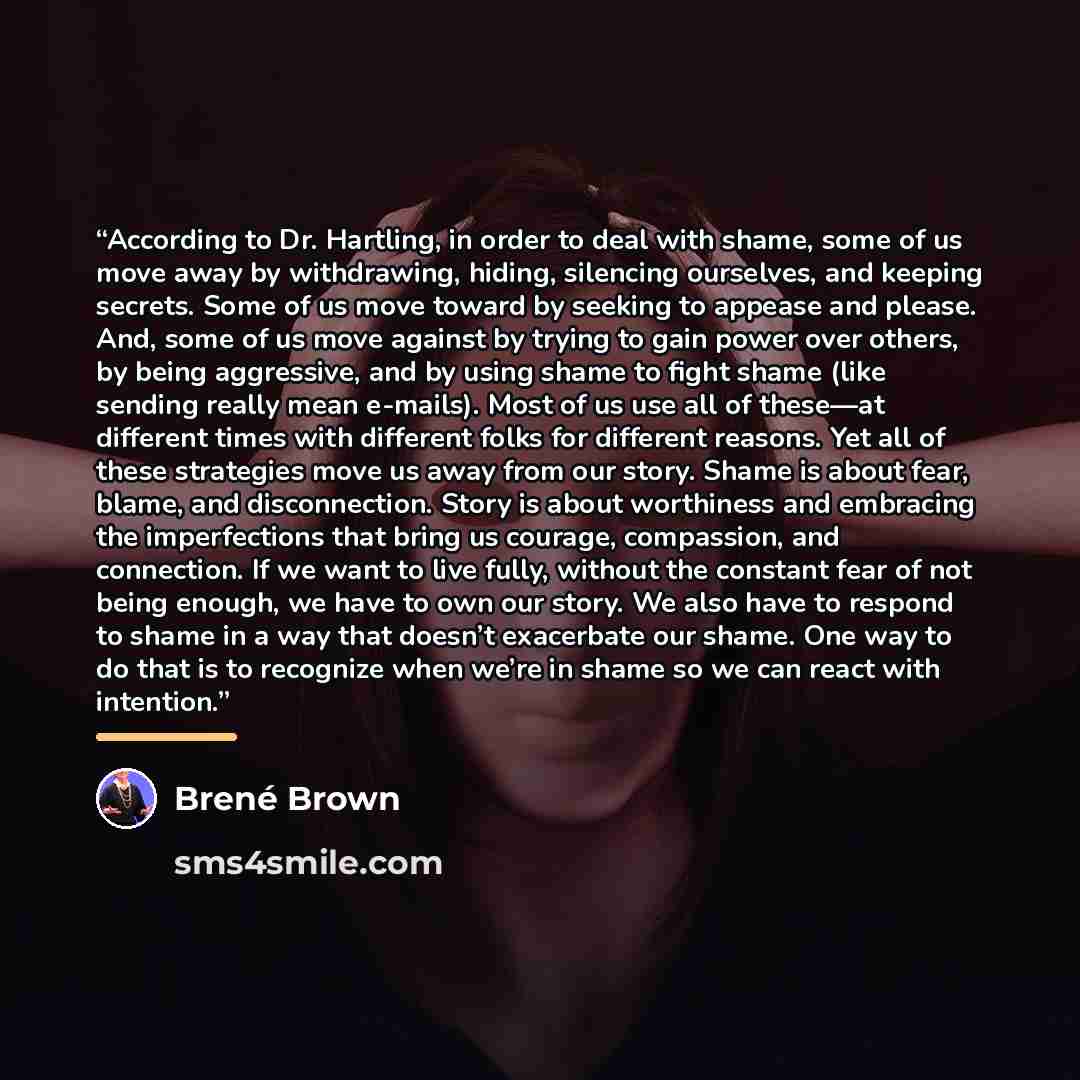
““According to Dr. Hartling, in order to deal with shame, some of us move away by withdrawing, hiding, silencing ourselves, and keeping secrets. Some of us move toward by seeking to appease and please. And, some of us move against by trying to gain power over others, by being aggressive, and by using shame to fight shame (like sending really mean e-mails). Most of us use all of these—at different times with different folks for different reasons. Yet all of these strategies move us away from our story. Shame is about fear, blame, and disconnection. Story is about worthiness and embracing the imperfections that bring us courage, compassion, and connection. If we want to live fully, without the constant fear of not being enough, we have to own our story. We also have to respond to shame in a way that doesn’t exacerbate our shame. One way to do that is to recognize when we’re in shame so we can react with intention.””
About This Quote
This interpretation was drafted with AI assistance. It is one reading of the quote, not the author's own explanation.
Shame drives people to withdraw, appease, or dominate, all of which distance them from authentic self‑story; confronting shame requires awareness and intentional response.
In simple terms: Shame makes us act in ways that hide our true selves.
Key Takeaway
Notice shame, then choose a response that aligns with your values.
Themes
shame
vulnerability
authenticity
connection
power
Mood
empathetic
introspective
motivational
Type
psychological
self‑help
When to use this quote
- therapy sessions
- team meetings
- personal reflection
- conflict resolution
Key Concepts
psychology
self‑compassion
behavioral patterns
Questions to Reflect On
- When have you recognized shame influencing your actions?
- What intentional response could replace a shame‑driven habit?
A Different Perspective
Responses may be constrained by social pressure or fear of judgment.