. . . every society that grows extensive lawns could…
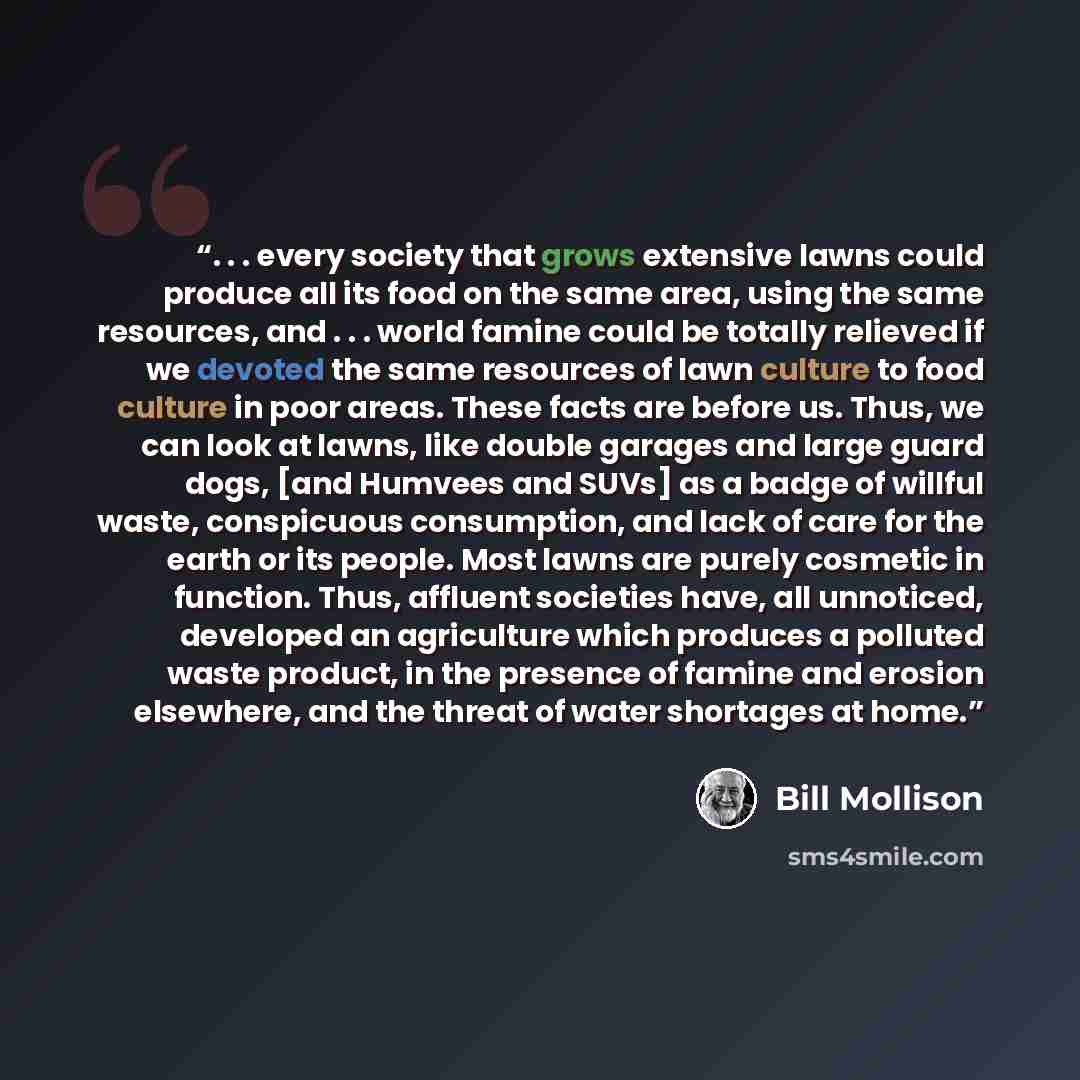
““. . . every society that grows extensive lawns could produce all its food on the same area, using the same resources, and . . . world famine could be totally relieved if we devoted the same resources of lawn culture to food culture in poor areas. These facts are before us. Thus, we can look at lawns, like double garages and large guard dogs, [and Humvees and SUVs] as a badge of willful waste, conspicuous consumption, and lack of care for the earth or its people. Most lawns are purely cosmetic in function. Thus, affluent societies have, all unnoticed, developed an agriculture which produces a polluted waste product, in the presence of famine and erosion elsewhere, and the threat of water shortages at home.””
About This Quote
This interpretation was drafted with AI assistance. It is one reading of the quote, not the author's own explanation.
Excessive lawns waste resources that could feed people; they symbolize wasteful consumption and environmental neglect.
In simple terms: Lawns waste resources that could feed people.
Key Takeaway
Reduce lawn area, grow food instead.
Themes
environment
resource use
social equity
Mood
concerned
urgent
Type
activist
educational
When to use this quote
- urban planning
- community gardening
- policy advocacy
Key Concepts
sustainability
food security
Questions to Reflect On
- How can communities replace lawns with productive spaces?
- What policies encourage food‑producing landscapes?
A Different Perspective
Transitioning away from lawns may face cultural resistance.