The nurse becomes willing to sacrifice herself for the…
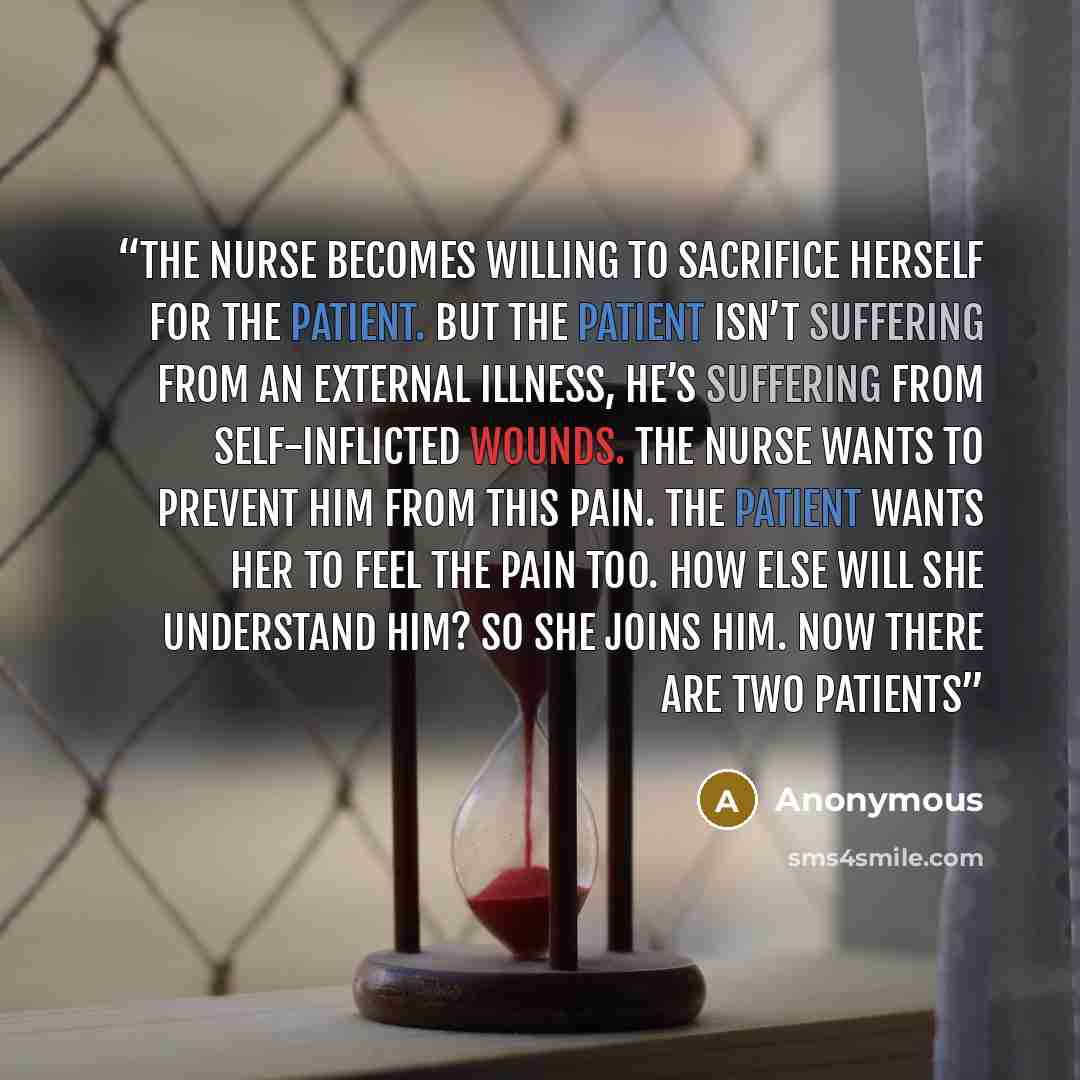
““The nurse becomes willing to sacrifice herself for the patient. But the patient isn’t suffering from an external illness, he’s suffering from self-inflicted wounds. The nurse wants to prevent him from this pain. The patient wants her to feel the pain too. How else will she understand him? So she joins him. Now there are two patients””
About This Quote
This interpretation was drafted with AI assistance. It is one reading of the quote, not the author's own explanation.
The quote explores a paradox where a caregiver's empathy leads to self‑sacrifice, blurring the line between healer and wounded, suggesting that shared suffering can be a path to true understanding.
In simple terms: Empathy can become self‑destructive when the healer mirrors the wounded.
Key Takeaway
Shared pain may deepen connection, but risks loss of self.
Themes
Empathy
Self‑sacrifice
Boundaries
Healing
Identity
Pain
Mood
Intense
Reflective
Melancholic
Type
Philosophical
Psychological
Narrative
When to use this quote
- Therapist working with a self‑harm client
- Nurse caring for a trauma survivor
- Counselor confronting a client’s self‑destructive behavior
- Family member supporting a loved one with addiction
Key Concepts
Caregiver‑patient dynamics
Self‑inflicted harm
Psychological projection
Moral ambiguity
Practical Applications
- Designing training on professional boundaries
- Developing reflective journaling for caregivers
Questions to Reflect On
- When does empathy become harmful?
- How can caregivers maintain self‑care while deeply connecting?
A Different Perspective
Such identification can erode professional objectivity, leading to burnout or enabling the patient’s self‑destructive behavior.