“Wisdom or intelligence and prudence are intellectual, liberality and temperance are moral virtues.” — Aristotle Copy Share Image
The virtue of the good man is necessarily the same as the virtue of the citizen of the perfect state. — Aristotle Copy Share Image
In order to be effective you need not only virtue but also mental strength. — Aristotle Copy Share Image
“Without virtue, man is most unholy and savage, and worst in regard to sex and eating.” — Aristotle Copy Share Image
Education and morals will be found almost the whole that goes to make a good man. — Aristotle Copy Share Image
What the statesman is most anxious to produce is a certain moral character in his fellow citizens, namely a disposition to virtue… — Aristotle Copy Share Image
Let us be well persuaded that everyone of us possesses happiness in proportion to his virtue and wisdom, and according as he… — Aristotle Copy Share Image
The attainment of truth is then the function of both the intellectual parts of the soul. Therefore their respective virtues are those… — Aristotle Copy Share Image
Happiness may be defined as good fortune joined to virtue, or a independence, or as a life that is both agreeable and… — Aristotle Copy Share Image
“Actions which produce [virtue] are those which increase it, and also, if differently performed, destroy it.” — Aristotle Copy Share Image
“The plot, then, is the first principle, and, as it were, the soul of a tragedy; Character holds the second place.” — Aristotle Copy Share Image
Happiness is the highest good, being a realization and perfect practice of virtue, which some can attain, while others have little or… — Aristotle Copy Share Image
“Virtue lies in our power, and similarly so does vice; because where it is in our power to act, it is also… — Aristotle Copy Share Image
Of the modes of persuasion furnished by the spoken word there are three kinds. The first kind depends on the personal character… — Aristotle Copy Share Image
But the virtues we get by first exercising them, as also happens in the case of the arts as well. For the… — Aristotle Copy Share Image
Our virtues are voluntary (and in fact we are in a sense ourselves partly the cause of our moral dispositions, and it… — Aristotle Copy Share Image
Virtue means doing the right thing, in relation to the right person, at the right time, to the right extent, in the… — Aristotle Copy Share Image
The virtue of a faculty is related to the special function which that faculty performs. Now there are three elements in the… — Aristotle Copy Share Image
There are, then, these three means of effecting persuasion. The man who is to be in command of them must, it is… — Aristotle Copy Share Image
Emotions of any kind are produced by melody and rhythm; therefore by music a man becomes accustomed to feeling the right emotions;… — Aristotle Copy Share Image
In a word, acts of any kind produce habits or characters of the same kind. Hence we ought to make sure that… — Aristotle Copy Share Image
Of ill-temper there are three kinds: irascibility, bitterness, sullenness. It belongs to the ill-tempered man to be unable to bear either small… — Aristotle Copy Share Image
If thinking is like perceiving, it must be either a process in which the soul is acted upon by what is capable… — Aristotle Copy Share Image
Without virtue it is difficult to bear gracefully the honors of fortune. — Aristotle Copy Share Image
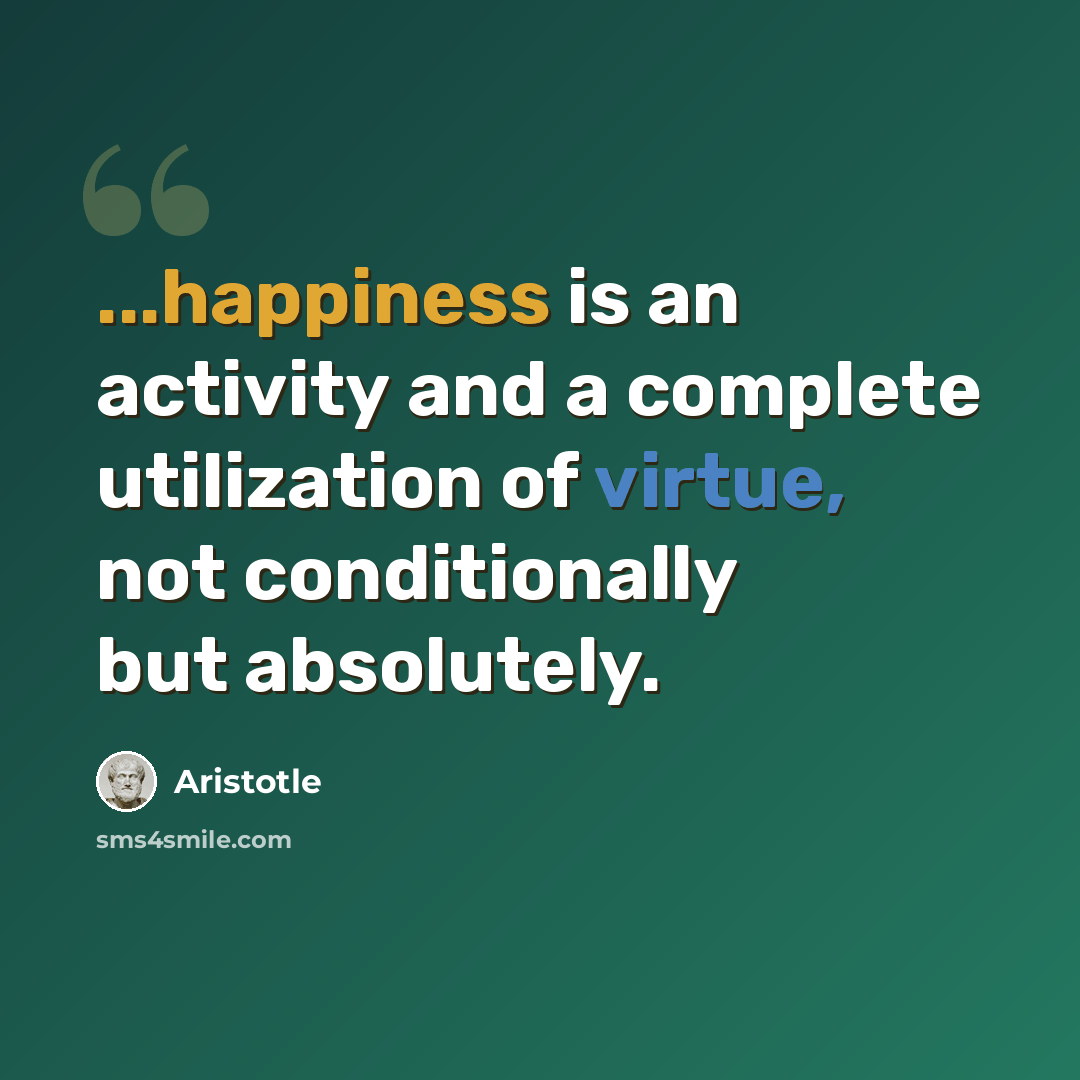
...happiness is an activity and a complete utilization of virtue, not conditionally but absolutely. — Aristotle Copy Share Image
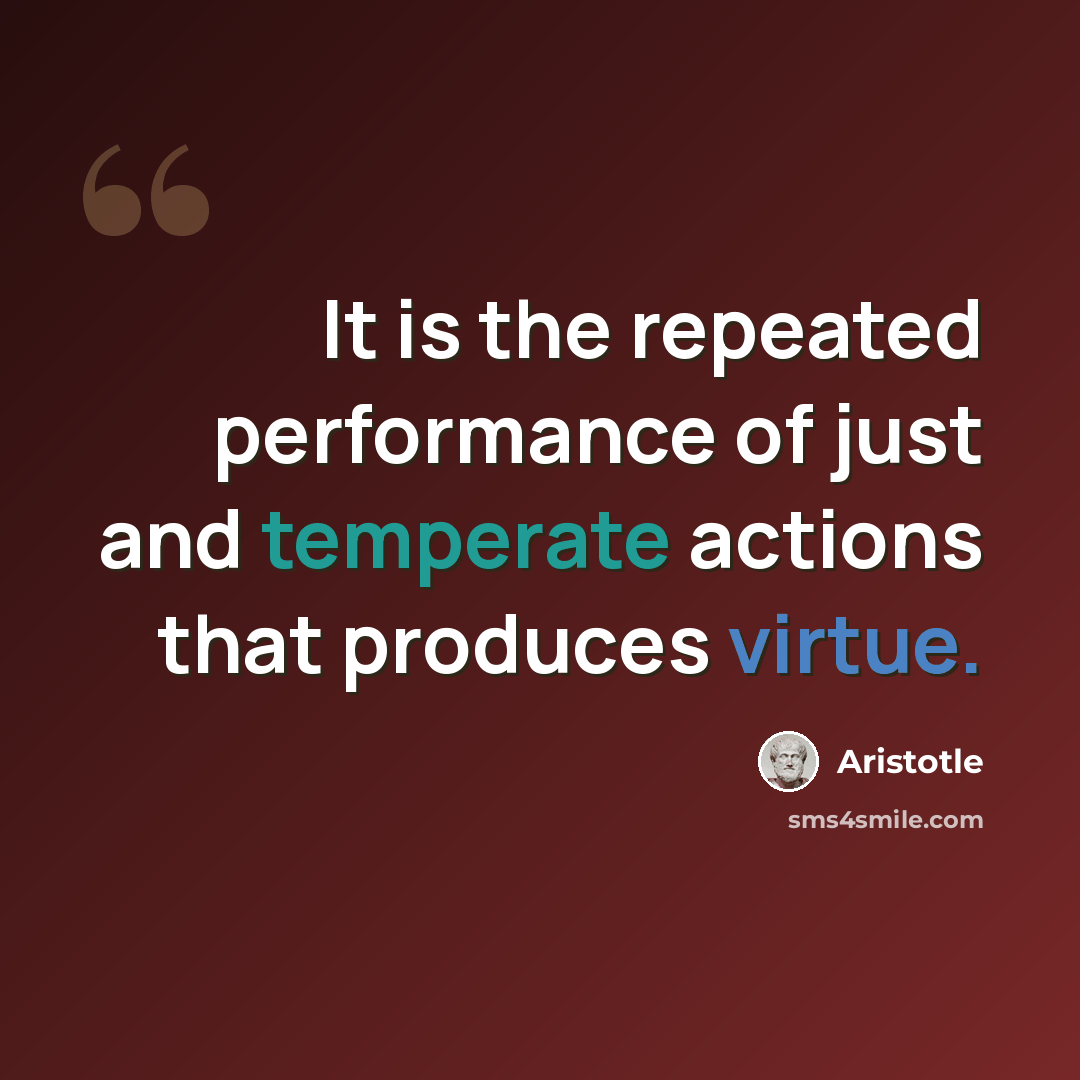
It is the repeated performance of just and temperate actions that produces virtue. — Aristotle Copy Share Image
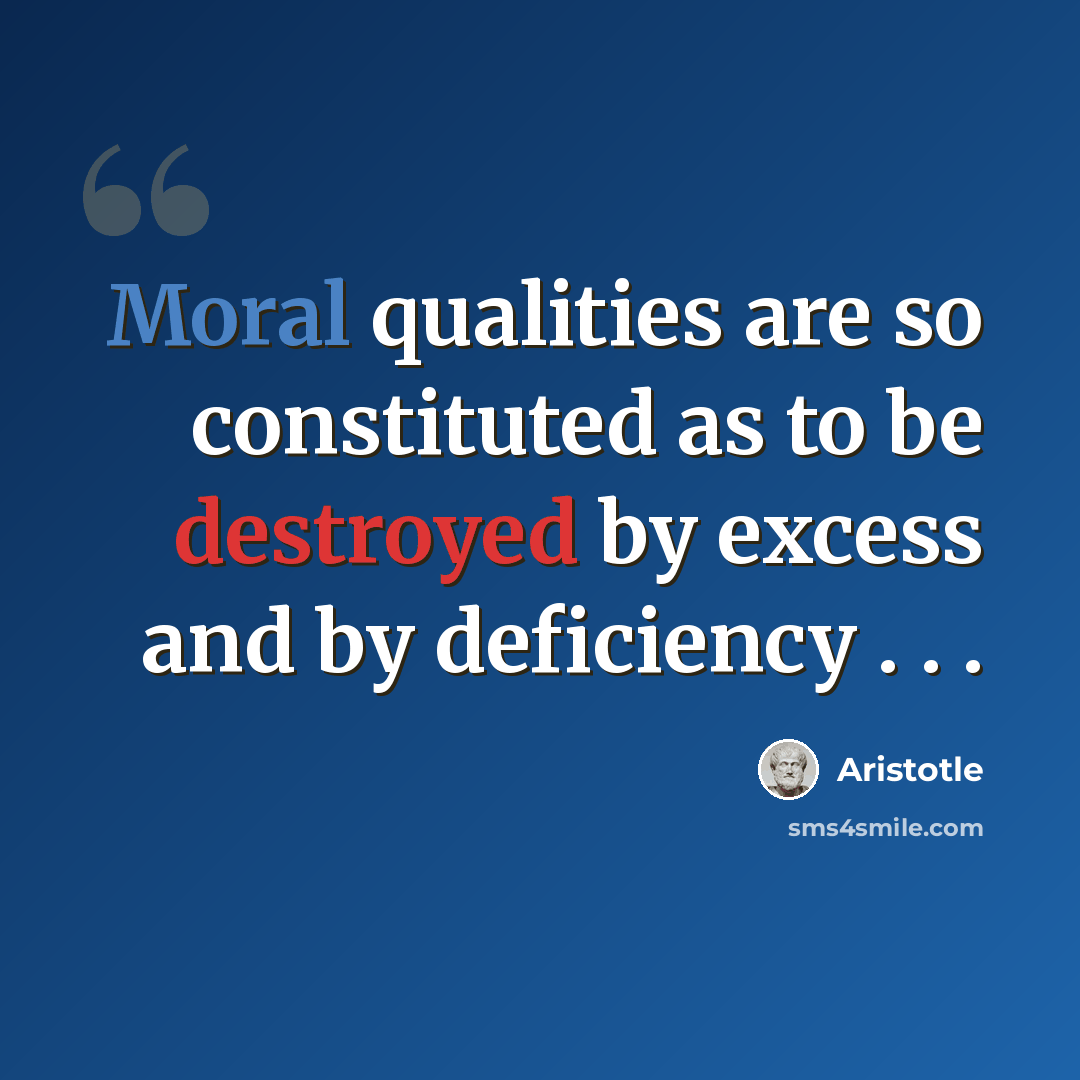
Moral qualities are so constituted as to be destroyed by excess and by deficiency . . . — Aristotle Copy Share Image
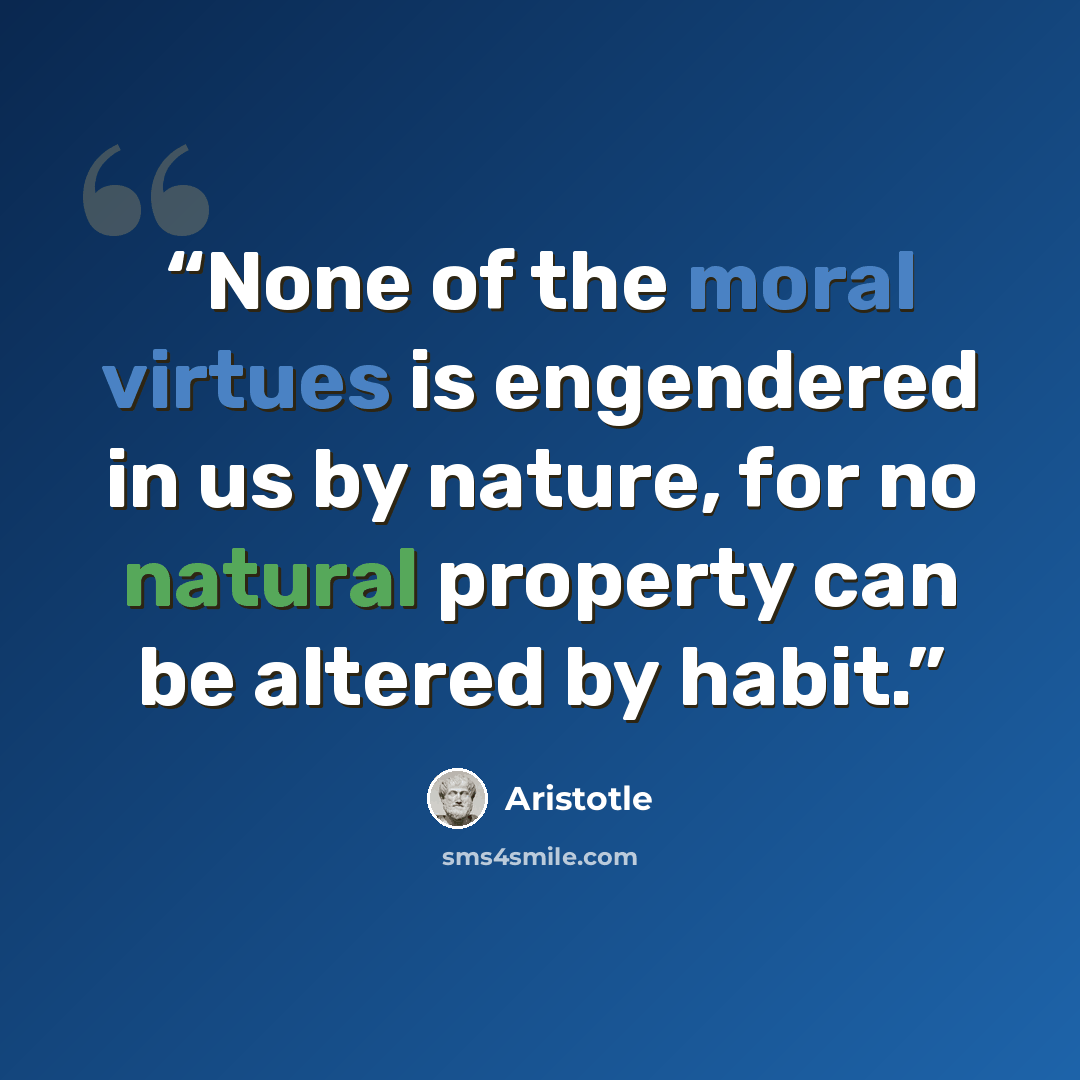
“None of the moral virtues is engendered in us by nature, for no natural property can be altered by habit.” — Aristotle Copy Share Image
The knowledge of the soul admittedly contributes greatly to the advance of truth in general, and, above all, to our understanding of Nature, for… — Aristotle Copy Share
Young men have strong passions and tend to gratify them indiscriminately. Of the bodily desires, it is the sexual by which they are most… — Aristotle Copy Share
The body is at its best between the ages of thirty and thirty-five; the mind is at its best about the age of forty-nine. — Aristotle Copy Share
The ensouled is distinguished from the unsouled by its being alive. Now since being alive is spoken of in many ways, even if only… — Aristotle Copy Share
Although it may be difficult in theory to know what is just and equal, the practical difficulty of inducing those to forbear who can,… — Aristotle Copy Share
The true forms of government, therefore, are those in which the one, or the few, or the many, govern with a view to the… — Aristotle Copy Share
All persons ought to endeavor to follow what is right, and not what is established. — Aristotle Copy Share
Give a man a fish, you feed him for a day. Give a man a poisoned fish, you feed him for the rest of… — Aristotle Copy Share
Obstinate people can be divided into the opinionated, the ignorant, and the boorish. — Aristotle Copy Share
Happiness does not consist in pastimes and amusements but in virtuous activities. — Aristotle Copy Share
To learn is a natural pleasure, not confined to philosophers, but common to all men. — Aristotle Copy Share
![“Actions which produce [virtue] are those which increase it, and also, if differently performed, destroy it.” quote by Aristotle](https://sms4smile.com/q/img-quotes/b6e/aristotle-78_character_actions-which-produce-virtue-are-those-w_1425556.png)
![“Rightness in our choice of an end is secured by [Moral] Virtue.” quote by Aristotle](https://sms4smile.com/q/img-quotes/498/aristotle-78_character_rightness-in-our-choice-of-an-end-is-sec_2740950.png)