True knowledge Quote by William Wordsworth
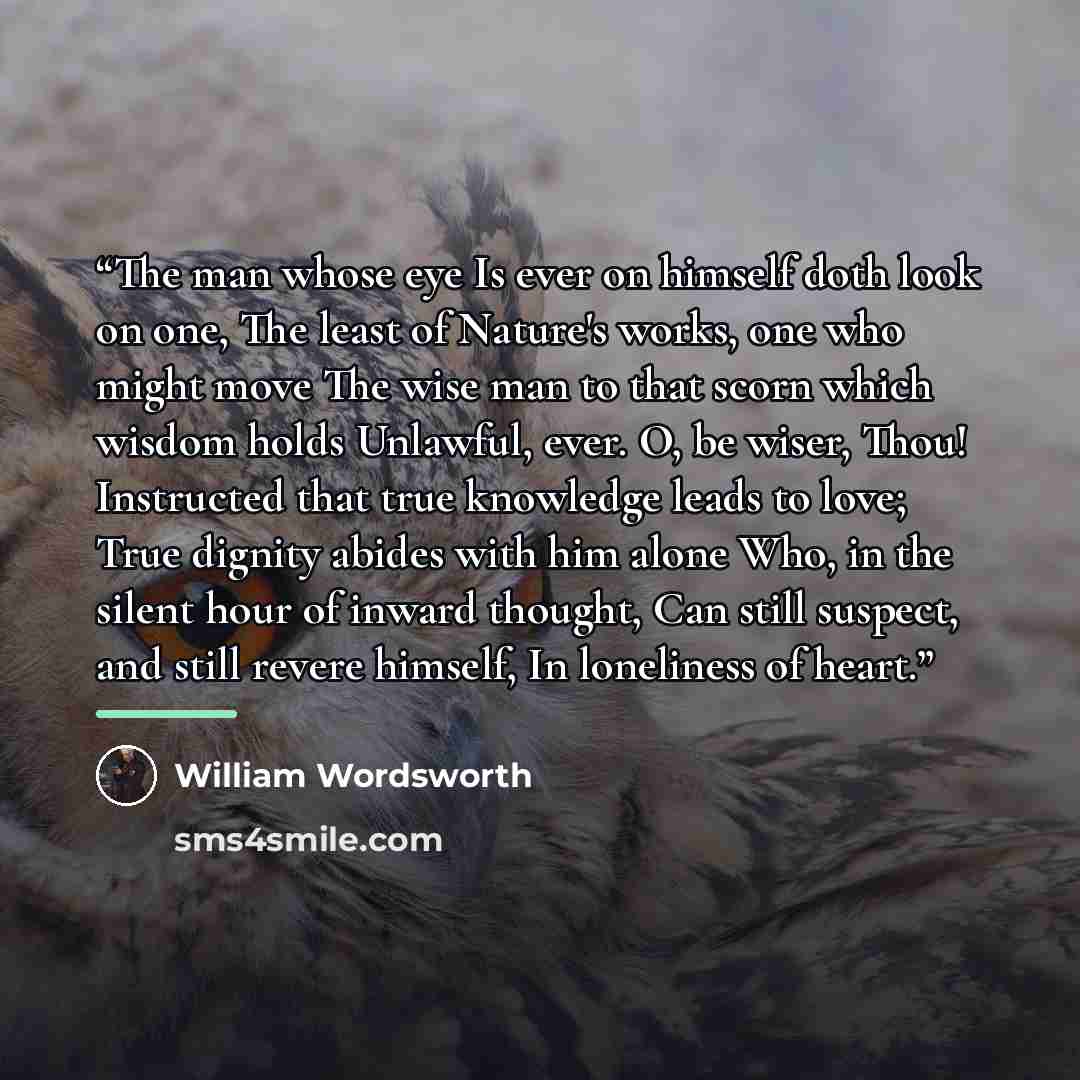
““The man whose eye Is ever on himself doth look on one, The least of Nature's works, one who might move The wise man to that scorn which wisdom holds Unlawful, ever. O, be wiser, Thou! Instructed that true knowledge leads to love; True dignity abides with him alone Who, in the silent hour of inward thought, Can still suspect, and still revere himself, In loneliness of heart.””
About This Quote
Source Poem: The Prelude, 1798
The poem urges self‑knowledge and humility, warning against vanity and encouraging love and dignity through inner reflection.
In simple terms: Know yourself, stay humble, love truth.
Key Takeaway
Practice introspection and humility.
Themes
humility
self‑knowledge
love
dignity
inner peace
Mood
contemplative
inspirational
Type
literary
philosophical
When to use this quote
- meditation
- journaling
- conflict resolution
- leadership training
Key Concepts
philosophy
psychology
spirituality
Questions to Reflect On
- What does true humility mean to you?
- How can love arise from self‑knowledge?
A Different Perspective
Self‑reflection can be uncomfortable and isolating.










![“Skills (learning) or lack of skills is all egoistic knowledge (ego based knowledge). Ego-free Knowledge is called (true) Knowledge [Gnan].” quote by Dada Bhagwan](https://sms4smile.com/quotes/img-quotes/b36/dada-bhagwan-31_egoism_skills-learning-or-lack-of-skills-is-all_9081.jpg)

![“refute arguments and theories and reasonings and every proud and lofty thing that sets itself up against the [true] knowledge of God; and I lead every thought and purpose away captive into the obedience of Christ (the Messiah, the Anointed one). —2 CORINTHIANS 10:5” quote by Joyce Meyer](https://sms4smile.com/quotes/img-quotes/f85/joyce-meyer-123_knowledge-of-god_refute-arguments-and-theories-and-reason_129576.jpg)