Apologise Quote by William Makepeace Thackeray
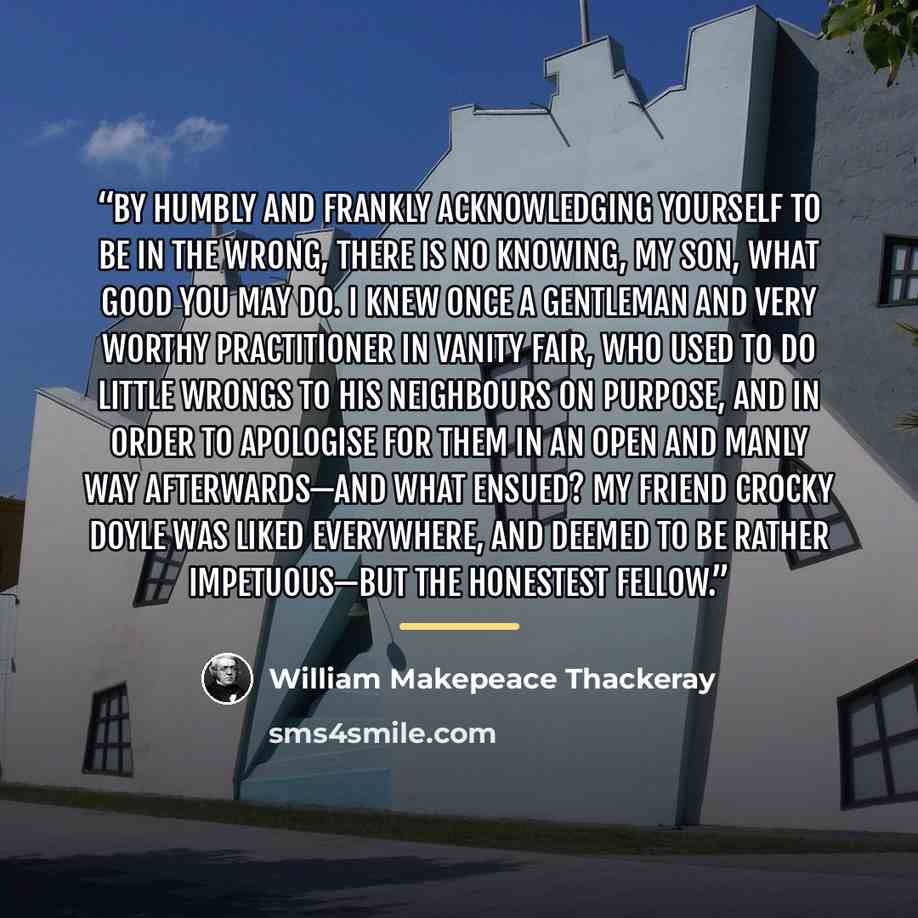
““By humbly and frankly acknowledging yourself to be in the wrong, there is no knowing, my son, what good you may do. I knew once a gentleman and very worthy practitioner in Vanity Fair, who used to do little wrongs to his neighbours on purpose, and in order to apologise for them in an open and manly way afterwards—and what ensued? My friend Crocky Doyle was liked everywhere, and deemed to be rather impetuous—but the honestest fellow.””
About This Quote
Source Novel: Vanity Fair, 1848
Admitting mistakes openly builds trust and reputation, even if the person is impulsive; honesty outweighs vanity.
In simple terms: Own your errors to gain respect.
Key Takeaway
Practice sincere apologies.
Themes
honesty
humility
reputation
Mood
reflective
pragmatic
Type
advice
literary
When to use this quote
- workplace conflicts
- personal relationships
- public apologies
Key Concepts
social ethics
character development
Questions to Reflect On
- When is an apology insufficient?
- How can you ensure apologies are genuine?
A Different Perspective
Apology may not repair deep harm.