Chimera Quote by Umberto Eco
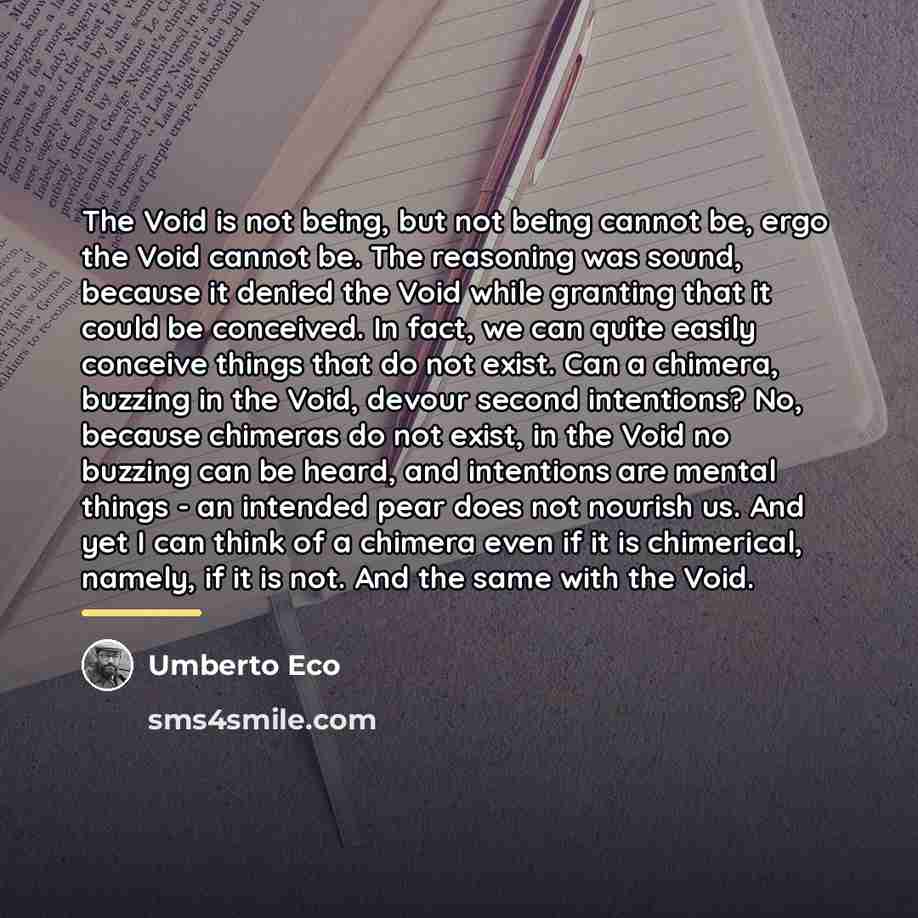
“The Void is not being, but not being cannot be, ergo the Void cannot be. The reasoning was sound, because it denied the Void while granting that it could be conceived. In fact, we can quite easily conceive things that do not exist. Can a chimera, buzzing in the Void, devour second intentions? No, because chimeras do not exist, in the Void no buzzing can be heard, and intentions are mental things - an intended pear does not nourish us. And yet I can think of a chimera even if it is chimerical, namely, if it is not. And the same with the Void.”
About This Quote
Source Book: The Name of the Rose by Umberto Eco, 1980
The passage argues that the concept of a non‑existent void is contradictory, because conceiving something implies some form of existence, even if only mental.
In simple terms: Thinking about non‑existence shows logical limits.
Key Takeaway
Recognize limits of conceptualizing nothingness.
Themes
philosophy
logic
ontology
paradox
existentialism
Mood
thoughtful
intrigued
skeptical
Type
analytical
philosophical
When to use this quote
- academic debate
- fiction writing
- philosophical discussion
- creative brainstorming
Key Concepts
metaphysics
contradiction
conceptual analysis
Questions to Reflect On
- Can we truly conceive of absolute nothingness?
- What does it mean to think about what does not exist?
A Different Perspective
The argument assumes language can fully capture emptiness, which may be contested.